Yao Jiajia, Zhou Rumeng, Liu Yue, Liu Yin, Cao Qian, Lu Zuneng
Department of Neurology, Renmin Hospital of Wuhan University, Hubei, China.
Neurol Ther. 2023 Dec;12(6):2121-2132. doi: 10.1007/s40120-023-00546-w. Epub 2023 Oct 4.
Guillain-Barré syndrome (GBS) is an acute inflammatory neuropathy. The Erasmus GBS Respiratory Insufficiency Score (EGRIS) and the modified Erasmus GBS Outcome Score (mEGOS) are prognostic models used in the prediction of mechanical ventilation and outcome. Thus far, there are only few biomarkers for the prognosis prediction of GBS patients, and albumin level is one that is promising.
Patients diagnosed with GBS from 2013 to 2022 at Renmin Hospital, Wuhan University, China, were included. Patients hospitalized between 2016 and 2022 underwent short- and long-term follow-ups. The correlations between EGRIS/mEGOS and mechanical ventilation and outcome were evaluated. Serum albumin level was examined the day after admission. Furthermore, we also investigated whether the level of serum albumin was useful in predicting disease severity or poor outcome.
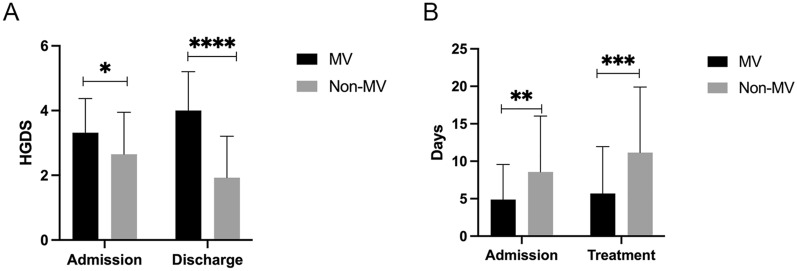
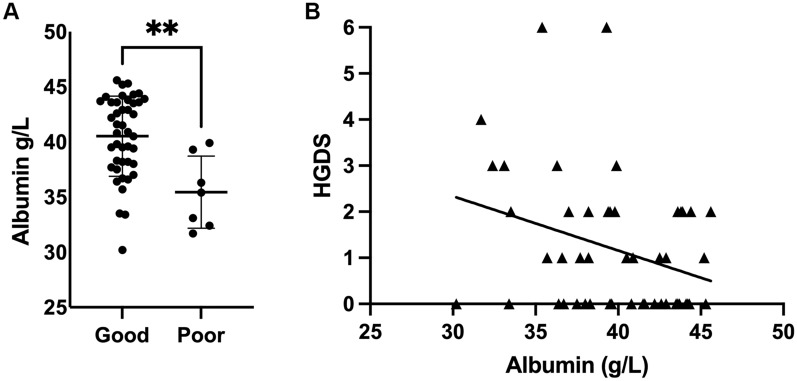
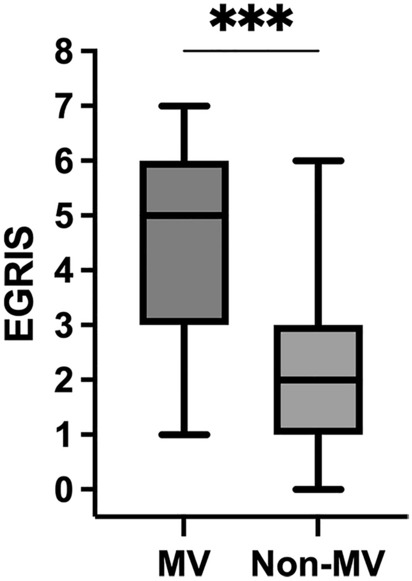
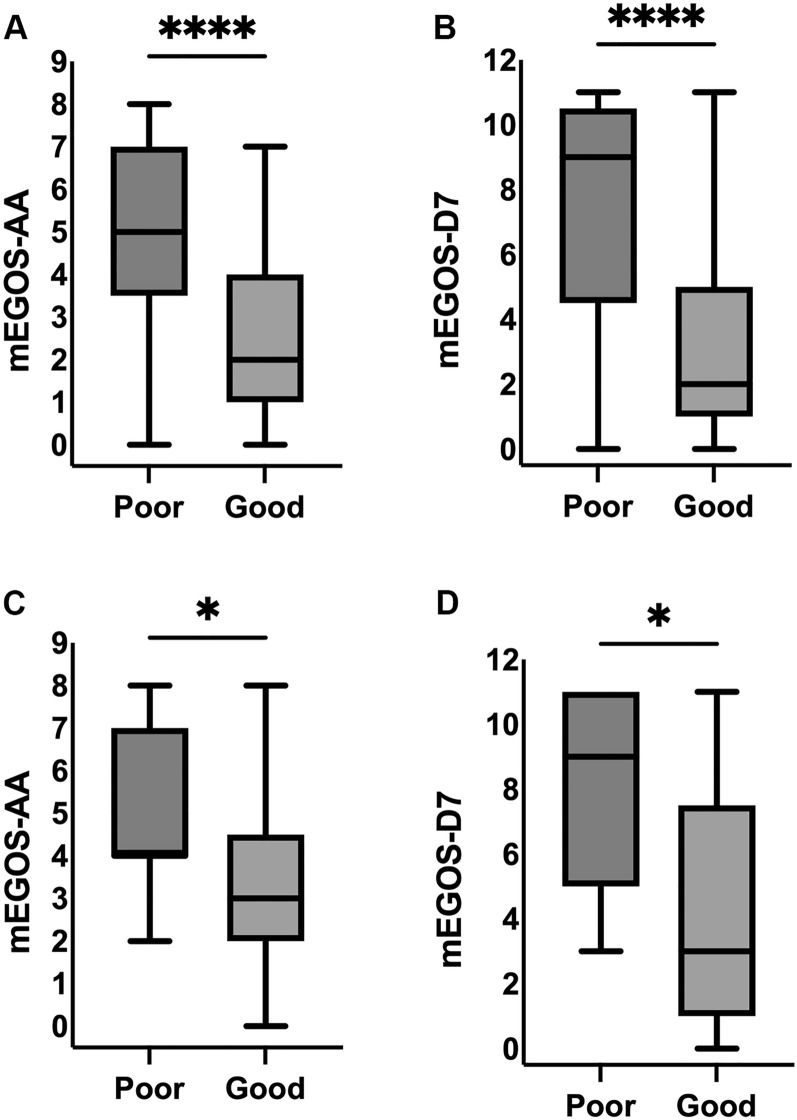
In all, 145 patients were enrolled. Nineteen patients (13.1%) who required mechanical ventilation had higher Hughes GBS disability score (HGDS) at admission and discharge (P < 0.05 and P < 0.0001, respectively), shorter time from onset to admission and treatment (P < 0.01 and P < 0.001, respectively) and longer hospital stays (P < 0.001) than patients who did not require mechanical ventilation. High EGRIS scores were linked with the need for mechanical ventilation (r = 0.427, P < 0.001, AUC = 0.623). Seventy-one patients were admitted between 2016 and 2022. Of these, 65 patients had a 4-week follow-up and 61 had a 6-month follow-up. Higher mEGOS scores at admission and 7 days after admission significantly correlated with short- (P < 0.0001 and P < 0.0001) and long-term (P < 0.05 and P < 0.05) outcomes, respectively. No significant difference in outcome was found between different subtypes (4 weeks [P = 0.099] and 6 months [P = 0.172]). Patients with lower albumin level tended to have higher HGDS (at admission P < 0.05, at nadir P < 0.001, and at discharge P < 0.001) and higher properties of the need of mechanical ventilation (P < 0.05) and ICU stay (P < 0.05) than those with normal albumin levels. Those with low albumin levels were also unable to walk independently at 6 months (P < 0.01).
mEGOS scores predicted the outcomes of GBS patients in China, and EGRIS score predicted the need for mechanical ventilation in these patients. Albumin level at admission correlated well with disease severity and outcomes.
吉兰 - 巴雷综合征(GBS)是一种急性炎性神经病。伊拉斯谟GBS呼吸功能不全评分(EGRIS)和改良伊拉斯谟GBS结局评分(mEGOS)是用于预测机械通气和结局的预后模型。迄今为止,用于GBS患者预后预测的生物标志物很少,白蛋白水平是其中一个有前景的指标。
纳入2013年至2022年在中国武汉大学人民医院诊断为GBS的患者。2016年至2022年住院的患者接受了短期和长期随访。评估EGRIS/mEGOS与机械通气和结局之间的相关性。入院后第二天检测血清白蛋白水平。此外,我们还研究了血清白蛋白水平是否有助于预测疾病严重程度或不良结局。
共纳入145例患者。19例(13.1%)需要机械通气的患者在入院时和出院时的休斯GBS残疾评分(HGDS)更高(分别为P < 0.05和P < 0.0001),从发病到入院和治疗的时间更短(分别为P < 0.01和P < 0.001),住院时间更长(P < 0.001),与不需要机械通气的患者相比。高EGRIS评分与需要机械通气相关(r = 0.427,P < 0.001,AUC = 0.623)。2016年至2022年期间有71例患者入院。其中,65例患者进行了4周随访,61例患者进行了6个月随访。入院时和入院后7天较高的mEGOS评分分别与短期(P < 0.0001和P < 0.0001)和长期(P < 0.05和P < 0.05)结局显著相关。不同亚型之间在结局方面未发现显著差异(4周[P = 0.099]和6个月[P = 0.172])。白蛋白水平较低的患者与白蛋白水平正常的患者相比,往往具有更高的HGDS(入院时P < 0.05,最低点时P < 0.001,出院时P < 0.001)以及更高的机械通气需求率(P < 0.05)和入住重症监护病房率(P < 0.05)。白蛋白水平低的患者在6个月时也无法独立行走(P < 0.01)。
mEGOS评分可预测中国GBS患者的结局,EGRIS评分可预测这些患者对机械通气的需求。入院时的白蛋白水平与疾病严重程度和结局密切相关。