Kaluschke Maximilian, Yin Myat Su, Haddawy Peter, Suebnukarn Siriwan, Zachmann Gabriel
Computer Graphics and Virtual Reality, University of Bremen, Bremen, Germany.
Faculty of ICT, Mahidol University, Bangkok, Thailand.
PLoS One. 2023 Oct 4;18(10):e0291389. doi: 10.1371/journal.pone.0291389. eCollection 2023.
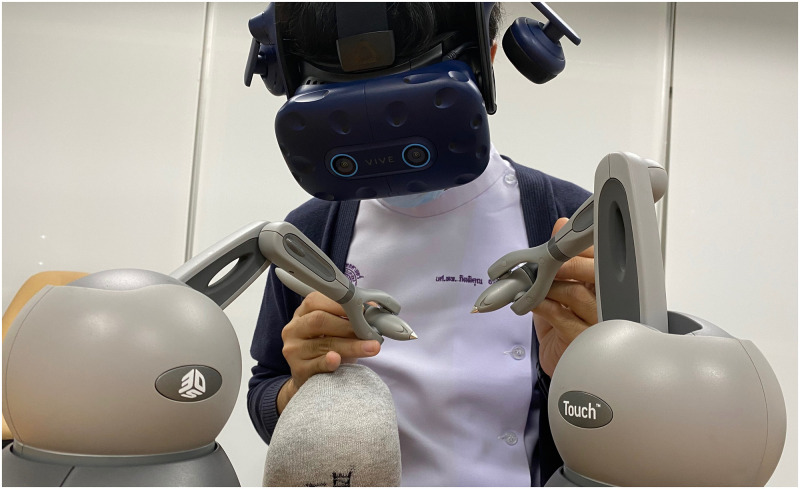
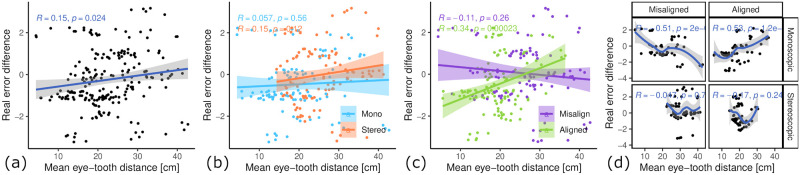
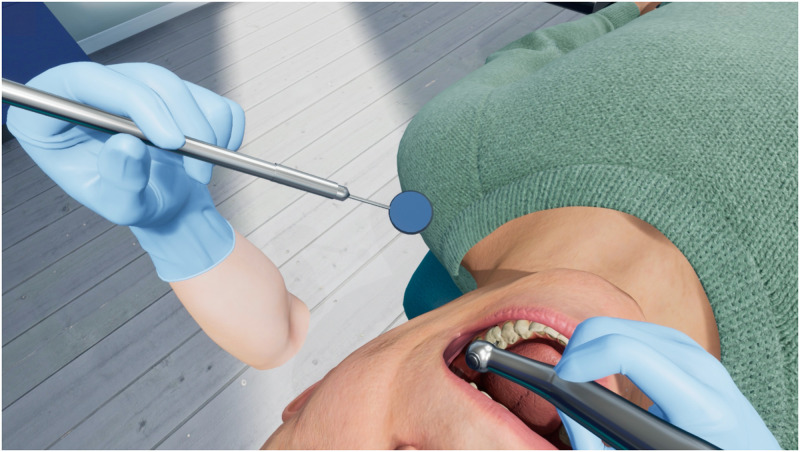
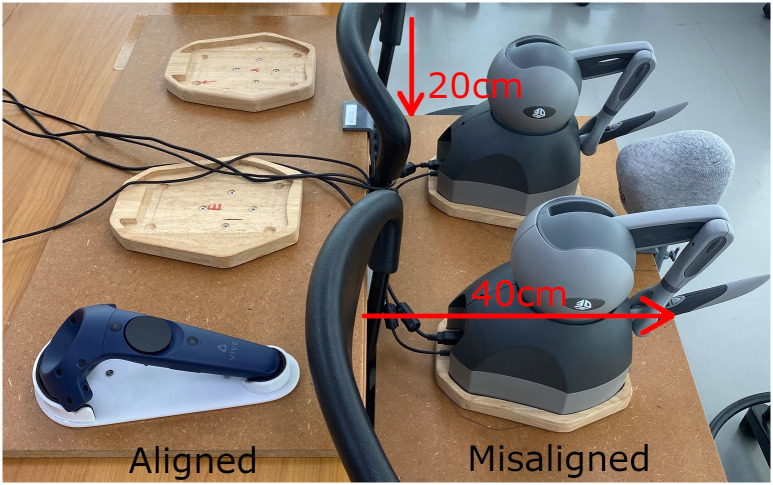
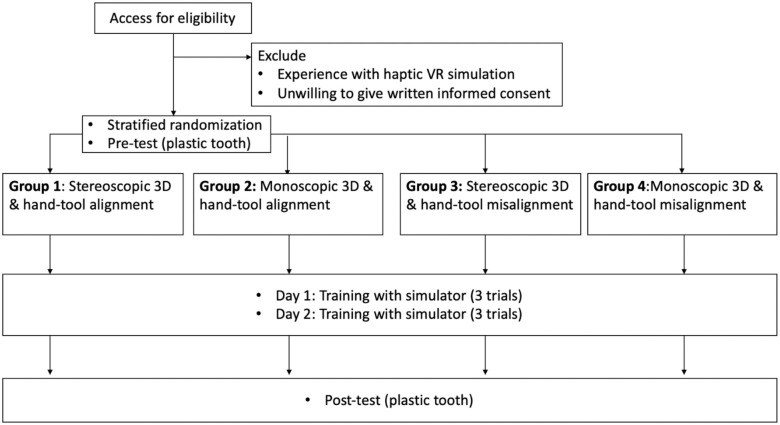
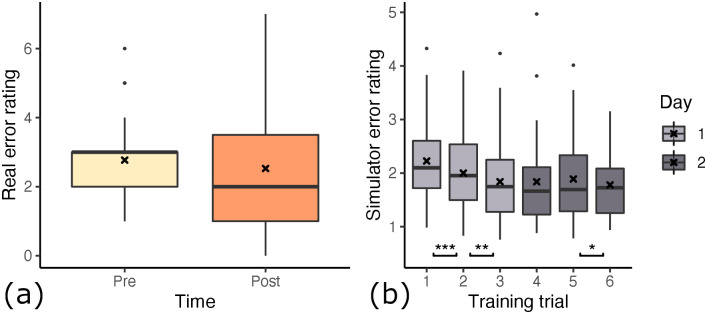
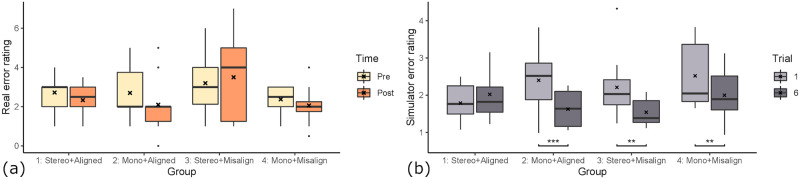
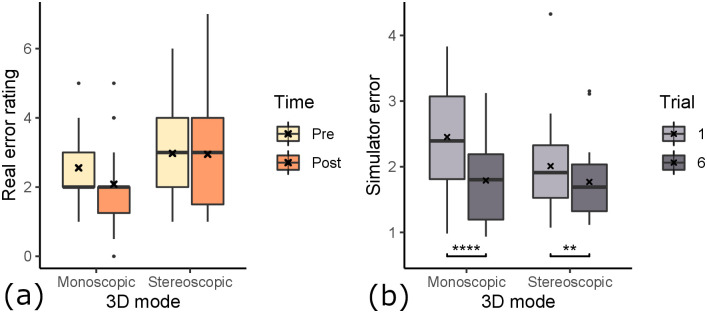
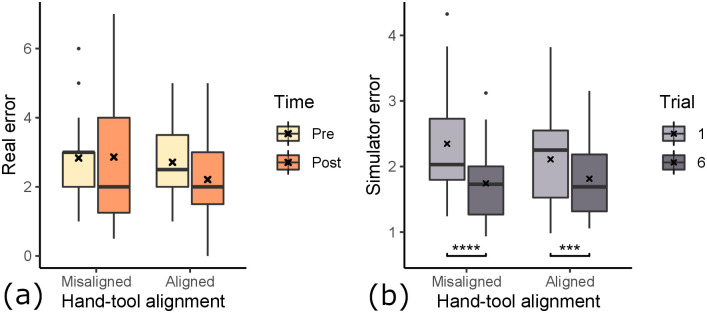
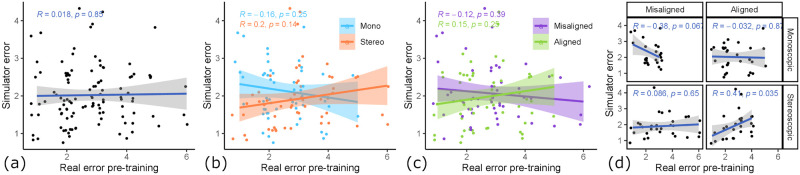
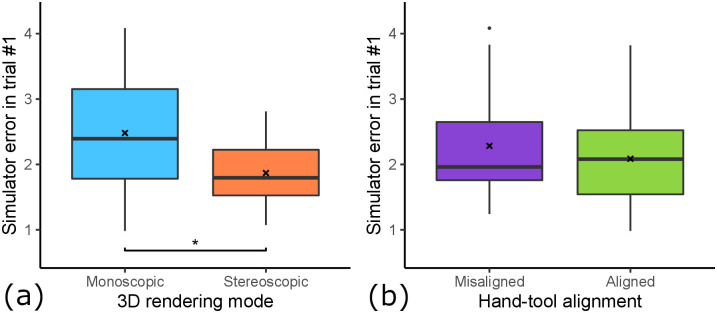
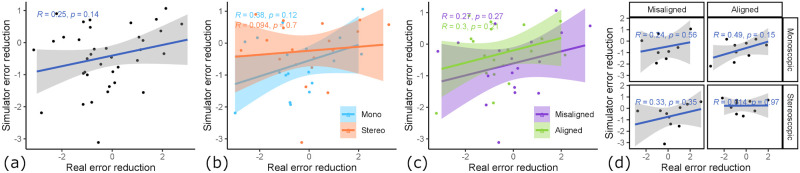
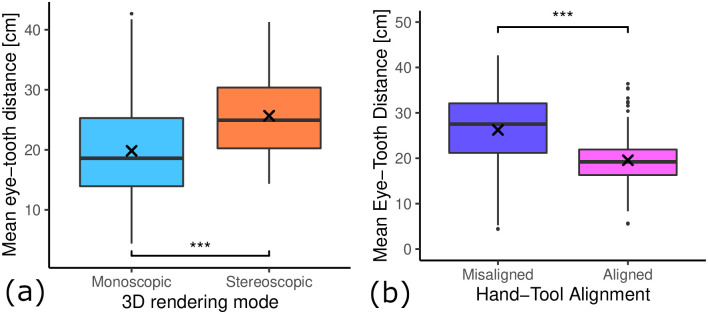
Recent years have seen the proliferation of VR-based dental simulators using a wide variety of different VR configurations with varying degrees of realism. Important aspects distinguishing VR hardware configurations are 3D stereoscopic rendering and visual alignment of the user's hands with the virtual tools. New dental simulators are often evaluated without analysing the impact of these simulation aspects. In this paper, we seek to determine the impact of 3D stereoscopic rendering and of hand-tool alignment on the teaching effectiveness and skill assessment accuracy of a VR dental simulator. We developed a bimanual simulator using an HMD and two haptic devices that provides an immersive environment with both 3D stereoscopic rendering and hand-tool alignment. We then independently controlled for each of the two aspects of the simulation. We trained four groups of students in root canal access opening using the simulator and measured the virtual and real learning gains. We quantified the real learning gains by pre- and post-testing using realistic plastic teeth and the virtual learning gains by scoring the training outcomes inside the simulator. We developed a scoring metric to automatically score the training outcomes that strongly correlates with experts' scoring of those outcomes. We found that hand-tool alignment has a positive impact on virtual and real learning gains, and improves the accuracy of skill assessment. We found that stereoscopic 3D had a negative impact on virtual and real learning gains, however it improves the accuracy of skill assessment. This finding is counter-intuitive, and we found eye-tooth distance to be a confounding variable of stereoscopic 3D, as it was significantly lower for the monoscopic 3D condition and negatively correlates with real learning gain. The results of our study provide valuable information for the future design of dental simulators, as well as simulators for other high-precision psycho-motor tasks.
近年来,基于虚拟现实(VR)的牙科模拟器大量涌现,它们采用了各种各样不同的VR配置,具有不同程度的真实感。区分VR硬件配置的重要方面包括3D立体渲染以及用户手部与虚拟工具的视觉对齐。新的牙科模拟器在评估时往往没有分析这些模拟方面的影响。在本文中,我们试图确定3D立体渲染和手部与工具的对齐对VR牙科模拟器的教学效果和技能评估准确性的影响。我们开发了一种使用头戴式显示器(HMD)和两个触觉设备的双手模拟器,该模拟器提供了一个同时具备3D立体渲染和手部与工具对齐功能的沉浸式环境。然后,我们分别独立控制模拟的这两个方面。我们使用该模拟器对四组学生进行根管口开放训练,并测量虚拟学习收获和实际学习收获。我们通过使用逼真的塑料牙齿进行测试前和测试后的评估来量化实际学习收获,通过对模拟器内的训练结果进行评分来量化虚拟学习收获。我们开发了一种评分指标,用于自动对训练结果进行评分,该指标与专家对这些结果的评分高度相关。我们发现手部与工具的对齐对虚拟和实际学习收获有积极影响,并提高了技能评估的准确性。我们发现立体3D对虚拟和实际学习收获有负面影响,然而它提高了技能评估的准确性。这一发现有悖于直觉,我们发现眼齿距离是立体3D的一个混杂变量,因为在单目3D条件下它明显更低,并且与实际学习收获呈负相关。我们的研究结果为牙科模拟器以及其他高精度心理运动任务模拟器的未来设计提供了有价值的信息。