Department of Prosthodontics, Peking University School and Hospital of Stomatology, Beijing, China.
National Clinical Research Center for Oral Diseases, Peking University School and Hospital of Stomatology, Beijing, China.
J Med Internet Res. 2021 Apr 8;23(4):e23635. doi: 10.2196/23635.
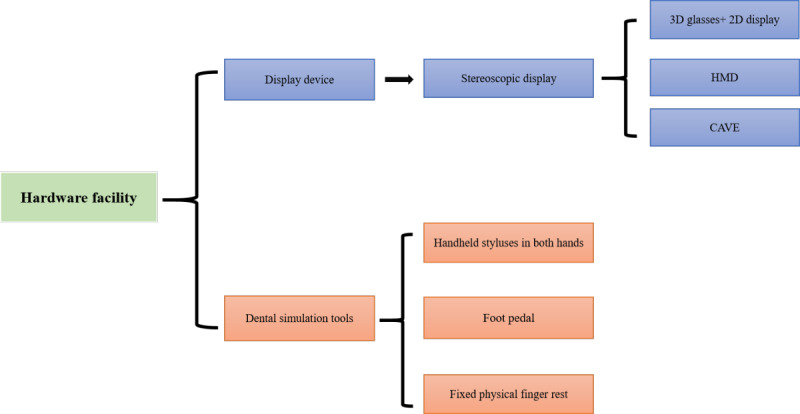
The application of virtual reality has become increasingly extensive as this technology has developed. In dental education, virtual reality is mainly used to assist or replace traditional methods of teaching clinical skills in preclinical training for several subjects, such as endodontics, prosthodontics, periodontics, implantology, and dental surgery. The application of dental simulators in teaching can make up for the deficiency of traditional teaching methods and reduce the teaching burden, improving convenience for both teachers and students. However, because of the technology limitations of virtual reality and force feedback, dental simulators still have many hardware and software disadvantages that have prevented them from being an alternative to traditional dental simulators as a primary skill training method. In the future, when combined with big data, cloud computing, 5G, and deep learning technology, dental simulators will be able to give students individualized learning assistance, and their functions will be more diverse and suitable for preclinical training. The purpose of this review is to provide an overview of current dental simulators on related technologies, advantages and disadvantages, methods of evaluating effectiveness, and future directions for development.
虚拟现实技术的应用随着技术的发展变得越来越广泛。在牙科教育中,虚拟现实主要用于辅助或替代传统的临床技能教学方法,用于牙髓学、修复学、牙周病学、种植学和牙科手术等多个学科的临床前培训。牙科模拟器在教学中的应用可以弥补传统教学方法的不足,减轻教学负担,为师生提供便利。然而,由于虚拟现实和力反馈技术的限制,牙科模拟器仍然存在许多硬件和软件方面的缺点,这使得它们无法作为传统牙科模拟器的替代方法,成为主要的技能训练方法。在未来,与大数据、云计算、5G 和深度学习技术相结合,牙科模拟器将能够为学生提供个性化的学习辅助,其功能将更加多样化,适用于临床前培训。本综述的目的是概述当前牙科模拟器相关技术、优缺点、效果评估方法和未来发展方向。