Machine Biology Group, Departments of Psychiatry and Microbiology, Institute for Biomedical Informatics, Institute for Translational Medicine and Therapeutics, Perelman School of Medicine, University of Pennsylvania, Philadelphia, PA, USA.
Departments of Bioengineering and Chemical and Biomolecular Engineering, School of Engineering and Applied Science, University of Pennsylvania, PhiladelphiaPA, USA.
Expert Opin Drug Discov. 2023 Jul-Dec;18(11):1245-1257. doi: 10.1080/17460441.2023.2250721. Epub 2023 Oct 18.
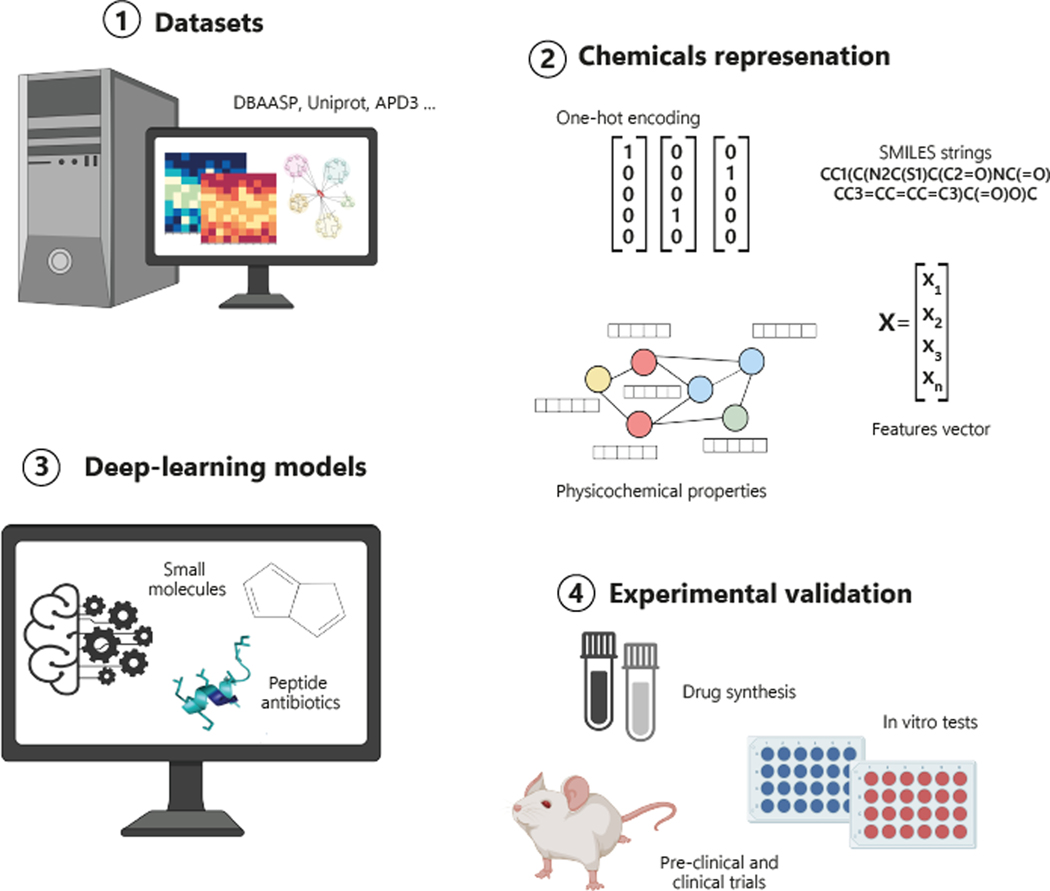
As machine learning (ML) and artificial intelligence (AI) expand to many segments of our society, they are increasingly being used for drug discovery. Recent deep learning models offer an efficient way to explore high-dimensional data and design compounds with desired properties, including those with antibacterial activity.
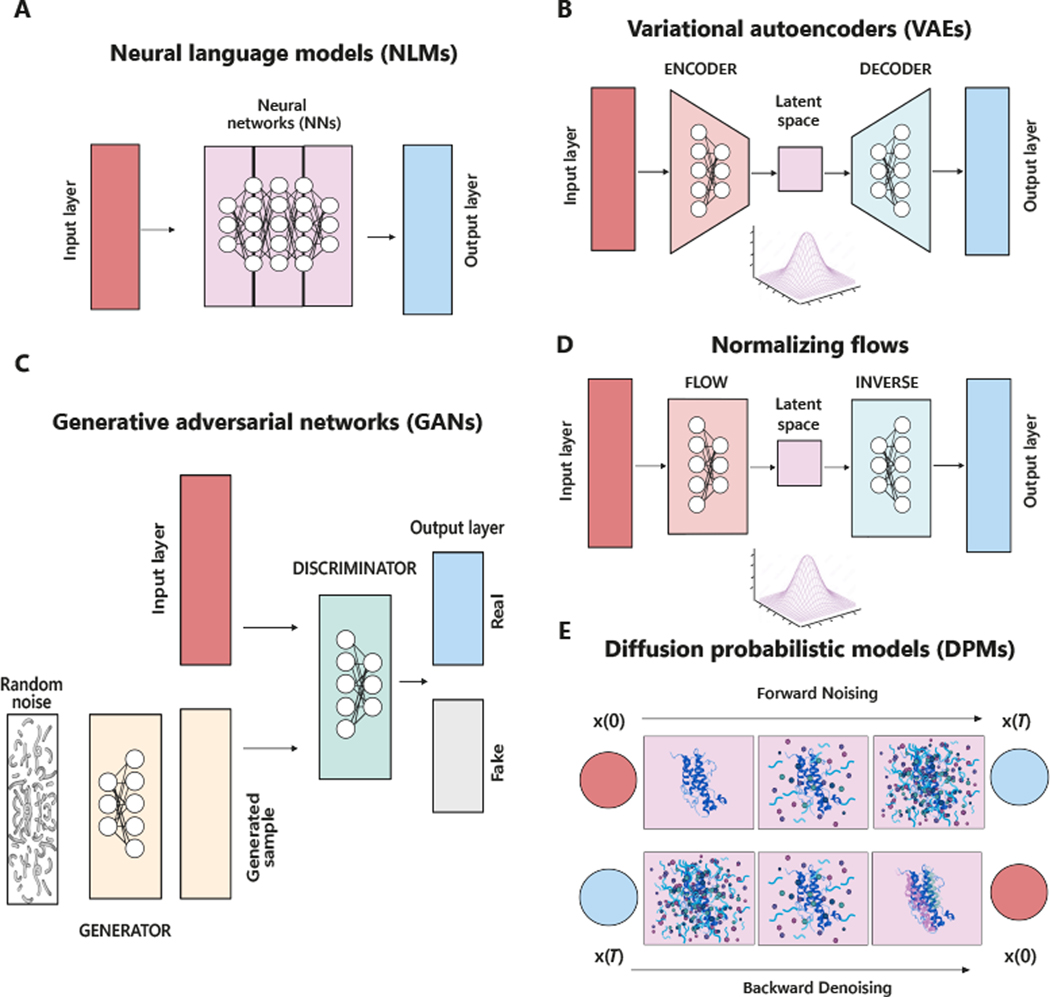
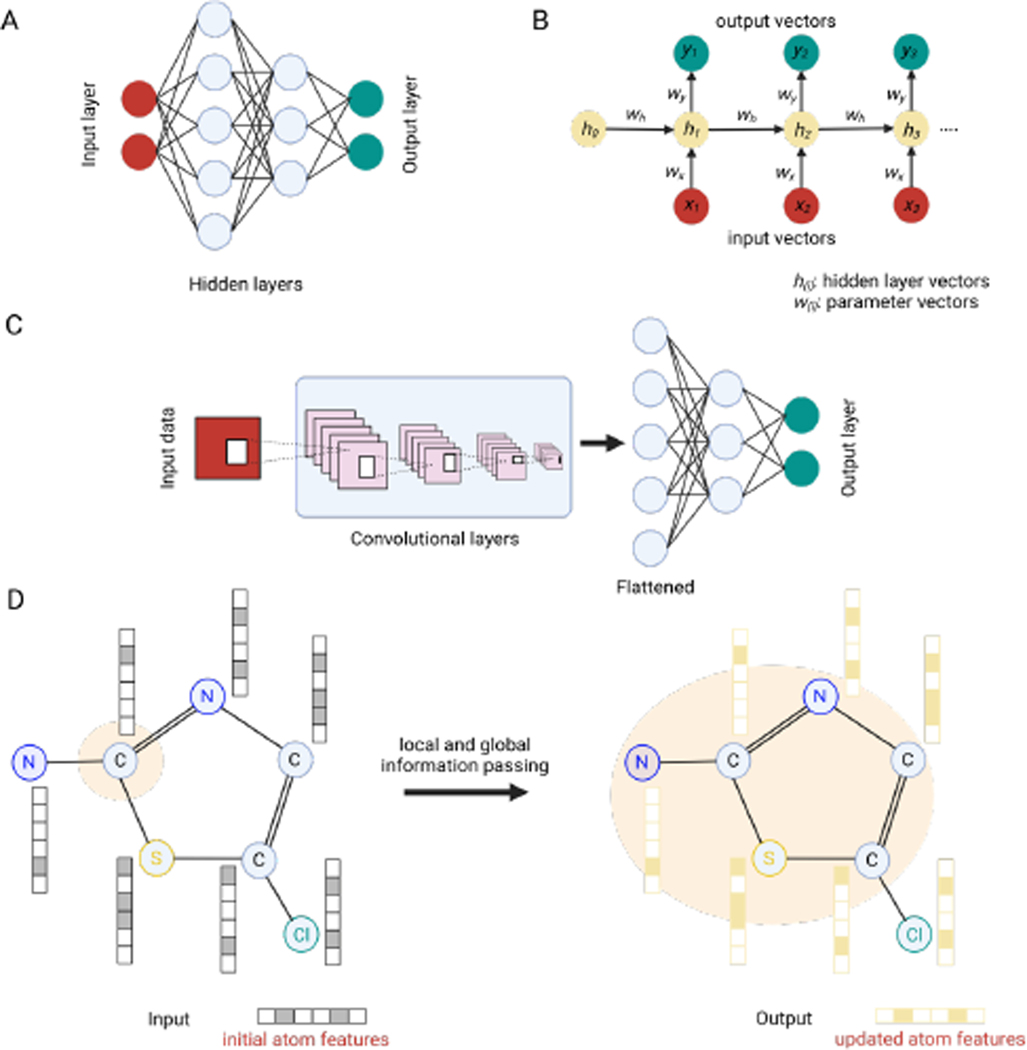
This review covers key frameworks in antibiotic discovery, highlighting physicochemical features and addressing dataset limitations. The deep learning approaches here described include discriminative models such as convolutional neural networks, recurrent neural networks, graph neural networks, and generative models like neural language models, variational autoencoders, generative adversarial networks, normalizing flow, and diffusion models. As the integration of these approaches in drug discovery continues to evolve, this review aims to provide insights into promising prospects and challenges that lie ahead in harnessing such technologies for the development of antibiotics.
Accurate antimicrobial prediction using deep learning faces challenges such as imbalanced data, limited datasets, experimental validation, target strains, and structure. The integration of deep generative models with bioinformatics, molecular dynamics, and data augmentation holds the potential to overcome these challenges, enhance model performance, and utlimately accelerate antimicrobial discovery.
随着机器学习(ML)和人工智能(AI)扩展到我们社会的许多领域,它们越来越多地被用于药物发现。最近的深度学习模型提供了一种高效的方法来探索高维数据,并设计具有所需特性的化合物,包括具有抗菌活性的化合物。
本综述涵盖了抗生素发现的关键框架,强调了物理化学特性,并解决了数据集的局限性。这里描述的深度学习方法包括判别模型,如卷积神经网络、循环神经网络、图神经网络,以及生成模型,如神经语言模型、变分自编码器、生成对抗网络、归一化流和扩散模型。随着这些方法在药物发现中的不断整合,本综述旨在提供有关利用这些技术开发抗生素的有前景的前景和挑战的见解。
使用深度学习进行准确的抗菌预测面临着一些挑战,如数据不平衡、数据集有限、实验验证、靶菌株和结构。将深度生成模型与生物信息学、分子动力学和数据增强相结合,有可能克服这些挑战、提高模型性能,并最终加速抗菌药物的发现。