Department of Psychiatry and Behavioral Sciences, University of Southern California Keck School of Medicine, 2250 Alcazar St., Suite 2200, Los Angeles, CA, 90089, USA.
RAND Corporation, 1776 Main St, Santa Monica, CA, 90401, USA.
J Behav Health Serv Res. 2024 Apr;51(2):164-184. doi: 10.1007/s11414-023-09862-3. Epub 2023 Oct 5.
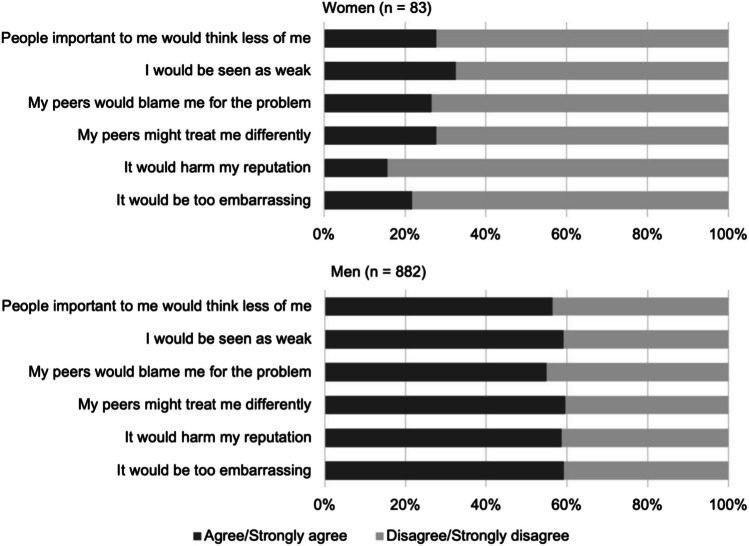
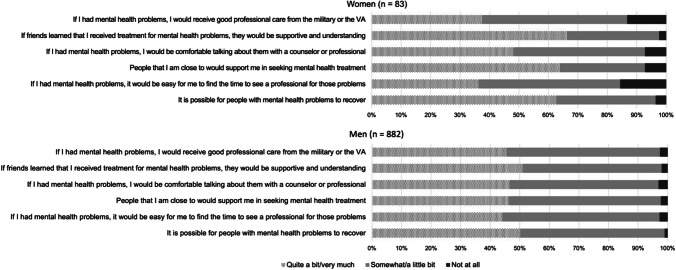
Women veterans have historically faced barriers to behavioral health treatment, particularly through the VA. In conjunction, there have been changes in behavioral healthcare delivery resulting from efforts to improve care for women veterans and the COVID-19 pandemic (e.g., widespread telehealth implementation). The current study draws on a quantitative and qualitative study centering current perspectives of women veterans in their choices to seek or not seek behavioral healthcare in VA and non-VA settings through interviewing 18 women recruited from a larger survey study on veteran behavioral health (n = 83 women, n = 882 men) on their experiences with behavioral health care access and satisfaction, including barriers and facilitators to seeking care. Quantitative findings are descriptively reported from the larger study, which outlined screening for behavioral health problems, behavioral health utilization, treatment modality preferences, and barriers/facilitators to care. While women in the survey sample screened for various behavioral health disorders, rates of treatment seeking remained relatively low. Women reported positive and negative experiences with telehealth and endorsed many barriers to treatment seeking in interviews not captured by survey findings, including lack of women-specific care (e.g., care for military sexual trauma, women-only groups), reports of stranger harassment at the VA, and lack of female providers. Women veterans continue to face barriers to behavioral healthcare; however, ongoing efforts to improve care access and quality, including the implementation of telehealth, show promise in reducing these obstacles. Continued efforts are needed to ensure diverse treatment modalities continue to reach women veterans as this population grows.
女性退伍军人在获得行为健康治疗方面一直面临障碍,尤其是在退伍军人事务部(VA)。与此同时,由于改善女性退伍军人护理的努力以及 COVID-19 大流行(例如,广泛实施远程医疗),行为医疗保健的提供方式发生了变化。目前的研究通过对从一项关于退伍军人行为健康的更大规模调查研究(n=83 名女性,n=882 名男性)中招募的 18 名女性进行访谈,借鉴了当前女性退伍军人在 VA 和非 VA 环境中寻求或不寻求行为医疗保健的选择的定量和定性研究,以了解她们在获得行为健康护理方面的经验和满意度,包括寻求护理的障碍和促进因素。定量研究结果来自更大规模的研究进行描述性报告,该研究概述了行为健康问题的筛查、行为健康利用、治疗模式偏好以及护理的障碍/促进因素。虽然调查样本中的女性筛查出各种行为健康障碍,但寻求治疗的比率仍然相对较低。女性在接受采访时报告了远程医疗的积极和消极体验,并对调查结果未捕捉到的许多寻求治疗的障碍表示认可,包括缺乏针对女性的护理(例如,针对军事性创伤的护理、仅限女性的小组)、VA 中报告的陌生人骚扰以及缺乏女性提供者。女性退伍军人在获得行为医疗保健方面仍然面临障碍;然而,改善护理获取和质量的持续努力,包括远程医疗的实施,有望减少这些障碍。随着这一人群的增长,需要继续努力确保各种治疗模式继续为女性退伍军人提供服务。