
用于双模态成像引导化学光热疗法治疗免疫冷三阴性乳腺癌的白蛋白基纳米系统
Albumin-based nanosystem for dual-modality imaging-guided chem-phototherapy against immune-cold triple-negative breast cancer.
作者信息
Peng Chen, Zeng Xiaodie, Cai Jiali, Huang Hanyu, Yang Fan, Jin Shaowen, Guan Xiuhong, Wang Zhiyong
机构信息
Key Laboratory for Polymeric Composite and Functional Materials of Ministry of Education, School of Materials Science and Engineering, Sun Yat-sen University, Guangzhou 510275, China.
Department of Pediatrics, Department of Nuclear Medicine, Guangdong Provincial Engineering Research Center of Molecular Imaging, The Fifth Affiliated Hospital, Sun Yat-sen University, Zhuhai 519000, China.
出版信息
Regen Biomater. 2023 Aug 31;10:rbad073. doi: 10.1093/rb/rbad073. eCollection 2023.
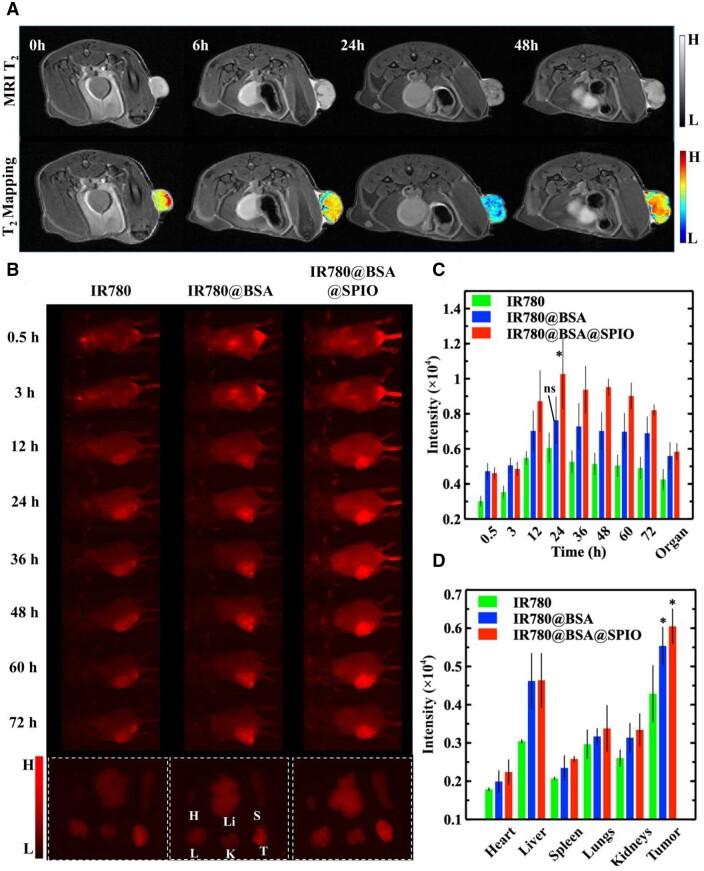
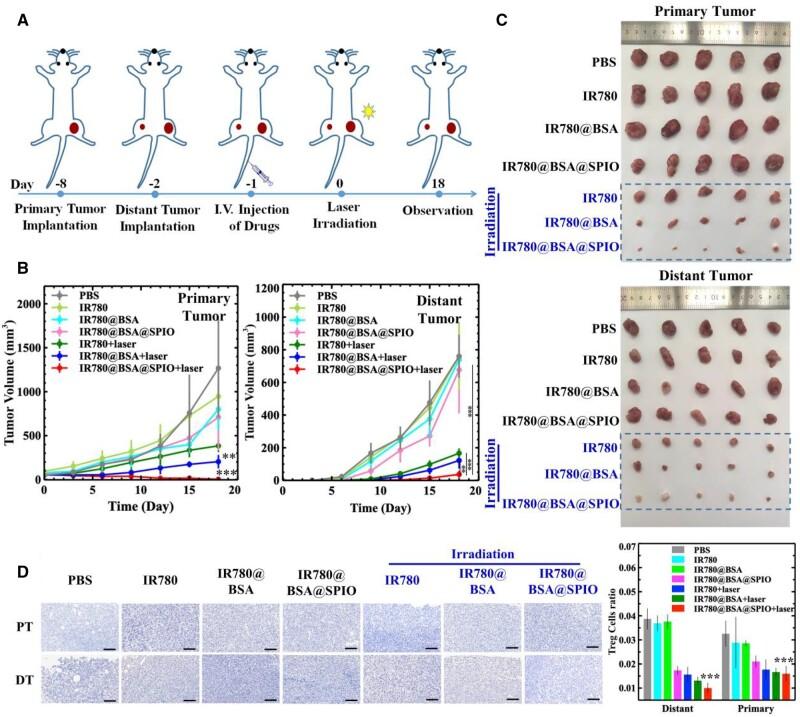
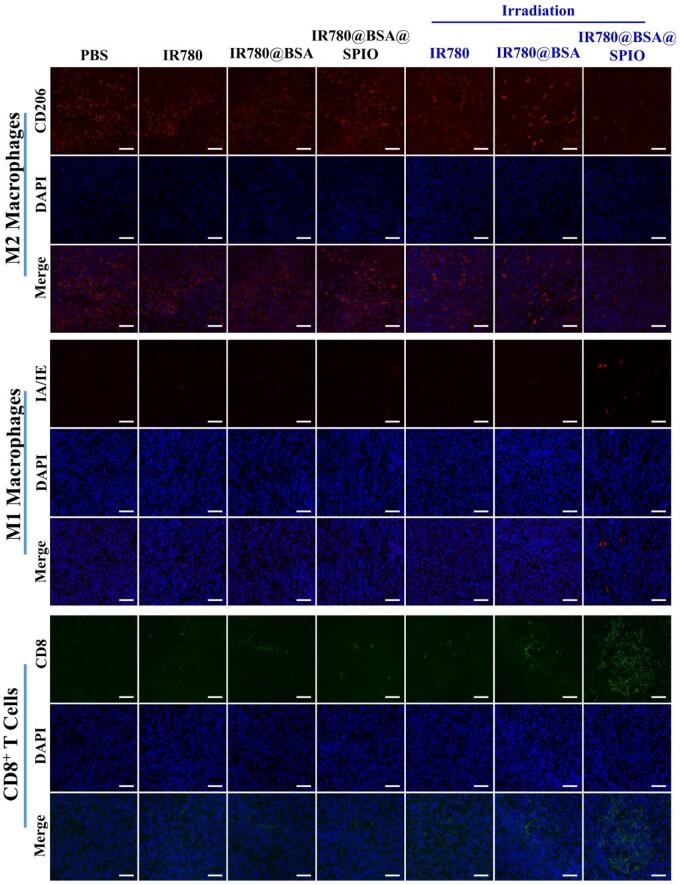
Triple-negative breast cancer is a highly aggressive and metastatic tumor; diagnosing it in the early stages is still difficult, and the prognosis for conventional radio-chemotherapy and immunotreatment is not promising due to cancer's immunosuppressive microenvironment. The utilization of protein-based nanosystem has proven to be effective in delivering agents with limited adverse effects, yet the combination of diagnosis and treatment remains a difficult challenge. This research took advantage of natural albumin and organic molecules to construct a self-assemble core-shell nanostructure combining with superparamagnetic iron oxide nanocrystals and heptamethine cyanine dye IR780 through non-covalent interactions. This nanocomposite successfully decreased the transverse relaxation time of the magnetic resonance hydrogen nucleus, resulting in outstanding imaging, as well as emitting near-infrared II fluorescence, thereby the resulting dual-modality imaging tool was applied to improve diagnostic competency. It is noteworthy that the nanocomposites exhibited impressive enzyme-like catalytic and photothermal capabilities, resulting in a successful activation of the immune system to efficiently suppress distant metastatic lesions . Consequently, this nano-drug-based therapy could be an advantageous asset in reinforcing the immune system and hindering the growth and reappearance of the immune-cold breast cancer.
三阴性乳腺癌是一种侵袭性很强且具有转移性的肿瘤;早期诊断仍很困难,并且由于癌症的免疫抑制微环境,传统放化疗和免疫治疗的预后并不乐观。基于蛋白质的纳米系统已被证明在递送药物方面有效且副作用有限,但诊断与治疗的结合仍然是一项艰巨的挑战。本研究利用天然白蛋白和有机分子,通过非共价相互作用构建了一种与超顺磁性氧化铁纳米晶体和七甲川花菁染料IR780相结合的自组装核壳纳米结构。这种纳米复合材料成功缩短了磁共振氢核的横向弛豫时间,实现了出色的成像效果,同时还能发射近红外II荧光,从而将所得的双模态成像工具用于提高诊断能力。值得注意的是,该纳米复合材料表现出令人印象深刻的类酶催化和光热能力,成功激活免疫系统以有效抑制远处转移病灶。因此,这种基于纳米药物的疗法在增强免疫系统以及抑制免疫冷型乳腺癌的生长和复发方面可能是一项优势资产。

 Zotero 插件