Sodnom-Ish Buyanbileg, Eo Mi Young, Kim Myung Joo, Kim Soung Min
Department of Oral and Maxillofacial Surgery, Dental Research Institute, School of Dentistry, Seoul National University, Seoul, Korea.
Department of Prosthodontics, Dental Research Institute, School of Dentistry, Seoul National University, Seoul, Korea.
Maxillofac Plast Reconstr Surg. 2023 Oct 6;45(1):35. doi: 10.1186/s40902-023-00401-w.
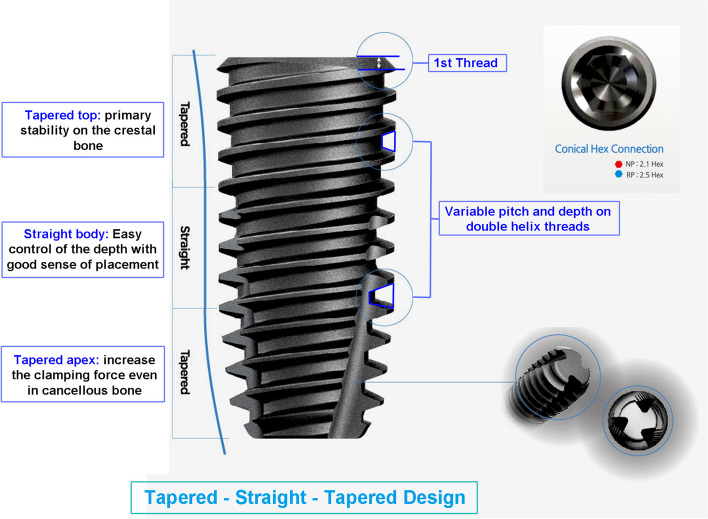
The 10-year survival rate of dental implants in healthy subjects is 90-95%. While in healthy individuals, dental implants have become commonplace to solve problems of edentulism, whether dental implant treatment is optimal in patients with systemic disease remains unclear. The purpose of this study is to investigate the clinical outcomes of tapered, sand-blasted, and acid-etched internal submerged dental implants installed in medically compromised patients in our maxillofacial surgical unit.
A total of 1019 Luna® dental implants were placed in 333 patients at the Department of Oral and Maxillofacial Surgery, Seoul National University Dental Hospital. Kaplan-Meier survival estimates after 10 years of follow-up were computed for healthy vs. medically compromised patients.
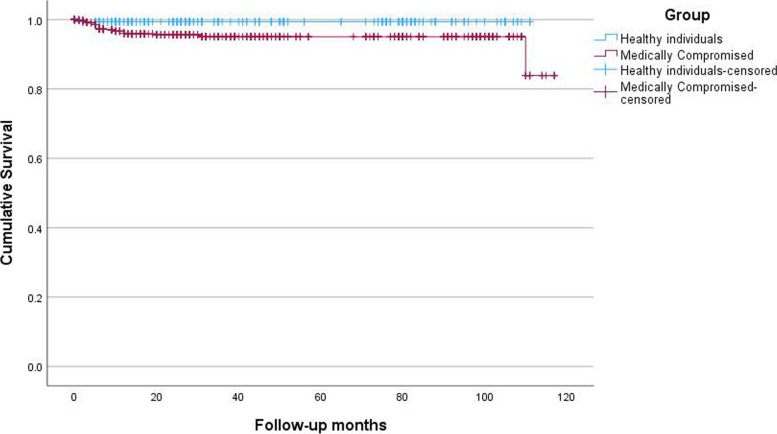
The 10-year follow-up survival rate of 1019 Luna® dental implants in the Korean maxillofacial surgical unit was 97.0% with a mean follow-up of 41.13 ± 35.13 months (0-120 months). The survival rate was 97.0%, in which 31 implants were failed during the follow-up. Cumulative 10-year implant survival rates were 99.4% in healthy individuals without systemic disease and 95.9% in patients with systemic disease.
Comparable success and survival rates were achieved with those of implants in healthy patients. Preoperative general health assessments including laboratory test results and checking the previous medication records are essential in diagnosing any unrecognized conditions for improved implant success rates in medically compromised patients.
健康受试者中牙种植体的10年生存率为90%-95%。在健康个体中,牙种植体已成为解决无牙问题的常见方法,但对于患有全身性疾病的患者,牙种植体治疗是否最佳仍不清楚。本研究的目的是调查在我们颌面外科病房为患有医学疾病的患者植入的锥形、喷砂和酸蚀内部潜入式牙种植体的临床结果。
首尔国立大学牙医院口腔颌面外科为333例患者共植入1019颗Luna®牙种植体。计算健康患者与患有医学疾病患者随访10年后的Kaplan-Meier生存率估计值。
韩国颌面外科病房1019颗Luna®牙种植体的10年随访生存率为97.0%,平均随访时间为41.13±35.13个月(0-120个月)。生存率为97.0%,其中31颗种植体在随访期间失败。无全身性疾病的健康个体的10年种植体累积生存率为99.4%,患有全身性疾病的患者为95.9%。
与健康患者的种植体相比,取得了相当的成功率和生存率。术前进行包括实验室检查结果和检查既往用药记录在内的一般健康评估对于诊断任何未被识别的情况至关重要,以提高患有医学疾病患者的种植成功率。