The Breast Cancer Now Toby Robins Research Centre, The Institute of Cancer Research, London, United Kingdom.
Translational Research Department, Institut Curie, Paris, France.
Cancer Res. 2024 Jan 2;84(1):17-25. doi: 10.1158/0008-5472.CAN-23-0650.
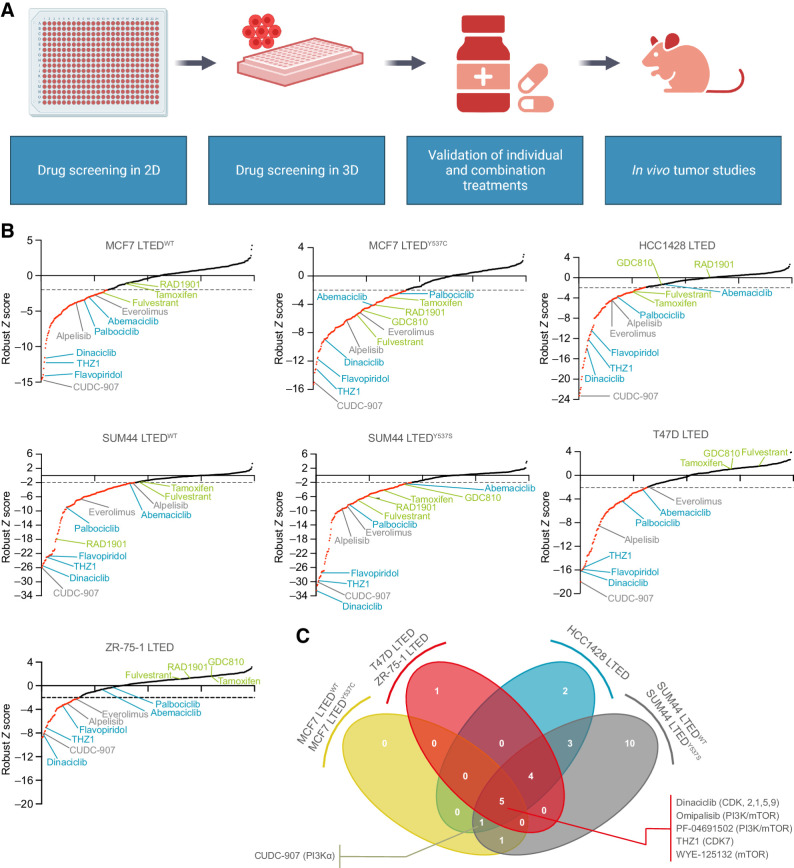
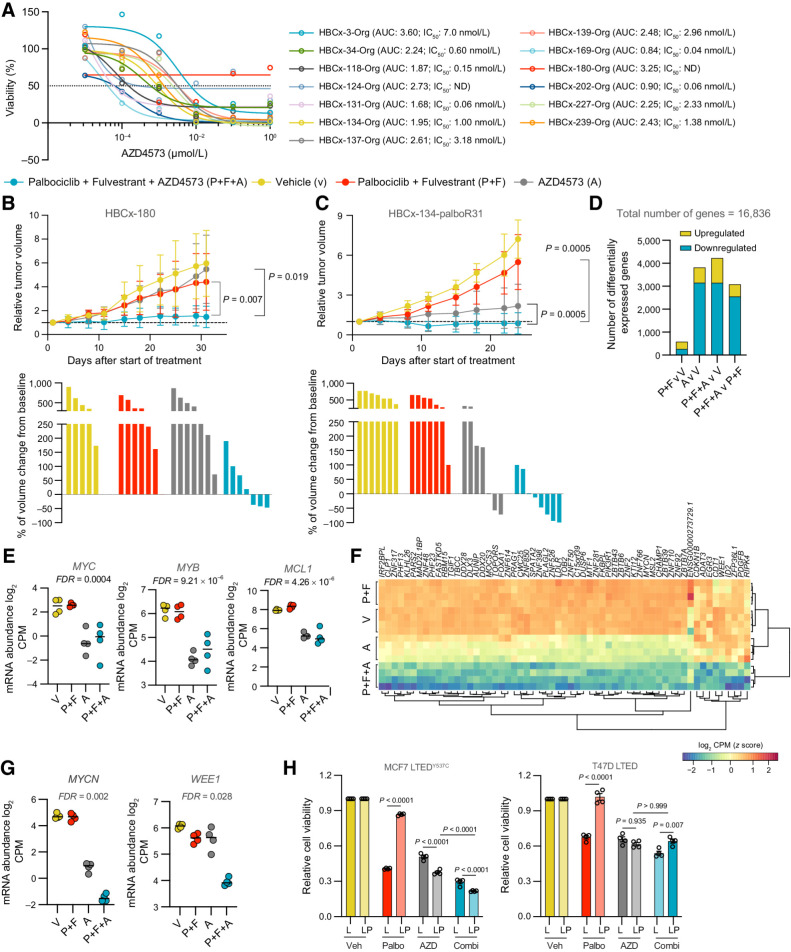
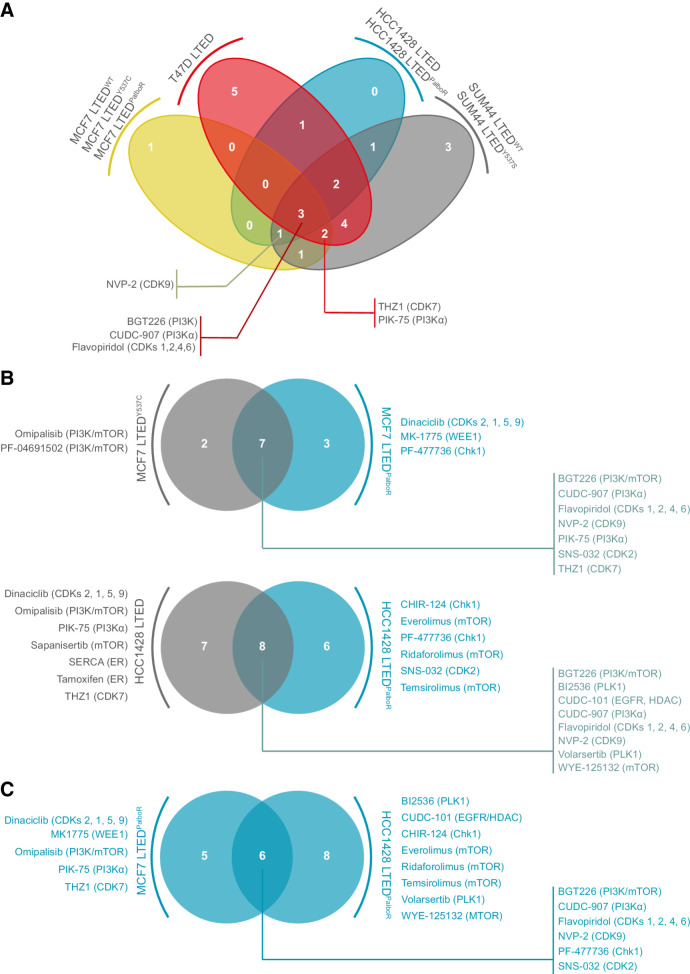
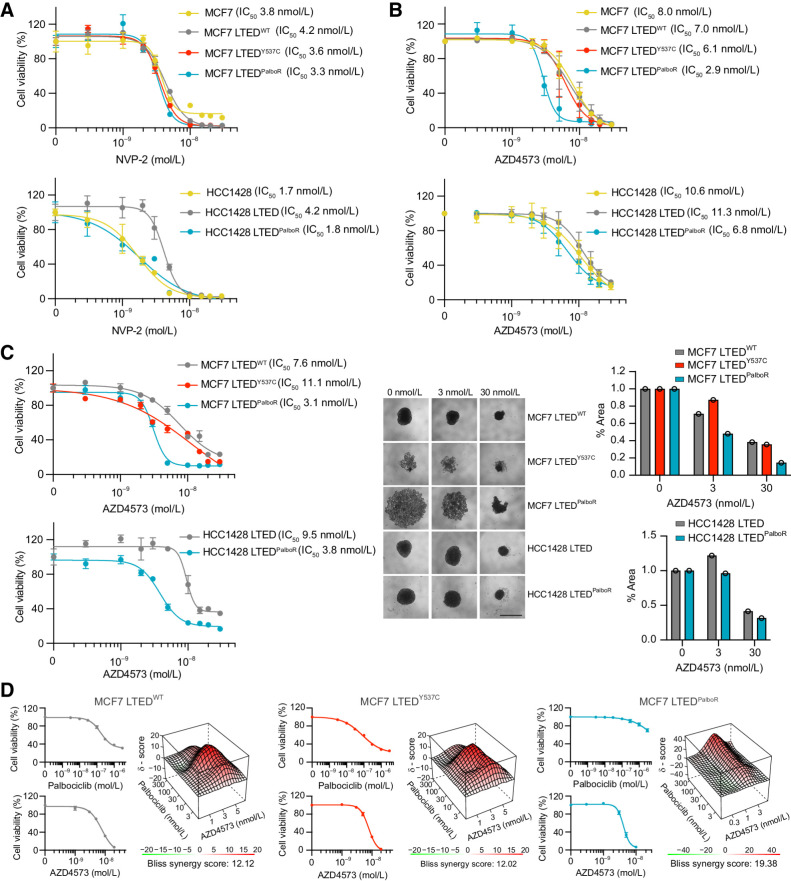
The combination of endocrine therapy and CDK4/6 inhibitors such as palbociclib is an effective and well-tolerated treatment for estrogen receptor-positive (ER+) breast cancer, yet many patients relapse with therapy-resistant disease. Determining the mechanisms underlying endocrine therapy resistance is limited by the lack of ability to fully recapitulate inter- and intratumor heterogeneity in vitro and of availability of tumor samples from women with disease progression or relapse. In this study, multiple cell line models of resistant disease were used for both two-dimensional (2D)- and three-dimensional (3D)-based inhibitor screening. The screens confirmed the previously reported role of pro-proliferative pathways, such as PI3K-AKT-mTOR, in endocrine therapy resistance and additionally identified the transcription-associated cyclin-dependent kinase CDK9 as a common hit in ER+ cell lines and patient-derived organoids modeling endocrine therapy-resistant disease in both the palbociclib-sensitive and palbociclib-resistant settings. The CDK9 inhibitor, AZD4573, currently in clinical trials for hematologic malignancies, acted synergistically with palbociclib in these ER+in vitro 2D and 3D models. In addition, in two independent endocrine- and palbociclib-resistance patient-derived xenografts, treatment with AZD4573 in combination with palbociclib and fulvestrant resulted in tumor regression. Tumor transcriptional profiling identified a set of transcriptional and cell-cycle regulators differentially downregulated only in combination-treated tumors. Together, these findings identify a clinically tractable combination strategy for overcoming resistance to endocrine therapy and CDK4/6 inhibitors in breast cancer and provide insight into the potential mechanism of drug efficacy in targeting treatment-resistant disease.
Targeting transcription-associated CDK9 synergizes with CDK4/6 inhibitor to drive tumor regression in multiple models of endocrine- and palbociclib-resistant ER+ breast cancer, which could address the challenge of overcoming resistance in patients.
内分泌治疗与 CDK4/6 抑制剂(如帕博西利)联合治疗雌激素受体阳性(ER+)乳腺癌具有疗效好、耐受性好的特点,但许多患者在治疗后仍会出现耐药性疾病复发。由于缺乏在体外充分重现肿瘤内和肿瘤间异质性的能力,以及无法获得疾病进展或复发女性的肿瘤样本,因此,确定内分泌治疗耐药的机制受到了限制。在这项研究中,使用多种耐药性疾病的细胞系模型进行了二维(2D)和三维(3D)基础抑制剂筛选。该筛选证实了先前报道的促增殖途径(如 PI3K-AKT-mTOR)在内分泌治疗耐药中的作用,并额外发现转录相关周期蛋白依赖性激酶 CDK9 是 ER+细胞系和模拟内分泌治疗耐药疾病的患者来源类器官的常见靶点,这些耐药模型既包括对帕博西利敏感的,也包括对帕博西利耐药的。CDK9 抑制剂 AZD4573 目前正在血液恶性肿瘤的临床试验中,它在这些 ER+体外 2D 和 3D 模型中与帕博西利联合作用具有协同作用。此外,在两个独立的内分泌和帕博西利耐药患者来源异种移植模型中,AZD4573 联合帕博西利和氟维司群治疗导致肿瘤消退。肿瘤转录谱分析确定了一组转录和细胞周期调节剂,仅在联合治疗的肿瘤中下调。总之,这些发现确定了一种临床可行的联合策略,用于克服乳腺癌对内分泌治疗和 CDK4/6 抑制剂的耐药性,并深入了解针对耐药性疾病的药物疗效的潜在机制。
靶向转录相关的 CDK9 与 CDK4/6 抑制剂协同作用,可驱动多种内分泌和帕博西利耐药的 ER+乳腺癌模型中的肿瘤消退,这可能解决患者耐药性克服的挑战。