Department of Urology, Sun Yat-sen University First Affiliated Hospital, Guangzhou, Guangdong, China.
Department of Urology, Xiangya Hospital Central South University, Changsha, Hunan, China.
J Immunother Cancer. 2023 Oct;11(10). doi: 10.1136/jitc-2023-007230.
Immune checkpoint inhibitor (ICI) therapy improves the survival of patients with advanced bladder cancer (BLCA); however, its overall effectiveness is limited, and many patients still develop immunotherapy resistance. The leucine-rich repeat and fibronectin type-III domain-containing protein (LRFN) family has previously been implicated in regulating brain dysfunction; however, the mechanisms underlying the effect of LRFN2 on the tumor microenvironment (TME) and immunotherapy remain unclear.
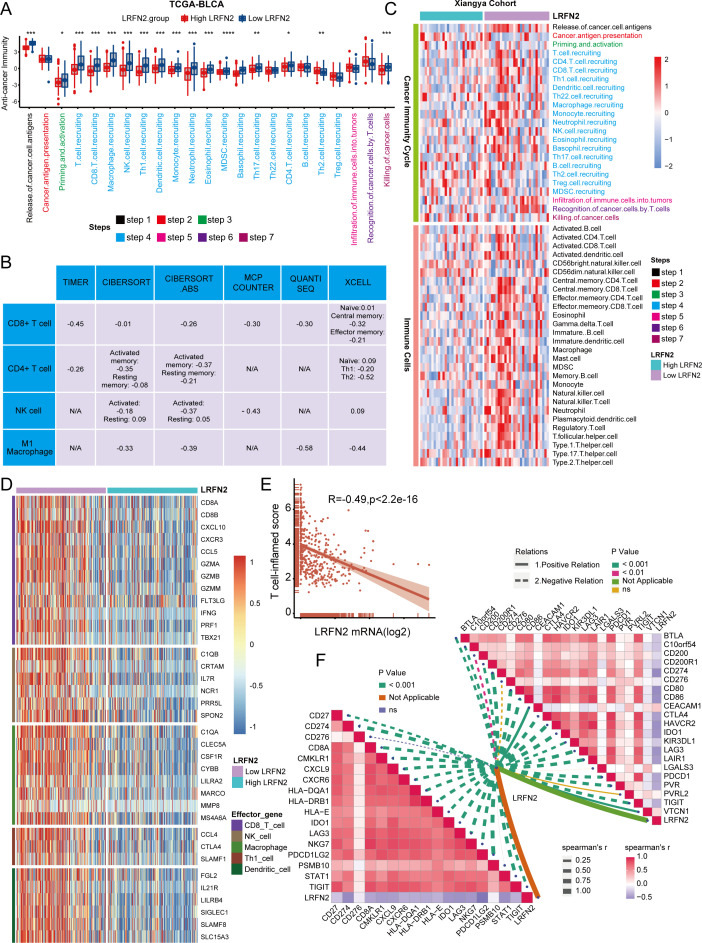
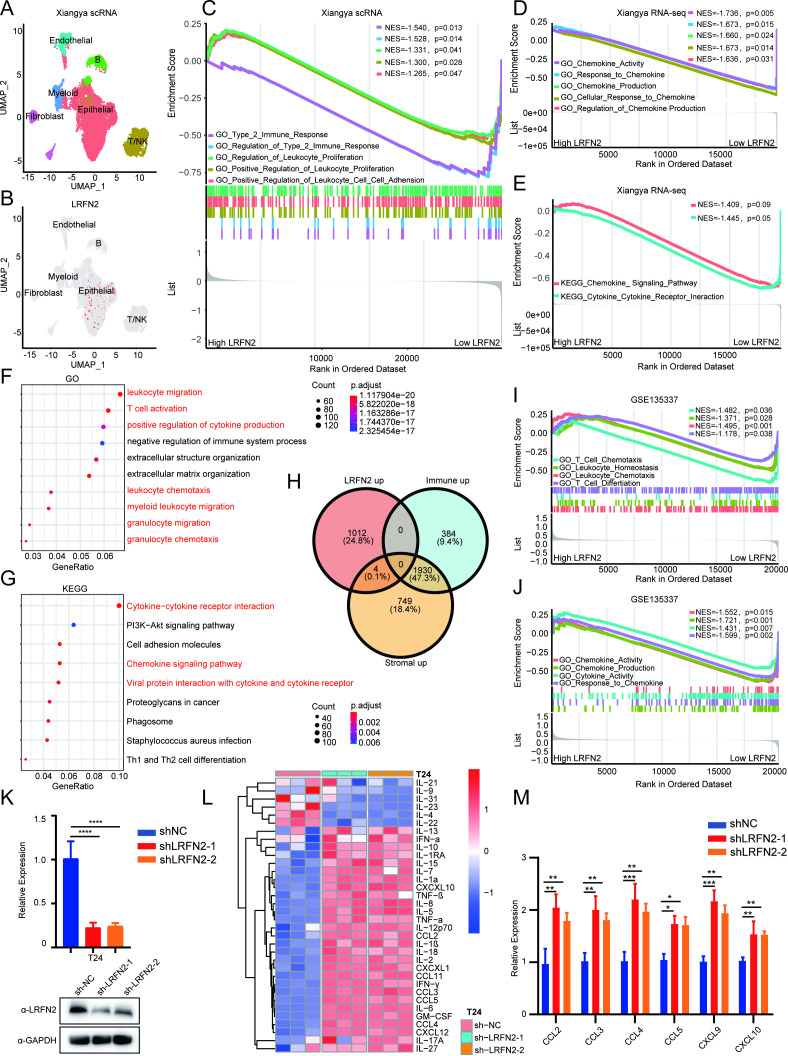
Here we combined bulk RNA sequencing, single-cell RNA sequencing, ProcartaPlex multiple immunoassays, functional experiments, and TissueFAXS panoramic tissue quantification assays to demonstrate that LRFN2 shapes a non-inflammatory TME in BLCA.
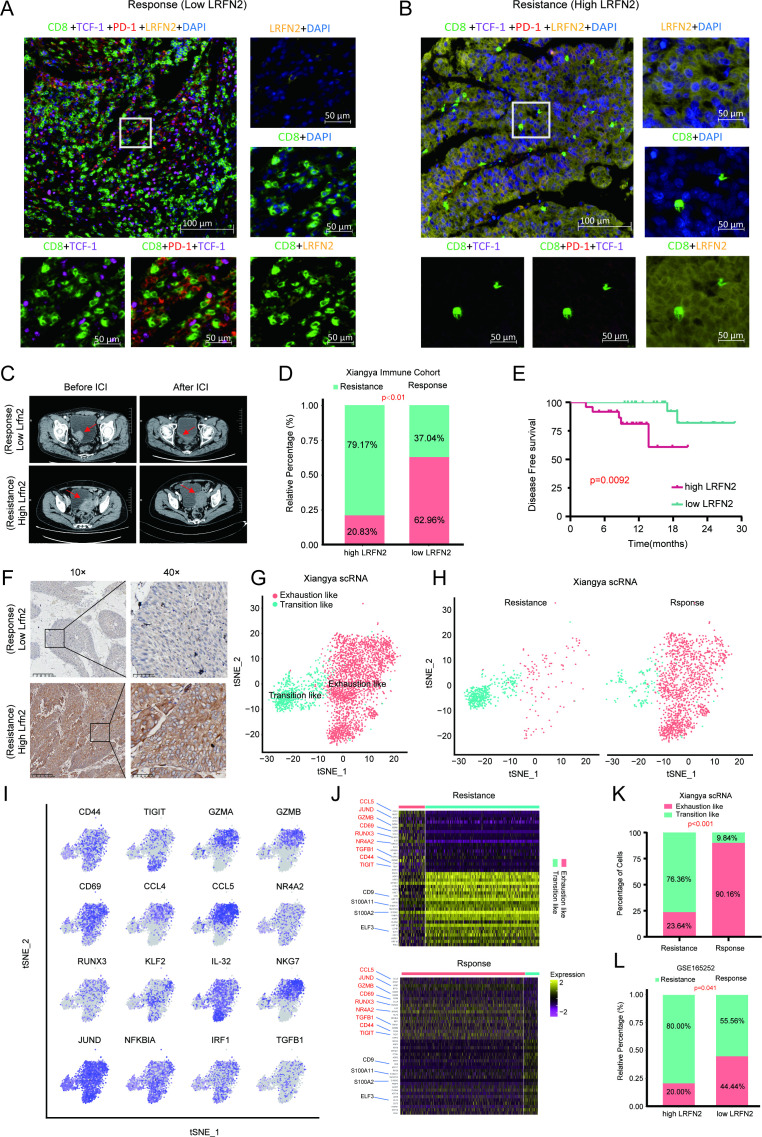
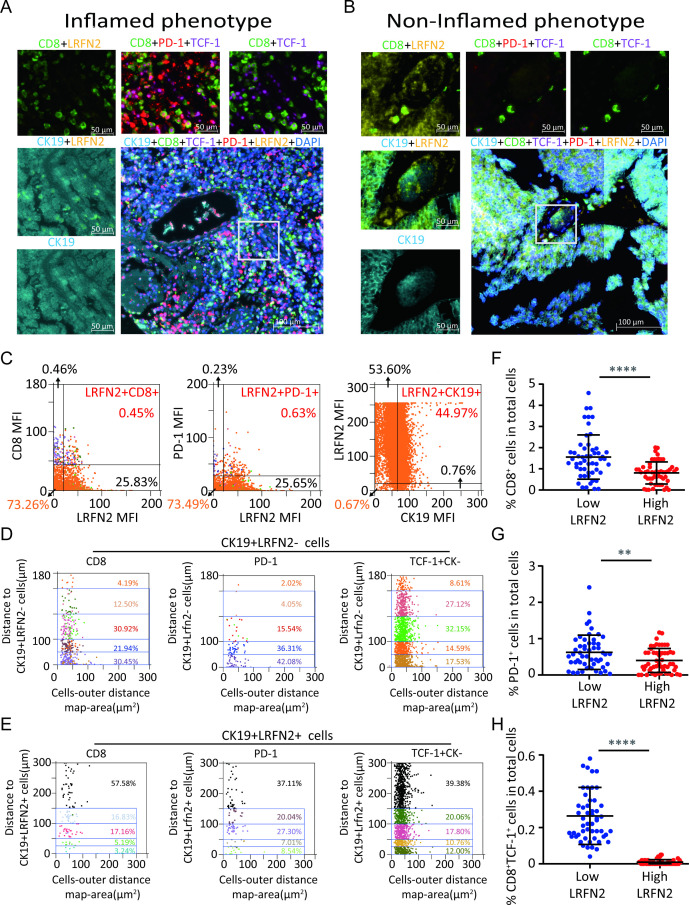
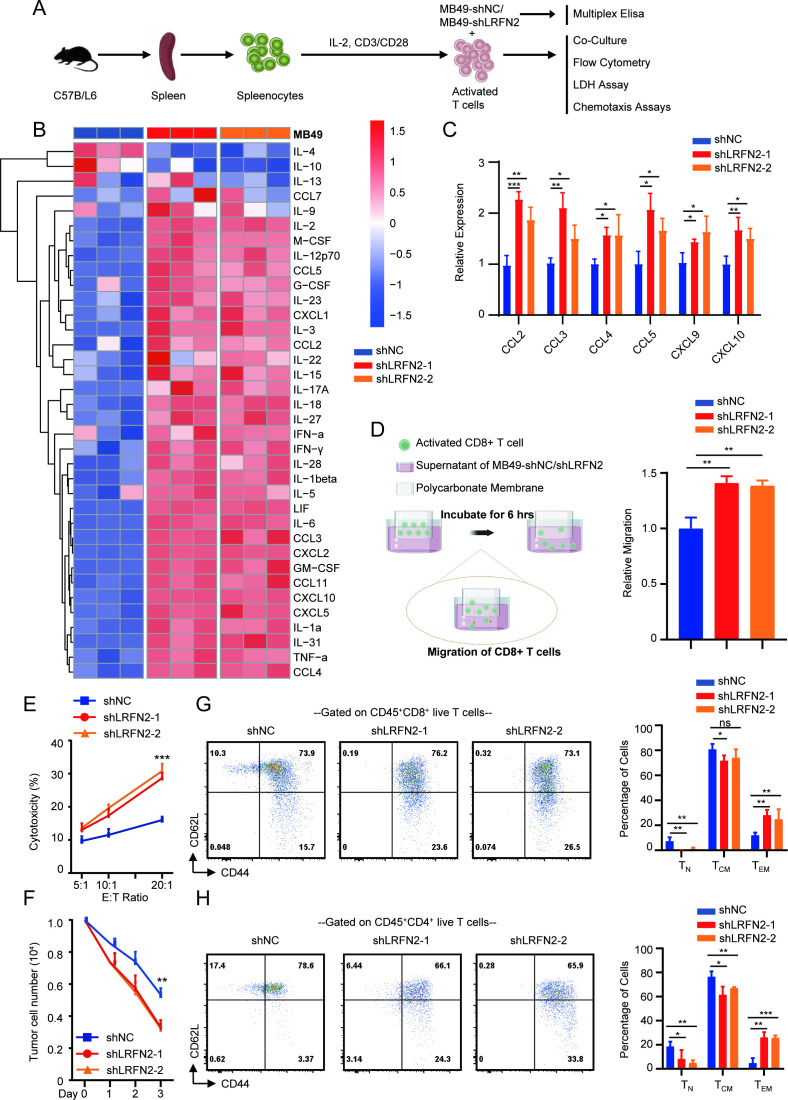
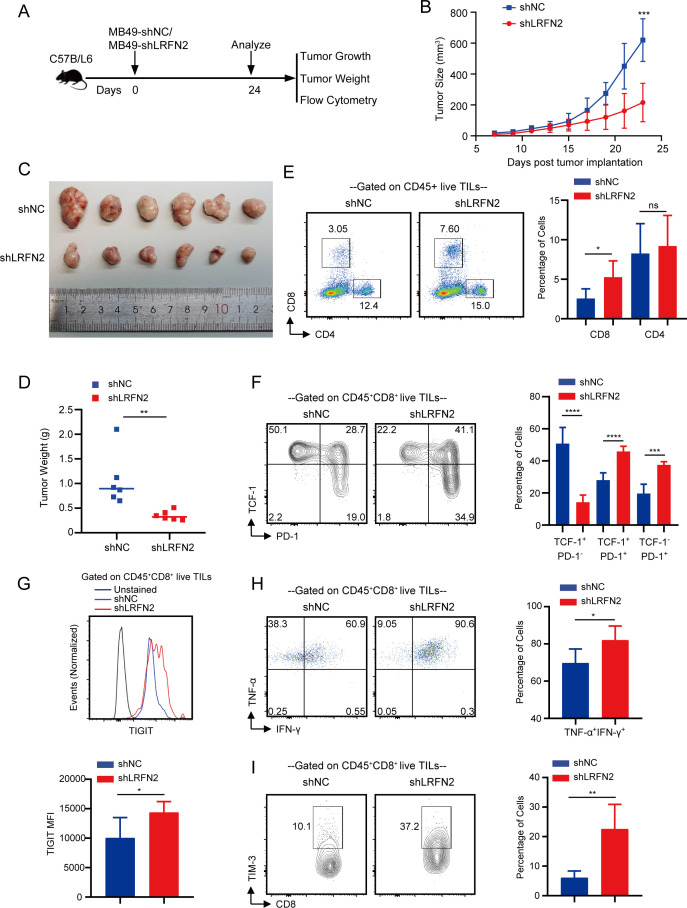
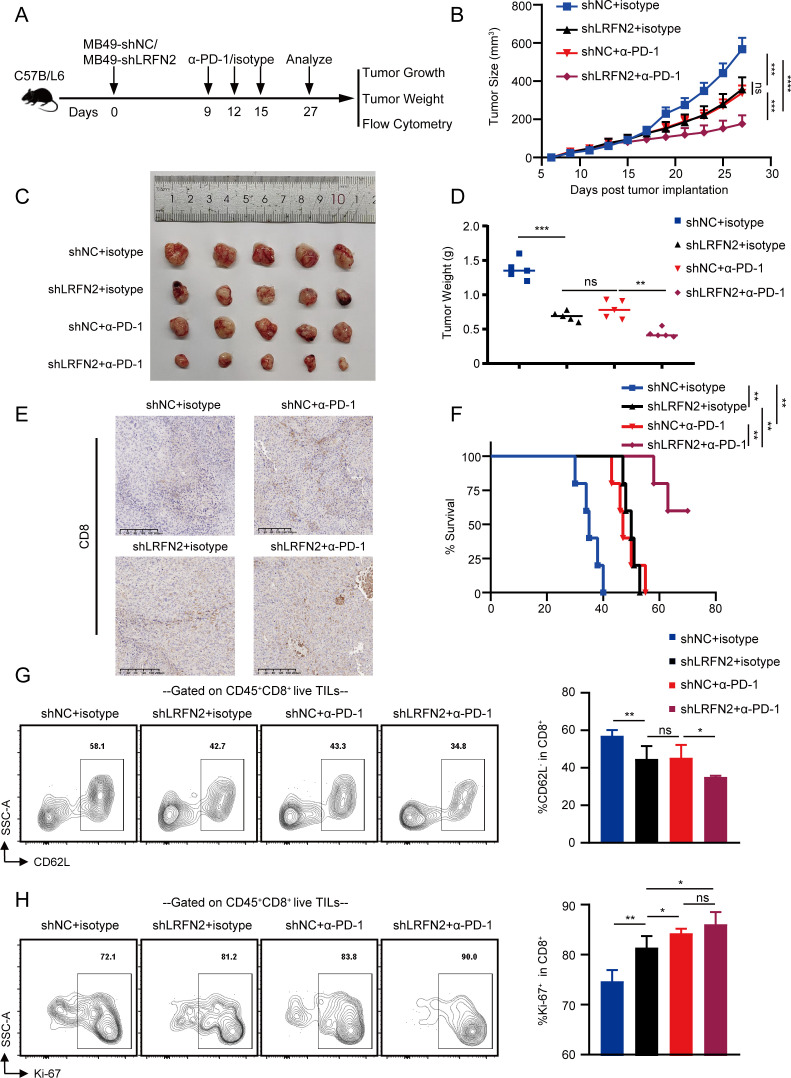
First, comprehensive multiomics analysis identified LRFN2 as a novel immunosuppressive target specific to BLCA. We found that tumor-intrinsic LRFN2 inhibited the recruitment and functional transition of CD8 T cells by reducing the secretion of pro-inflammatory cytokines and chemokines, and this mechanism was verified in vitro and in vivo. LRFN2 restrained antitumor immunity by inhibiting the infiltration, proliferation, and differentiation of CD8 T cells in vitro. Furthermore, a spatial exclusivity relationship was observed between LRFN2 tumor cells and CD8 T cells and cell markers programmed cell death-1 (PD-1) and T cell factor 1 (TCF-1). Preclinically, LRFN2 knockdown significantly enhanced the efficacy of ICI therapy. Clinically, LRFN2 can predict immunotherapy responses in real-world and public immunotherapy cohorts. Our results reveal a new role for LRFN2 in tumor immune evasion by regulating chemokine secretion and inhibiting CD8 T-cell recruitment and functional transition.
Thus, LRFN2 represents a new target that can be combined with ICIs to provide a potential treatment option for BLCA.
免疫检查点抑制剂(ICI)治疗可改善晚期膀胱癌(BLCA)患者的生存;然而,其整体效果有限,许多患者仍会产生免疫治疗耐药性。富含亮氨酸重复和纤维连接蛋白 III 型结构域蛋白(LRFN)家族先前被认为与调节大脑功能障碍有关;然而,LRFN2 对肿瘤微环境(TME)和免疫治疗的影响的机制尚不清楚。
在这里,我们结合了批量 RNA 测序、单细胞 RNA 测序、ProcartaPlex 多重免疫测定、功能实验和 TissueFAXS 全景组织定量分析,证明了 LRFN2 可在 BLCA 中塑造一个非炎症性的 TME。
首先,综合多组学分析确定 LRFN2 是 BLCA 中一种新的免疫抑制性靶标。我们发现,肿瘤内在的 LRFN2 通过减少促炎细胞因子和趋化因子的分泌,抑制 CD8 T 细胞的募集和功能转化,这种机制在体外和体内都得到了验证。LRFN2 通过抑制 CD8 T 细胞在体外的浸润、增殖和分化来抑制抗肿瘤免疫。此外,还观察到 LRFN2 肿瘤细胞与 CD8 T 细胞和细胞标志物程序性细胞死亡蛋白-1(PD-1)和 T 细胞因子 1(TCF-1)之间存在空间排他性关系。临床前研究表明,LRFN2 敲低显著增强了 ICI 治疗的疗效。临床上,LRFN2 可以预测真实世界和公共免疫治疗队列中的免疫治疗反应。我们的研究结果揭示了 LRFN2 通过调节趋化因子分泌和抑制 CD8 T 细胞募集和功能转化来调节肿瘤免疫逃逸的新作用。
因此,LRFN2 代表了一个新的靶点,可以与 ICI 联合使用,为 BLCA 提供一种潜在的治疗选择。