Mutegoa Eric, Sahini Mtabazi G
Department of Chemistry, College of Natural and Mathematical Sciences (CNMS), The University of Dodoma, P.O. Box 338, Dodoma, Tanzania.
Heliyon. 2023 Sep 4;9(9):e19768. doi: 10.1016/j.heliyon.2023.e19768. eCollection 2023 Sep.
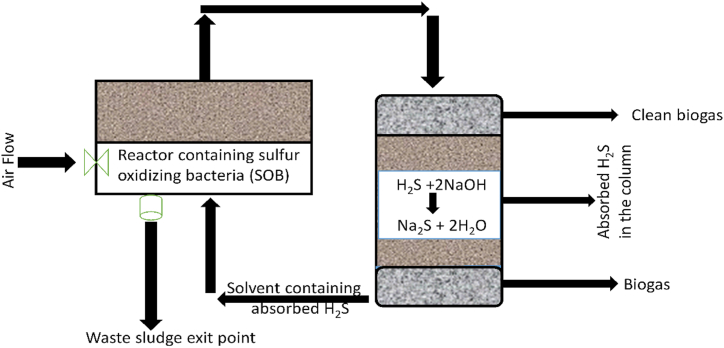
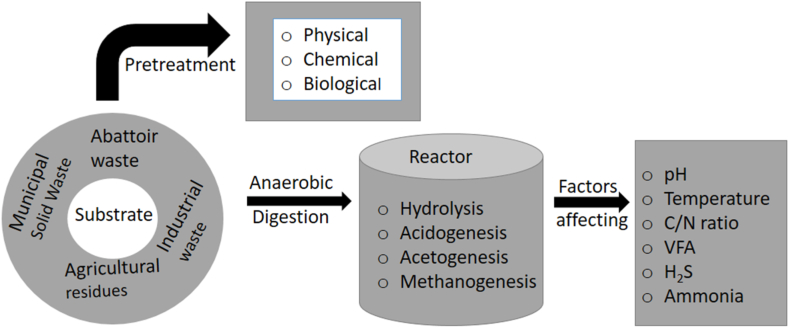
Anaerobic digestion (AD) is the primary technology for energy production from wet biomass under a limited oxygen supply. Various wastes rich in organic content have been renowned for enhancing the process of biogas production. However, several other intermediate unwanted products such as hydrogen sulfide, ammonia, carbon dioxide, siloxanes and halogens have been generated during the process, which tends to lower the quality and quantity of the harvested biogas. The removal of hydrogen sulfide from wastewater, a potential substrate for anaerobic digestion, using various technologies is covered in this study. It is recommended that microaeration would increase the higher removal efficiency of hydrogen sulfide based on a number of benefits for the specific method. The process is primarily accomplished by dosing smaller amounts of oxygen in the digester, which increases the system's oxidizing capacity by rendering the sulfate reducing bacteria responsible for converting sulfate ions to hydrogen sulfide inactive. This paper reviews physicochemical and biological methods that have been in place to eliminate the effects of hydrogen sulfide from wastewater treated anaerobically and future direction to remove hydrogen sulfide from biogas produced.
厌氧消化(AD)是在有限氧气供应下从湿生物质生产能源的主要技术。各种富含有机成分的废物因能促进沼气生产过程而闻名。然而,在此过程中会产生其他几种不需要的中间产物,如硫化氢、氨、二氧化碳、硅氧烷和卤素,这往往会降低所收获沼气的质量和产量。本研究涵盖了使用各种技术从废水(厌氧消化的潜在底物)中去除硫化氢的方法。基于该特定方法的诸多益处,建议微曝气可提高硫化氢的去除效率。该过程主要通过向消化池中加入少量氧气来实现,这通过使负责将硫酸根离子转化为硫化氢的硫酸盐还原菌失活,从而提高系统的氧化能力。本文综述了已用于消除厌氧处理废水中硫化氢影响的物理化学和生物方法,以及从所产生的沼气中去除硫化氢的未来方向。