• 文献检索
  • 文档翻译
  • 深度研究
  • 学术资讯
  • Suppr Zotero 插件Zotero 插件
  • 邀请有礼
  • 套餐&价格
  • 历史记录
应用&插件
Suppr Zotero 插件Zotero 插件浏览器插件Mac 客户端Windows 客户端微信小程序
定价
高级版会员购买积分包购买API积分包
服务
文献检索文档翻译深度研究API 文档MCP 服务
关于我们
关于 Suppr公司介绍联系我们用户协议隐私条款
关注我们

Suppr 超能文献

核心技术专利:CN118964589B侵权必究
粤ICP备2023148730 号-1Suppr @ 2026

文献检索

告别复杂PubMed语法,用中文像聊天一样搜索,搜遍4000万医学文献。AI智能推荐,让科研检索更轻松。

立即免费搜索

文件翻译

保留排版,准确专业,支持PDF/Word/PPT等文件格式,支持 12+语言互译。

免费翻译文档

深度研究

AI帮你快速写综述,25分钟生成高质量综述,智能提取关键信息,辅助科研写作。

立即免费体验

生物质与固体废弃物共热解过程动力学及产物产率的分子机制研究:基于ReaxFF-MD方法的途径

Molecular Mechanism Study of the Kinetics and Product Yields during Copyrolysis of Biomass and Solid Wastes: ReaxFF-MD Method Approach.

作者信息

Xu Jinghui, Zhu Lianyi

机构信息

China Academy of Launch Vehicle Technology, Changzheng Engineering Co., Ltd., Beijing 101111, China.

出版信息

ACS Omega. 2023 Sep 20;8(39):36126-36135. doi: 10.1021/acsomega.3c04325. eCollection 2023 Oct 3.

DOI:10.1021/acsomega.3c04325
PMID:37810673
原文链接:https://pmc.ncbi.nlm.nih.gov/articles/PMC10552490/
Abstract

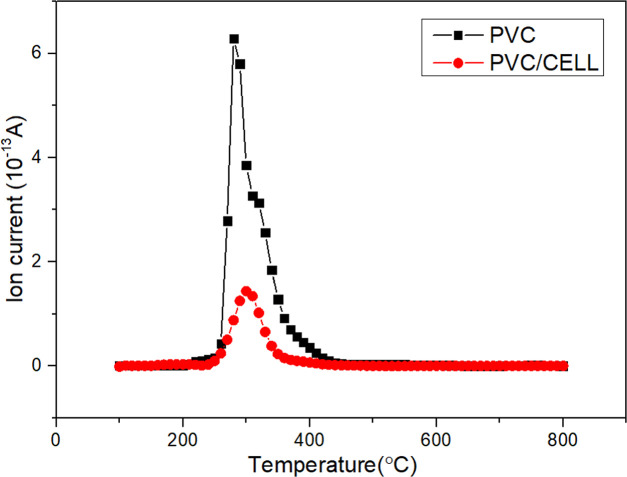
Copyrolysis is a potential method for the collaborative disposal of biomass and plastics. There is an interaction between biomass and plastics during copyrolysis. In this work, a combination of ReaxFF-MD simulation and experimental validation was used to investigate the pyrolysis reaction process of the biomass and plastic, observing the evolution of free radicals at the molecular level and exploring the distribution of pyrolysis products. TG-MS results show that reaction temperature ranges for cellulose and PVC are 296-400 and 267-480 °C, respectively. HCl is the main product of PVC pyrolysis, and mixing with cellulose will reduce the yield of HCl. The ReaxFF method was used to model the pyrolysis of cellulose and PVC. The modeling temperature is much higher than the real reaction temperature, which is attributed to the time scale of picoseconds of ReaxFF-MD modeling. Modeling results show that the yield of HCl of the cellulose/PVC mixture is obviously lower than that of pure PVC. When mixed with cellulose, the HCl release is largely inhibited and more chlorine elements are retained in the pyrolysis hydrocarbon fraction or solid products.

摘要

共热解是生物质与塑料协同处置的一种潜在方法。共热解过程中生物质与塑料之间存在相互作用。在这项工作中,采用ReaxFF-MD模拟与实验验证相结合的方法,研究生物质与塑料的热解反应过程,在分子水平上观察自由基的演变,并探索热解产物的分布。热重-质谱结果表明,纤维素和聚氯乙烯的反应温度范围分别为296-400℃和267-480℃。HCl是聚氯乙烯热解的主要产物,与纤维素混合会降低HCl的产率。采用ReaxFF方法对纤维素和聚氯乙烯的热解进行建模。建模温度远高于实际反应温度,这归因于ReaxFF-MD建模的皮秒时间尺度。建模结果表明,纤维素/聚氯乙烯混合物的HCl产率明显低于纯聚氯乙烯。与纤维素混合时,HCl的释放受到很大抑制,更多的氯元素保留在热解烃馏分或固体产物中。

https://cdn.ncbi.nlm.nih.gov/pmc/blobs/f354/10552490/2514a4559928/ao3c04325_0010.jpg
https://cdn.ncbi.nlm.nih.gov/pmc/blobs/f354/10552490/fbfbec5dad81/ao3c04325_0001.jpg
https://cdn.ncbi.nlm.nih.gov/pmc/blobs/f354/10552490/9972b8045ea7/ao3c04325_0002.jpg
https://cdn.ncbi.nlm.nih.gov/pmc/blobs/f354/10552490/6083377b7da3/ao3c04325_0003.jpg
https://cdn.ncbi.nlm.nih.gov/pmc/blobs/f354/10552490/f81e858ada26/ao3c04325_0004.jpg
https://cdn.ncbi.nlm.nih.gov/pmc/blobs/f354/10552490/381ac30f2773/ao3c04325_0005.jpg
https://cdn.ncbi.nlm.nih.gov/pmc/blobs/f354/10552490/31a31a325737/ao3c04325_0006.jpg
https://cdn.ncbi.nlm.nih.gov/pmc/blobs/f354/10552490/2ae24fefb3c3/ao3c04325_0007.jpg
https://cdn.ncbi.nlm.nih.gov/pmc/blobs/f354/10552490/60efcae3c68d/ao3c04325_0008.jpg
https://cdn.ncbi.nlm.nih.gov/pmc/blobs/f354/10552490/9ce9c9a0e879/ao3c04325_0009.jpg
https://cdn.ncbi.nlm.nih.gov/pmc/blobs/f354/10552490/2514a4559928/ao3c04325_0010.jpg
https://cdn.ncbi.nlm.nih.gov/pmc/blobs/f354/10552490/fbfbec5dad81/ao3c04325_0001.jpg
https://cdn.ncbi.nlm.nih.gov/pmc/blobs/f354/10552490/9972b8045ea7/ao3c04325_0002.jpg
https://cdn.ncbi.nlm.nih.gov/pmc/blobs/f354/10552490/6083377b7da3/ao3c04325_0003.jpg
https://cdn.ncbi.nlm.nih.gov/pmc/blobs/f354/10552490/f81e858ada26/ao3c04325_0004.jpg
https://cdn.ncbi.nlm.nih.gov/pmc/blobs/f354/10552490/381ac30f2773/ao3c04325_0005.jpg
https://cdn.ncbi.nlm.nih.gov/pmc/blobs/f354/10552490/31a31a325737/ao3c04325_0006.jpg
https://cdn.ncbi.nlm.nih.gov/pmc/blobs/f354/10552490/2ae24fefb3c3/ao3c04325_0007.jpg
https://cdn.ncbi.nlm.nih.gov/pmc/blobs/f354/10552490/60efcae3c68d/ao3c04325_0008.jpg
https://cdn.ncbi.nlm.nih.gov/pmc/blobs/f354/10552490/9ce9c9a0e879/ao3c04325_0009.jpg
https://cdn.ncbi.nlm.nih.gov/pmc/blobs/f354/10552490/2514a4559928/ao3c04325_0010.jpg

相似文献

1
Molecular Mechanism Study of the Kinetics and Product Yields during Copyrolysis of Biomass and Solid Wastes: ReaxFF-MD Method Approach.生物质与固体废弃物共热解过程动力学及产物产率的分子机制研究:基于ReaxFF-MD方法的途径
ACS Omega. 2023 Sep 20;8(39):36126-36135. doi: 10.1021/acsomega.3c04325. eCollection 2023 Oct 3.
2
Tertiary recycling of PVC-containing plastic waste by copyrolysis with cattle manure.含聚氯乙烯塑料废料与牛粪共热解进行三级回收利用。
Waste Manag. 2008 Nov;28(11):2415-21. doi: 10.1016/j.wasman.2007.12.010. Epub 2008 Mar 7.
3
Catalytic stepwise pyrolysis for dechlorination and chemical recycling of PVC-containing mixed plastic wastes: Influence of temperature, heating rate, and catalyst.用于含聚氯乙烯混合塑料废物脱氯及化学循环利用的催化分步热解:温度、加热速率及催化剂的影响
Sci Total Environ. 2024 Jan 15;908:168344. doi: 10.1016/j.scitotenv.2023.168344. Epub 2023 Nov 10.
4
Transformation and kinetics of chlorine-containing products during pyrolysis of plastic wastes.塑料废物热解过程中含氯产物的转化与动力学。
Chemosphere. 2021 Dec;284:131348. doi: 10.1016/j.chemosphere.2021.131348. Epub 2021 Jun 28.
5
Copyrolysis of Waste Cartons and Polyolefin Plastics under Microwave Heating and Characterization of the Products.微波加热下废纸箱与聚烯烃塑料的共热解及其产物表征
ACS Omega. 2023 Feb 16;8(8):7331-7343. doi: 10.1021/acsomega.2c05045. eCollection 2023 Feb 28.
6
Co-pyrolysis of biomass and polyvinyl chloride under microwave irradiation: Distribution of chlorine.微波辐射下生物质与聚氯乙烯的共热解:氯的分布
Sci Total Environ. 2022 Feb 1;806(Pt 4):150903. doi: 10.1016/j.scitotenv.2021.150903. Epub 2021 Oct 12.
7
Production of biofuel precursor chemicals from the mixture of cellulose and polyvinylchloride in polar aprotic solvent.在极性非质子溶剂中由纤维素和聚氯乙烯混合物生产生物燃料前体化学品。
Waste Manag. 2018 Aug;78:894-902. doi: 10.1016/j.wasman.2018.07.011. Epub 2018 Jul 9.
8
Synergistic Effect and Chlorine-Release Behaviors During Co-pyrolysis of LLDPE, PP, and PVC.线性低密度聚乙烯、聚丙烯和聚氯乙烯共热解过程中的协同效应及氯释放行为
ACS Omega. 2020 May 15;5(20):11291-11298. doi: 10.1021/acsomega.9b04116. eCollection 2020 May 26.
9
Thermal behavior of vehicle plastic blends contained acrylonitrile-butadiene-styrene (ABS) in pyrolysis using TG-FTIR.采用热重-傅里叶变换红外光谱联用技术研究含丙烯腈-丁二烯-苯乙烯共聚物(ABS)的汽车塑料共混物在热解过程中的热行为。
Waste Manag. 2017 Mar;61:315-326. doi: 10.1016/j.wasman.2017.01.034. Epub 2017 Feb 1.
10
Preparation of carbon nanotubes by catalytic pyrolysis of dechlorinated PVC.通过催化热解脱氯 PVC 制备碳纳米管。
Waste Manag. 2023 Sep 1;169:62-69. doi: 10.1016/j.wasman.2023.06.034. Epub 2023 Jul 4.

引用本文的文献

1
Detailed mechanism study of volatile organic compound decomposition and oxidation removal based on a ReaxFF MD method.基于ReaxFF分子动力学方法的挥发性有机化合物分解与氧化去除详细机理研究
RSC Adv. 2024 Feb 14;14(9):5863-5874. doi: 10.1039/d3ra08122b.

本文引用的文献

1
Direct observation of realistic-temperature fuel combustion mechanisms in atomistic simulations.在原子模拟中对实际温度下的燃料燃烧机制进行直接观测。
Chem Sci. 2016 Aug 1;7(8):5280-5286. doi: 10.1039/c6sc00498a. Epub 2016 May 5.
2
Thermal degradation of PVC: A review.聚氯乙烯的热降解:综述
Waste Manag. 2016 Feb;48:300-314. doi: 10.1016/j.wasman.2015.11.041. Epub 2015 Dec 10.
3
Pyrolysis technologies for municipal solid waste: a review.城市固体废物的热解技术:综述
Waste Manag. 2014 Dec;34(12):2466-86. doi: 10.1016/j.wasman.2014.08.004. Epub 2014 Sep 23.
4
Reaction analysis and visualization of ReaxFF molecular dynamics simulations.ReaxFF分子动力学模拟的反应分析与可视化
J Mol Graph Model. 2014 Sep;53:13-22. doi: 10.1016/j.jmgm.2014.07.002. Epub 2014 Jul 11.
5
Coupled thermal and electromagnetic induced decomposition in the molecular explosive αHMX; a reactive molecular dynamics study.α-HMX 分子爆炸物中热电磁感应耦合分解:反应分子动力学研究。
J Phys Chem A. 2014 Feb 6;118(5):885-95. doi: 10.1021/jp406248m. Epub 2014 Jan 22.
6
ReaxFF molecular dynamics simulations of oxidation of toluene at high temperatures.ReaxFF 分子动力学模拟在高温下氧化甲苯。
J Phys Chem A. 2012 Oct 11;116(40):9811-8. doi: 10.1021/jp304040q. Epub 2012 Oct 3.
7
Distinguishing primary and secondary reactions of cellulose pyrolysis.区分纤维素热解的主反应和次反应。
Bioresour Technol. 2011 Apr;102(8):5265-9. doi: 10.1016/j.biortech.2011.02.018. Epub 2011 Feb 26.