Université Paris Cité, Laboratoire Mémoire, Cerveau & Cognition (LMC2 UR 7536), Institut de Psychologie, 71 Ave Édouard Vaillant, 92100, Boulogne-Billancourt, France.
Sci Rep. 2023 Oct 9;13(1):17013. doi: 10.1038/s41598-023-43823-2.
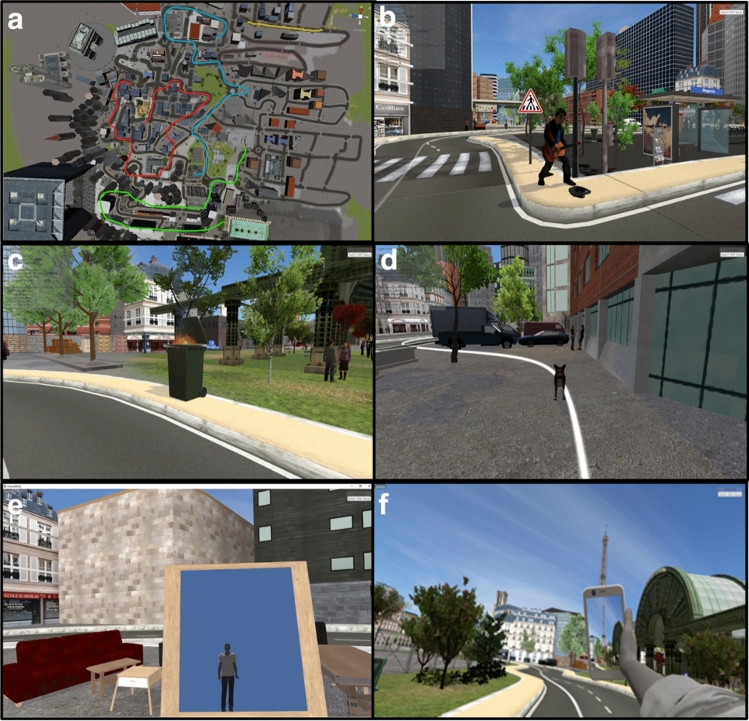
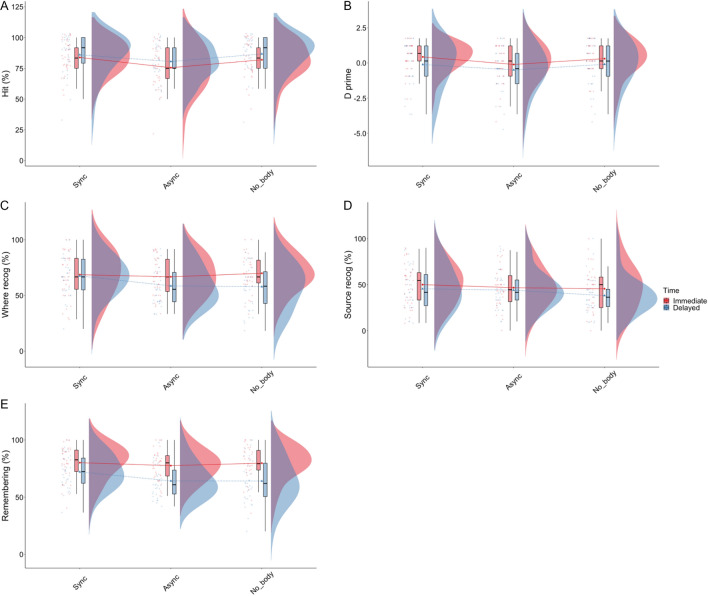
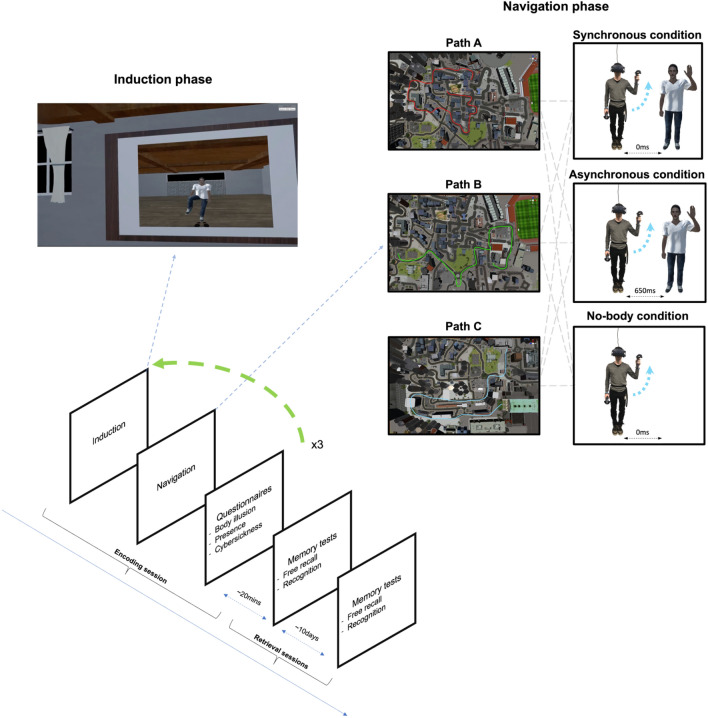
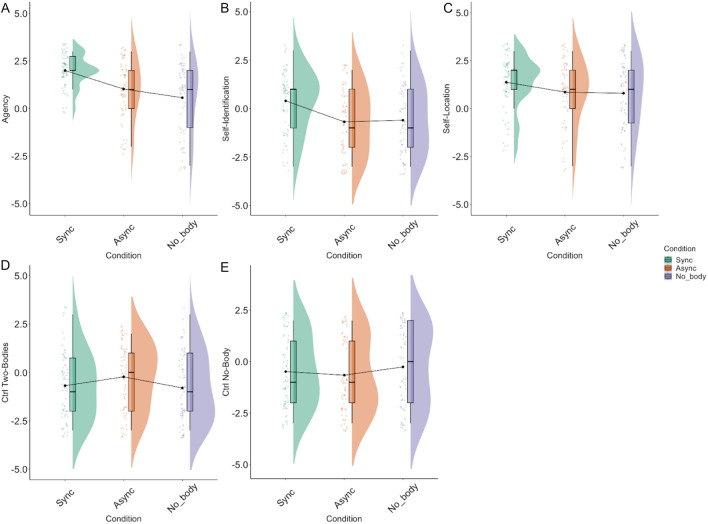
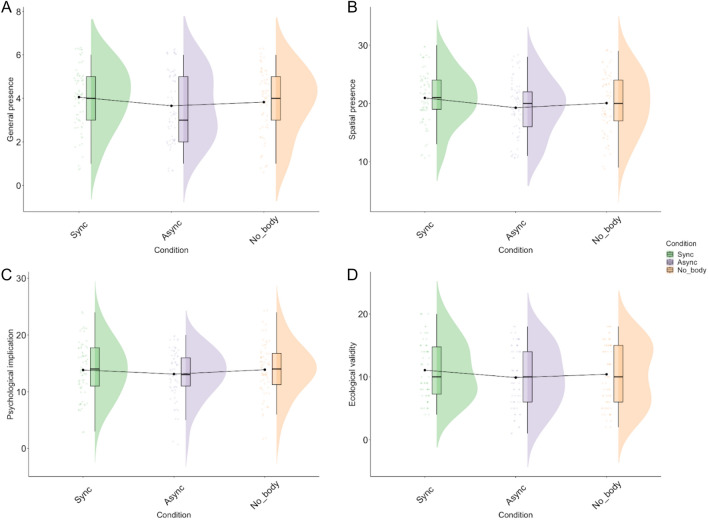
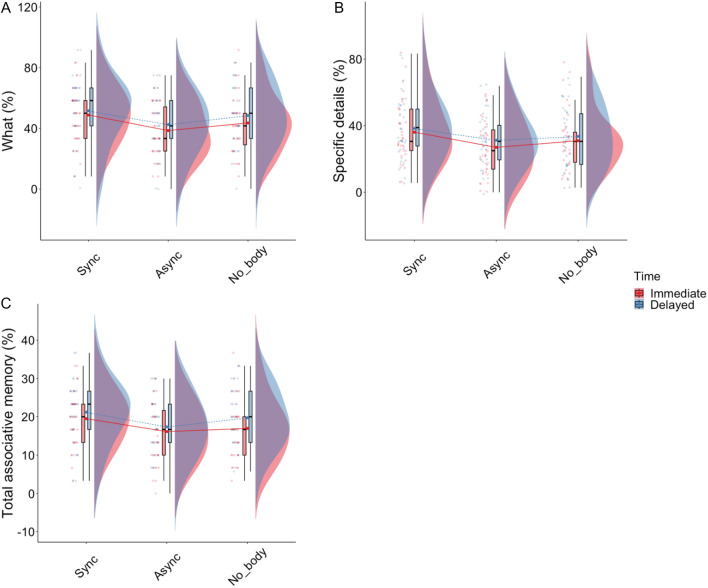
Recent studies suggest that the human body plays a critical role in episodic memory. Still, the precise relationship between bodily self-consciousness (BSC) and memory formation of specific events, especially in real-life contexts, remains a topic of ongoing research. The present study investigated the relationship between BSC and episodic memory (EM) using immersive virtual reality (VR) technology. Participants were immersed in an urban environment with naturalistic events, while their visuomotor feedback was manipulated in three within-subjects conditions: Synchronous, Asynchronous, and No-body. Our results show that asynchronous visuomotor feedback and not seeing one's body, compared to synchronous feedback, decrease the sense of self-identification, self-location and agency, and sense of presence. Moreover, navigating in the Asynchronous condition had a detrimental impact on incidental event memory, perceptual details, contextual association, subjective sense of remembering, and memory consolidation. In contrast, participants in the No-Body condition were only impaired in egocentric spatial memory and the sense of remembering at ten-day delay. We discuss these findings in relation to the role of bodily self-representation in space during event memory encoding. This study sheds light on the complex interplay between BSC, sense of presence, and episodic memory processes, and strengthens the potential of embodiment and VR technology in studying and enhancing human cognition.
最近的研究表明,人体在情景记忆中起着关键作用。然而,身体自我意识(BSC)与特定事件记忆形成之间的确切关系,特别是在现实生活情境中,仍然是一个正在研究的课题。本研究使用沉浸式虚拟现实(VR)技术研究了 BSC 与情景记忆(EM)之间的关系。参与者沉浸在一个具有自然事件的城市环境中,同时在三个被试内条件下对他们的视觉运动反馈进行了操控:同步、异步和无身体。我们的研究结果表明,与同步反馈相比,异步视觉运动反馈和看不到自己的身体会降低自我认同、自我定位和自主性以及存在感。此外,在异步条件下导航会对偶然事件记忆、感知细节、上下文关联、主观记忆感和记忆巩固产生不利影响。相比之下,无身体条件下的参与者仅在十天延迟后在自我中心空间记忆和记忆感方面受到损害。我们根据身体自我表现在事件记忆编码过程中的空间作用讨论了这些发现。这项研究揭示了 BSC、存在感和情景记忆过程之间复杂的相互作用,并增强了体现和 VR 技术在研究和增强人类认知方面的潜力。