Department of Integrative Neurophysiology, Graduate School of Medical Sciences, Kanazawa University, Kanazawa, Ishikawa, 920-8640, Japan.
Laboratory of Molecular Neuroscience, Medical Research Institute, Tokyo Medical and Dental University (TMDU), Tokyo, Japan.
Sci Rep. 2023 Oct 9;13(1):16974. doi: 10.1038/s41598-023-44282-5.
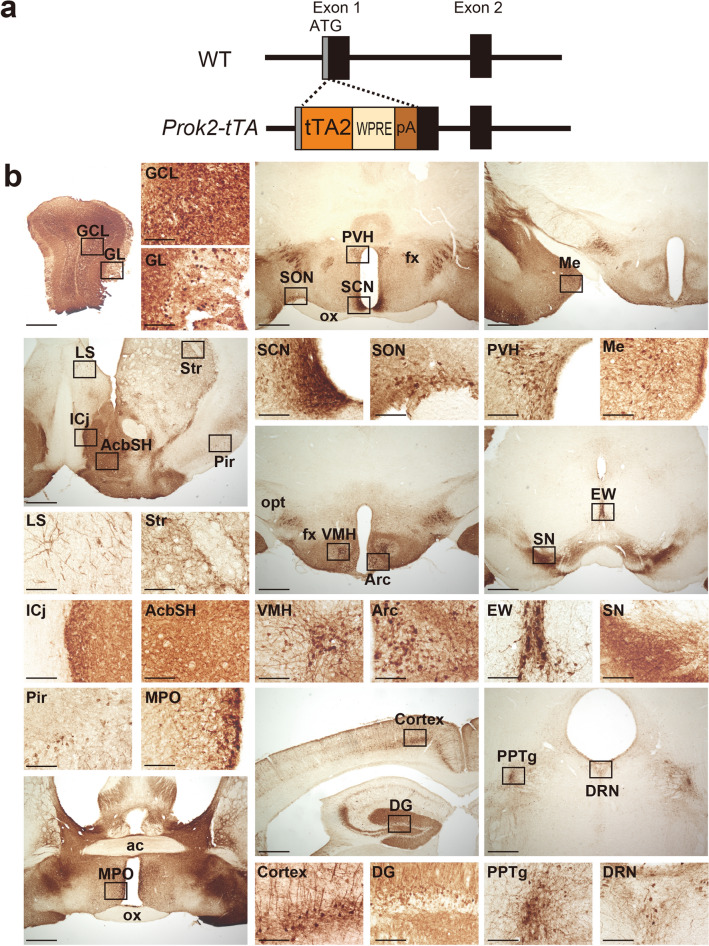
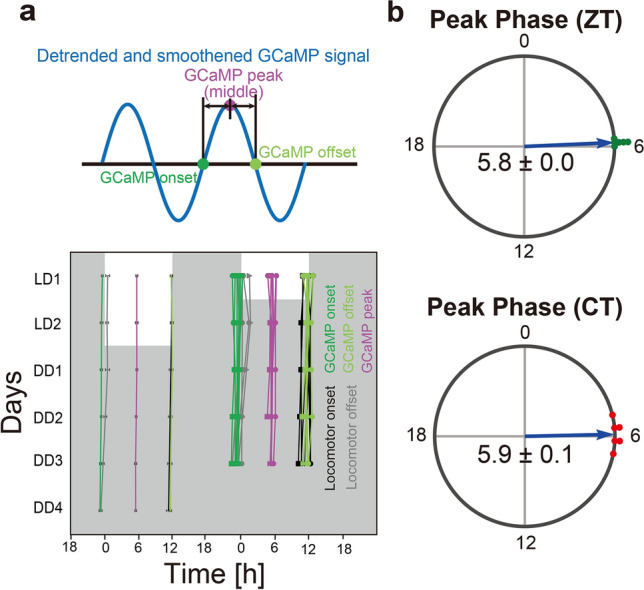
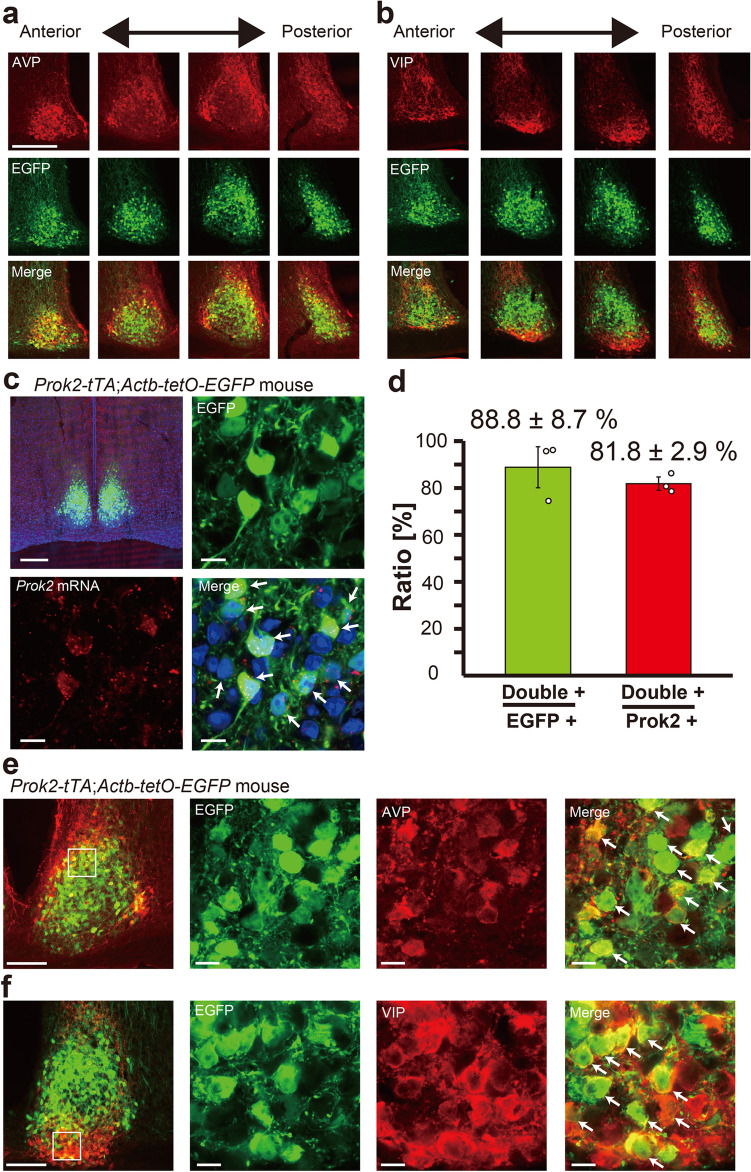
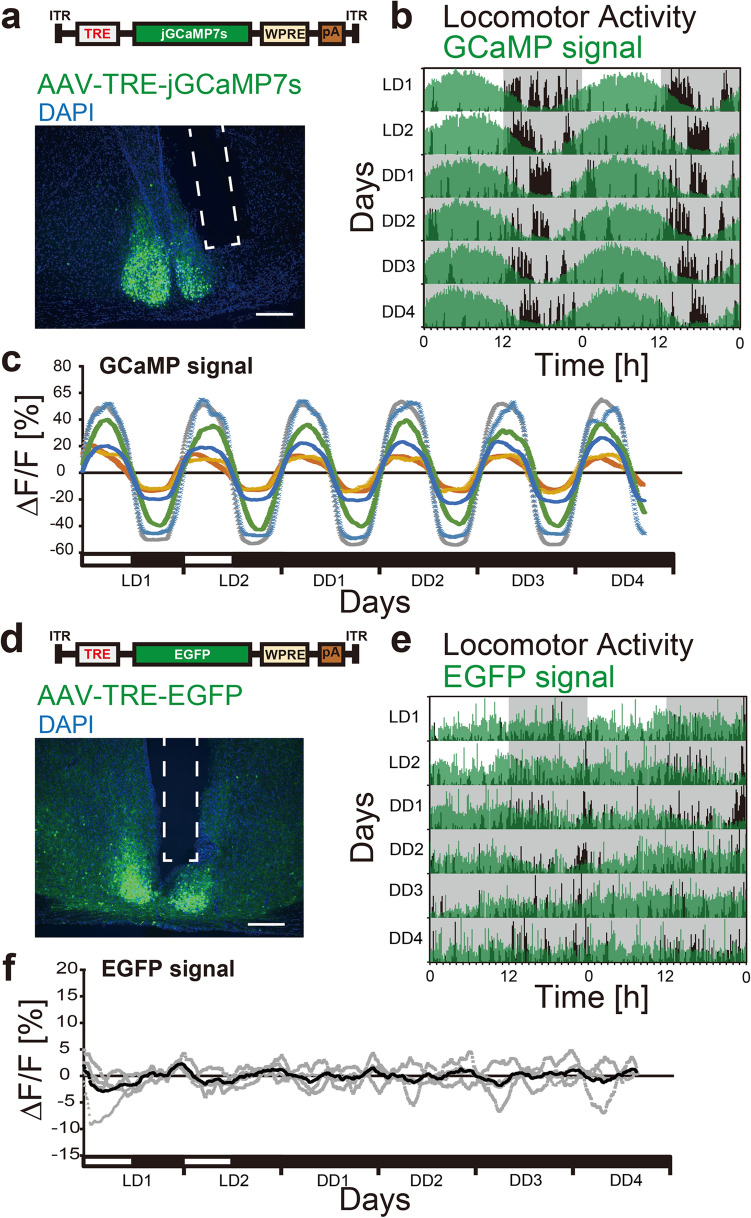
Prokineticin 2 (Prok2) is a small protein expressed in a subpopulation of neurons in the suprachiasmatic nucleus (SCN), the primary circadian pacemaker in mammals. Prok2 has been implicated as a candidate output molecule from the SCN to control multiple circadian rhythms. Genetic manipulation specific to Prok2-producing neurons would be a powerful approach to understanding their function. Here, we report the generation of Prok2-tTA knock-in mice expressing the tetracycline transactivator (tTA) specifically in Prok2 neurons and an application of these mice to in vivo recording of Ca rhythms in these neurons. First, the specific and efficient expression of tTA in Prok2 neurons was verified by crossing the mice with EGFP reporter mice. Prok2-tTA mice were then used to express a fluorescent Ca sensor protein to record the circadian Ca rhythm in SCN Prok2 neurons in vivo. Ca in these cells showed clear circadian rhythms in both light-dark and constant dark conditions, with their peaks around midday. Notably, the hours of high Ca nearly coincided with the rest period of the behavioral rhythm. These observations fit well with the predicted function of Prok2 neurons as a candidate output pathway of the SCN by suppressing locomotor activity during both daytime and subjective daytime.
促动力素 2(Prok2)是一种在哺乳动物中主要的生物钟——视交叉上核(SCN)的神经元亚群中表达的小蛋白。Prok2 被认为是 SCN 控制多种生物钟的候选输出分子。针对产生 Prok2 的神经元的遗传操作将是理解其功能的有力方法。在这里,我们报告了 Prok2-tTA 敲入小鼠的产生,这些小鼠在 Prok2 神经元中特异性表达四环素转录激活剂(tTA),并将这些小鼠应用于这些神经元中 Ca 节律的体内记录。首先,通过与 EGFP 报告小鼠杂交,验证了 tTA 在 Prok2 神经元中的特异性和高效表达。然后,使用 Prok2-tTA 小鼠表达荧光 Ca 传感器蛋白来记录 SCN Prok2 神经元的体内昼夜 Ca 节律。这些细胞中的 Ca 显示出在光-暗和持续黑暗条件下明显的昼夜节律,峰值出现在中午左右。值得注意的是,高 Ca 的时间几乎与行为节律的休息时间一致。这些观察结果与 Prok2 神经元作为 SCN 的候选输出途径的预测功能非常吻合,即在白天和主观白天都抑制运动活动。