• 文献检索
  • 文档翻译
  • 深度研究
  • 学术资讯
  • Suppr Zotero 插件Zotero 插件
  • 邀请有礼
  • 套餐&价格
  • 历史记录
应用&插件
Suppr Zotero 插件Zotero 插件浏览器插件Mac 客户端Windows 客户端微信小程序
定价
高级版会员购买积分包购买API积分包
服务
文献检索文档翻译深度研究API 文档MCP 服务
关于我们
关于 Suppr公司介绍联系我们用户协议隐私条款
关注我们

Suppr 超能文献

核心技术专利:CN118964589B侵权必究
粤ICP备2023148730 号-1Suppr @ 2026

文献检索

告别复杂PubMed语法,用中文像聊天一样搜索,搜遍4000万医学文献。AI智能推荐,让科研检索更轻松。

立即免费搜索

文件翻译

保留排版,准确专业,支持PDF/Word/PPT等文件格式,支持 12+语言互译。

免费翻译文档

深度研究

AI帮你快速写综述,25分钟生成高质量综述,智能提取关键信息,辅助科研写作。

立即免费体验

孕产妇获得适当医疗保健机会的不平等:来自 2017-2018 年孟加拉国人口与健康调查的证据。

Inequalities in adequate maternal healthcare opportunities: evidence from Bangladesh Demographic and Health Survey 2017-2018.

机构信息

Department of Statistics, Tejgaon College, National University Bangladesh, Dhaka, Bangladesh.

Faculty of Health, The Australian Centre for Public and Population Health Research, University of Technology Sydney, Liverpool, New South Wales, Australia.

出版信息

BMJ Open. 2023 Oct 10;13(10):e070111. doi: 10.1136/bmjopen-2022-070111.

DOI:10.1136/bmjopen-2022-070111
PMID:37816563
原文链接:https://pmc.ncbi.nlm.nih.gov/articles/PMC10565284/
Abstract

OBJECTIVES

This study investigated the inequalities in access to maternal healthcare services in Bangladesh.

DESIGN AND SETTING

This study used cross-sectional data from the nationally representative Bangladesh Demographic and Health Survey conducted in 2017-2018. The survey encompassed diverse regions and households across Bangladesh. The study used the Human Opportunity Index (HOI) and Shapley's decomposition technique to measure the inequality in access to maternal healthcare opportunities.

PARTICIPANTS

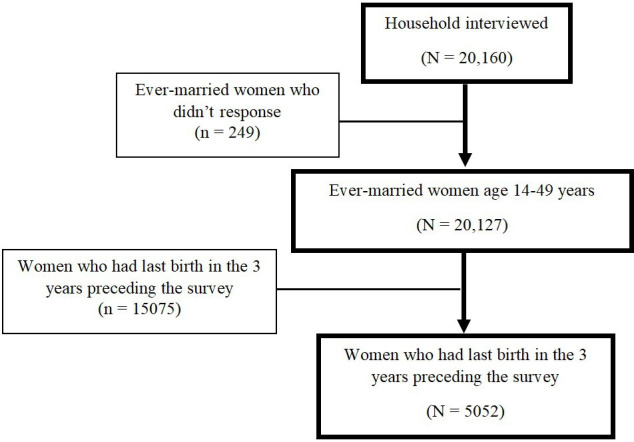
This study included 20 127 women aged 15-49 years. Among them, 5012 women had live births in the preceding 3 years of the survey, forming the study sample.

PRIMARY AND SECONDARY OUTCOME MEASURES

This study has no secondary outcome variable. The primary dependent variable is 'adequate maternal healthcare', a dichotomous variable.

RESULTS

Household wealth status contributed the highest to inequality in accessing adequate maternal healthcare services (41.4%) such as receiving at least four antenatal care (ANC) visits (39.7%), access to proper ANC (50.7% and 44.0%) and health facility birth (43.4%). Maternal educational status contributes the second highest inequality among all factors in accessing adequate maternal healthcare (29.5%). Adequate maternal healthcare presented the lowest coverage rate and opportunity index among all (approximately 24% with HOI=17.2).

CONCLUSIONS

We found that attained adequate maternal healthcare had the lowest coverage and widest dissimilarity, while wealth index, education and place of residence are the major factors that contribute to inequalities in accessibility to maternal healthcare services in Bangladesh. These findings underscore a need for pro-poor interventions to narrow the economic inequalities between the poor and rich in terms of accessibility to maternal healthcare services. The results indicate the need for the Bangladeshi government and its health department to strengthen their commitment to improving female education. Investments should be made in initiatives that facilitate the proximity of maternal healthcare services to women in rural areas.

摘要

目的

本研究旨在探讨孟加拉国产妇保健服务获取方面的不平等现象。

设计和设置

本研究使用了 2017-2018 年全国代表性的孟加拉国人口与健康调查的横断面数据。该调查涵盖了孟加拉国不同地区和家庭。本研究使用人类机会指数(HOI)和 Shapley 分解技术来衡量产妇保健机会获取方面的不平等。

参与者

本研究纳入了 20127 名年龄在 15-49 岁的妇女。其中,5012 名妇女在调查前 3 年内有活产,构成了研究样本。

主要和次要结果测量

本研究没有次要结果变量。主要因变量是“适当的产妇保健”,这是一个二分变量。

结果

家庭财富状况对获得适当产妇保健服务的不平等贡献最大(41.4%),例如接受至少 4 次产前护理(ANC)就诊(39.7%)、获得适当的 ANC(50.7%和 44.0%)和在医疗设施分娩(43.4%)。产妇教育状况在所有因素中对获得适当产妇保健的不平等贡献排名第二(29.5%)。适当的产妇保健在所有方面的覆盖率和机会指数最低(约 24%,HOI=17.2)。

结论

我们发现,获得充分的产妇保健的覆盖率最低,差异最大,而财富指数、教育和居住地是导致孟加拉国产妇保健服务获取不平等的主要因素。这些发现突显出需要采取扶贫干预措施,缩小贫困和富裕人群在获得产妇保健服务方面的经济不平等。结果表明,孟加拉国政府及其卫生部门需要加强对提高女性教育的承诺。应投资于促进产妇保健服务向农村地区妇女提供的举措。
https://cdn.ncbi.nlm.nih.gov/pmc/blobs/1727/10565284/349b0bc553a6/bmjopen-2022-070111f01.jpg

相似文献

1
Inequalities in adequate maternal healthcare opportunities: evidence from Bangladesh Demographic and Health Survey 2017-2018.孕产妇获得适当医疗保健机会的不平等:来自 2017-2018 年孟加拉国人口与健康调查的证据。
BMJ Open. 2023 Oct 10;13(10):e070111. doi: 10.1136/bmjopen-2022-070111.
2
Socio-economic and cultural factors associated with the utilization of maternal healthcare services in Togo: a cross-sectional study.多哥产妇利用医疗保健服务的社会经济和文化因素:一项横断面研究。
Reprod Health. 2023 Jul 25;20(1):109. doi: 10.1186/s12978-023-01644-6.
3
Measurement and analysis of inequality of opportunity in access of maternal and child health care in Togo.多哥孕产妇和儿童保健服务获取机会不平等的测量与分析。
BMC Health Serv Res. 2017 Dec 4;17(Suppl 2):699. doi: 10.1186/s12913-017-2647-8.
4
Comparison of inequality in utilization of maternal healthcare services between Bangladesh and Pakistan: evidence from the demographic health survey 2017-2018.孟加拉国和巴基斯坦利用母婴保健服务不平等的比较:来自 2017-2018 年人口健康调查的证据。
Reprod Health. 2023 Mar 13;20(1):43. doi: 10.1186/s12978-023-01595-y.
5
Exploring the factors behind socioeconomic inequalities in Antenatal Care (ANC) utilization across five South Asian natiaons: A decomposition approach.探索五个南亚国家中产前护理(ANC)利用方面社会经济不平等的背后因素:一种分解方法。
PLoS One. 2024 Aug 7;19(8):e0304648. doi: 10.1371/journal.pone.0304648. eCollection 2024.
6
Prevalence and determinants of socioeconomic inequality in caesarean section deliveries in Bangladesh: an analysis of cross-sectional data from Bangladesh Demographic Health Survey, 2017-18.孟加拉国剖宫产率的社会经济不平等状况及其决定因素:来自 2017-18 年孟加拉国人口健康调查的横断面数据分析
BMC Pregnancy Childbirth. 2023 Jul 4;23(1):492. doi: 10.1186/s12884-023-05782-4.
7
Examining inequality of opportunity in the use of maternal and reproductive health interventions in Sierra Leone.考察塞拉利昂产妇和生殖健康干预措施利用方面机会不平等的情况。
J Public Health (Oxf). 2020 May 26;42(2):254-261. doi: 10.1093/pubmed/fdz023.
8
Progress in the utilization of antenatal and delivery care services in Bangladesh: where does the equity gap lie?孟加拉国产前和分娩护理服务利用情况的进展:公平差距在哪里?
BMC Pregnancy Childbirth. 2016 Jul 29;16(1):200. doi: 10.1186/s12884-016-0970-4.
9
Does gender inequality matter for access to and utilization of maternal healthcare services in Bangladesh?在孟加拉国,性别不平等对获得和利用孕产妇医疗保健服务有影响吗?
PLoS One. 2021 Sep 16;16(9):e0257388. doi: 10.1371/journal.pone.0257388. eCollection 2021.
10
Comparison of inequality in utilization of postnatal care services between Bangladesh and Pakistan: Evidence from the Demographic and Health Survey 2017-2018.孟加拉国和巴基斯坦利用产后护理服务不平等的比较:来自 2017-2018 年人口与健康调查的证据。
BMC Pregnancy Childbirth. 2023 Jun 22;23(1):461. doi: 10.1186/s12884-023-05778-0.

引用本文的文献

1
Socioeconomic inequities impacting complete continuum of maternal healthcare service utilisation over time in Ethiopia.埃塞俄比亚随着时间推移影响孕产妇医疗保健服务全流程利用的社会经济不平等现象。
Int J Health Econ Manag. 2025 Aug 23. doi: 10.1007/s10754-025-09401-x.
2
Socioeconomic inequalities in access to maternal healthcare in South-Asian countries: A systematic review.南亚国家孕产妇保健服务可及性方面的社会经济不平等:一项系统评价。
PLoS One. 2025 Jun 17;20(6):e0326130. doi: 10.1371/journal.pone.0326130. eCollection 2025.
3
Distribution of government health financing benefits among women who delivered in public institutions in Bangladesh: a nationally representative cross-sectional study.

本文引用的文献

1
Socioeconomic correlates of Adequate Maternal Care in Bangladesh: Analysis of the Bangladesh Demographic and Health Survey 2017-18.孟加拉国充分母婴保健的社会经济关联因素:2017-18 年孟加拉国人口与健康调查分析。
Biomed Res Int. 2022 Nov 8;2022:8027712. doi: 10.1155/2022/8027712. eCollection 2022.
2
Factors That Affect Maternal Mortality in Rwanda: A Comparative Study with India and Bangladesh.影响卢旺达孕产妇死亡率的因素:与印度和孟加拉国的比较研究。
Comput Math Methods Med. 2022 Apr 9;2022:1940188. doi: 10.1155/2022/1940188. eCollection 2022.
3
Adopting Andersen's behavior model to identify factors influencing maternal healthcare service utilization in Bangladesh.
孟加拉国在公共机构分娩的妇女中政府卫生筹资福利的分配情况:一项全国代表性横断面研究。
Lancet Reg Health Southeast Asia. 2025 May 3;37:100590. doi: 10.1016/j.lansea.2025.100590. eCollection 2025 Jun.
4
Exploring the barriers to accessing antenatal care at the primary health care center level of a tertiary hospital in Lebanon: a qualitative study.探索黎巴嫩一家三级医院基层医疗中心产前护理的获取障碍:一项定性研究。
BMC Health Serv Res. 2025 Feb 25;25(1):304. doi: 10.1186/s12913-025-12444-y.
采用安德森行为模型来识别影响孟加拉国产妇医疗保健服务利用的因素。
PLoS One. 2021 Nov 29;16(11):e0260502. doi: 10.1371/journal.pone.0260502. eCollection 2021.
4
Does gender inequality matter for access to and utilization of maternal healthcare services in Bangladesh?在孟加拉国,性别不平等对获得和利用孕产妇医疗保健服务有影响吗?
PLoS One. 2021 Sep 16;16(9):e0257388. doi: 10.1371/journal.pone.0257388. eCollection 2021.
5
Prevalence, progress, and social inequalities of home deliveries in Ghana from 2006 to 2018: insights from the multiple indicator cluster surveys.2006 年至 2018 年加纳家庭分娩的流行率、进展和社会不平等:多指标类集调查的见解。
BMC Pregnancy Childbirth. 2021 Jul 21;21(1):518. doi: 10.1186/s12884-021-03989-x.
6
Women's autonomy in household decision-making and safer sex negotiation in sub-Saharan Africa: An analysis of data from 27 Demographic and Health Surveys.撒哈拉以南非洲地区女性在家庭决策中的自主权与安全性行为协商:对27项人口与健康调查数据的分析
SSM Popul Health. 2021 Mar 17;14:100773. doi: 10.1016/j.ssmph.2021.100773. eCollection 2021 Jun.
7
Socio-economic inequality in maternal health care utilization in Sub-Saharan Africa: Evidence from Togo.撒哈拉以南非洲地区孕产妇医疗保健利用方面的社会经济不平等:来自多哥的证据。
Int J Health Plann Manage. 2021 Mar;36(2):288-301. doi: 10.1002/hpm.3083. Epub 2020 Sep 30.
8
Geographical and socioeconomic inequalities in the utilization of maternal healthcare services in Nigeria: 2003-2017.尼日利亚孕产妇医疗服务利用的地理和社会经济不平等:2003-2017 年。
BMC Health Serv Res. 2020 Sep 10;20(1):849. doi: 10.1186/s12913-020-05700-w.
9
Examining inequality of opportunity in the use of maternal and reproductive health interventions in Sierra Leone.考察塞拉利昂产妇和生殖健康干预措施利用方面机会不平等的情况。
J Public Health (Oxf). 2020 May 26;42(2):254-261. doi: 10.1093/pubmed/fdz023.
10
Inequalities in sub-Saharan African women's and girls' health opportunities and outcomes: evidence from the Demographic and Health Surveys.撒哈拉以南非洲妇女和女童健康机会和结果的不平等:来自人口与健康调查的证据。
J Glob Health. 2019 Jun;9(1):010410. doi: 10.7189/jogh.09.010410.