CAS Key Laboratory of Animal Ecology and Conservation Biology, Institute of Zoology, Chinese Academy of Sciences, Beijing 100101, China.
Geneplus-Beijing Institute, Beijing 102206, China.
Mol Biol Evol. 2023 Nov 3;40(11). doi: 10.1093/molbev/msad229.
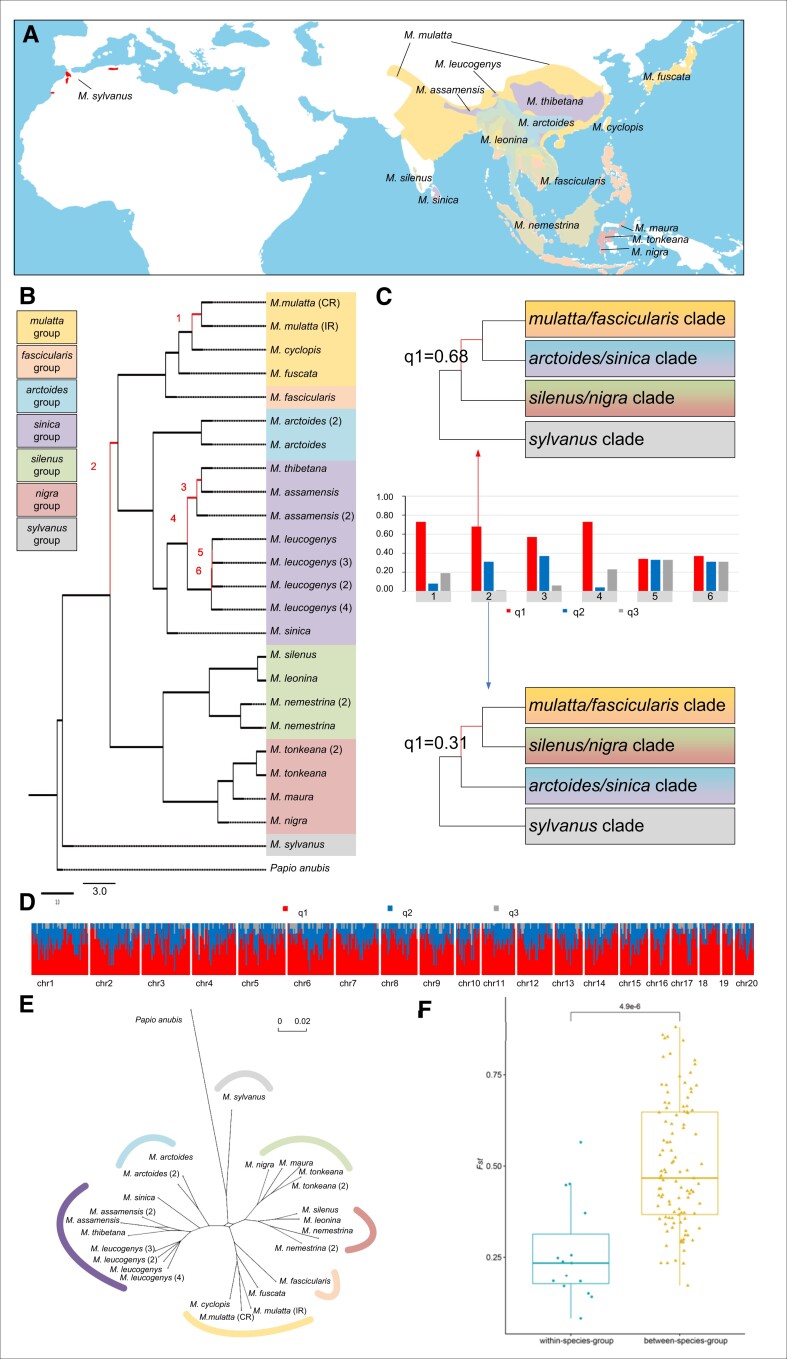
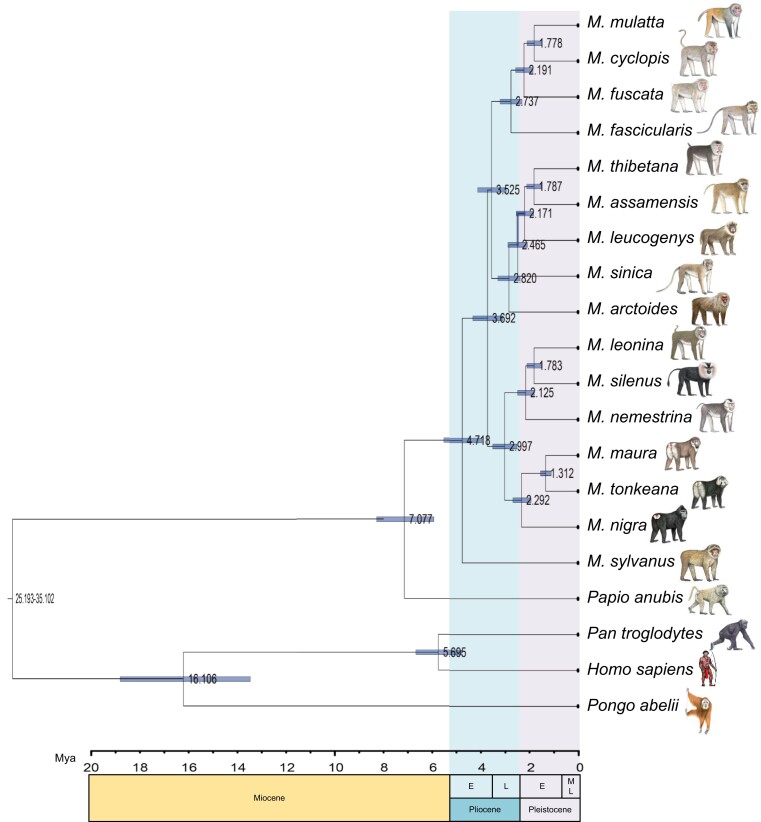
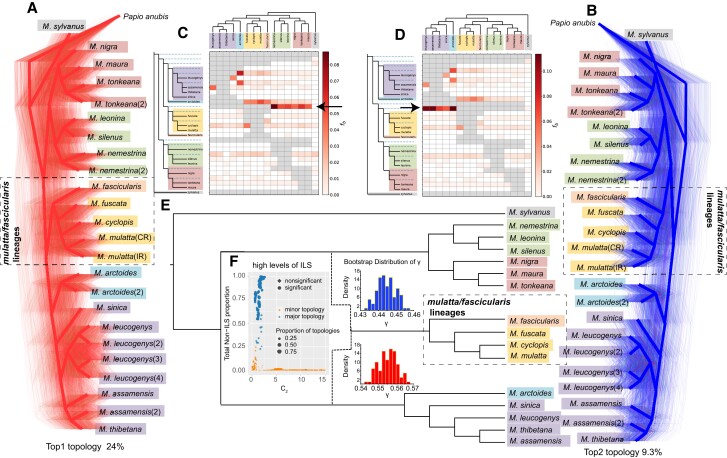
The genus Macaca includes 23 species assigned into 4 to 7 groups. It exhibits the largest geographic range and represents the most successful example of adaptive radiation of nonhuman primates. However, intrageneric phylogenetic relationships among species remain controversial and have not been resolved so far. In this study, we conducted a phylogenomic analysis on 16 newly generated and 8 published macaque genomes. We found strong evidence supporting the division of this genus into 7 species groups. Incomplete lineage sorting (ILS) was the primary factor contributing to the discordance observed among gene trees; however, we also found evidence of hybridization events, specifically between the ancestral arctoides/sinica and silenus/nigra lineages that resulted in the hybrid formation of the fascicularis/mulatta group. Combined with fossil data, our phylogenomic data were used to establish a scenario for macaque radiation. These findings provide insights into ILS and potential ancient introgression events that were involved in the radiation of macaques, which will lead to a better understanding of the rapid speciation occurring in nonhuman primates.
猕猴属包括 23 个种,分为 4 到 7 个组。它的地理分布范围最广,是灵长类动物中适应性辐射最成功的例子。然而,种内的系统发育关系仍然存在争议,至今尚未解决。在这项研究中,我们对 16 个新生成的和 8 个已发表的猕猴基因组进行了基因组分析。我们发现有强有力的证据支持将这个属分为 7 个物种群。不完全谱系分选(ILS)是导致基因树之间不一致的主要因素;然而,我们也发现了杂交事件的证据,特别是在祖先的 arctoides/sinica 和 silenus/nigra 谱系之间,导致了 fascicularis/mulatta 群的杂种形成。结合化石数据,我们的基因组数据用于建立猕猴辐射的情景。这些发现为 ILS 和潜在的古代基因渗入事件提供了深入的了解,这些事件涉及猕猴的辐射,将有助于更好地理解非人类灵长类动物中发生的快速物种形成。