Department of Neuroscience, Imaging and Clinical Sciences; Institute for Advanced Biomedical Technologies (ITAB), 'G. d'Annunzio' University of Chieti-Pescara, Chieti, Italy.
Clinical Neurology, SS. Annunziata University Hospital, Chieti, Italy.
Eur J Neurol. 2024 Feb;31(2):e16094. doi: 10.1111/ene.16094. Epub 2023 Oct 12.
The association between Guillain-Barré syndrome (GBS) and severe acute respiratory syndrome coronavirus 2 (SARS-CoV-2) is debated. This study reappraises, after three pandemic years, the epidemiological data and the features of GBS in SARS-CoV-2 patients.
A systematic review and meta-analysis of case reports/series and cohort studies published between 1 January 2020 and 19 April 2023 was performed.
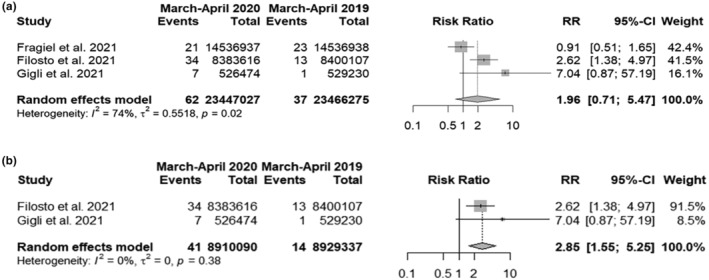
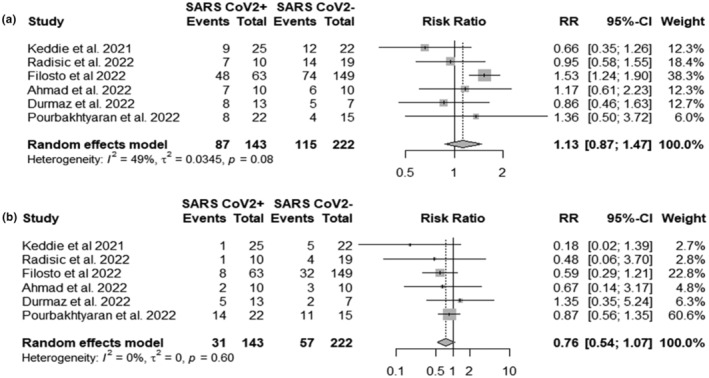
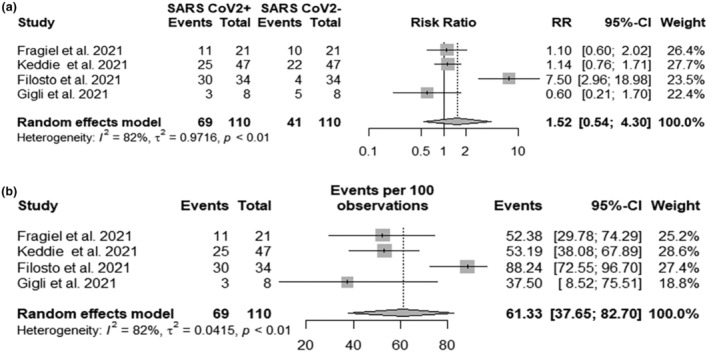
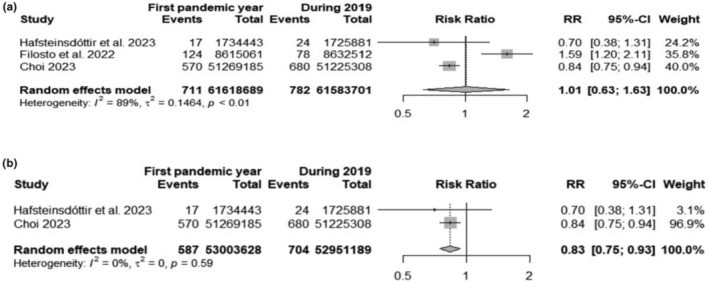
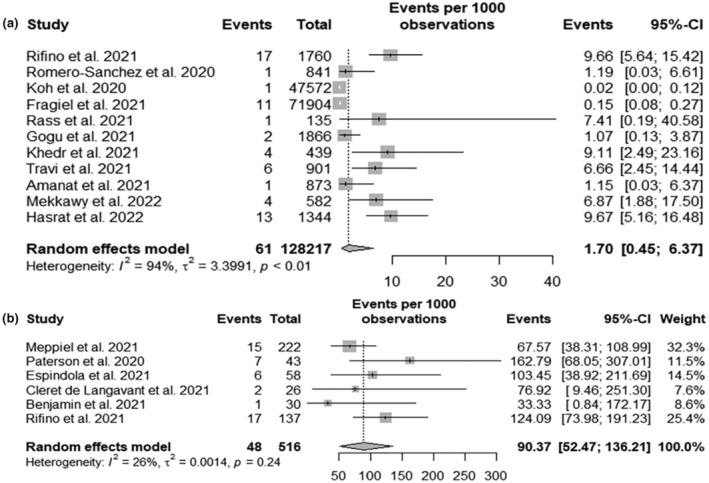
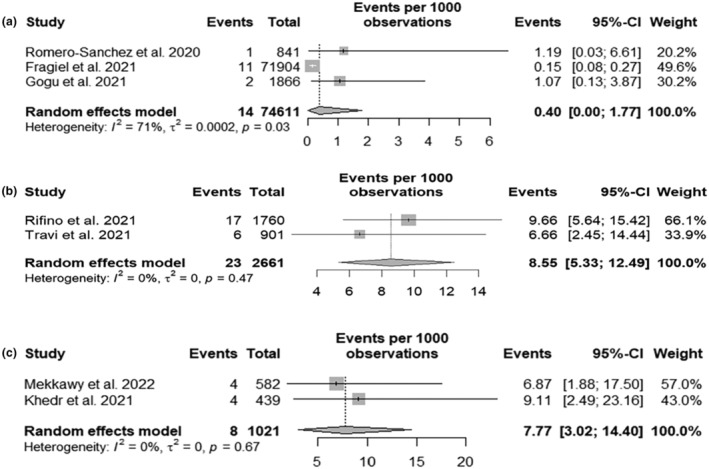
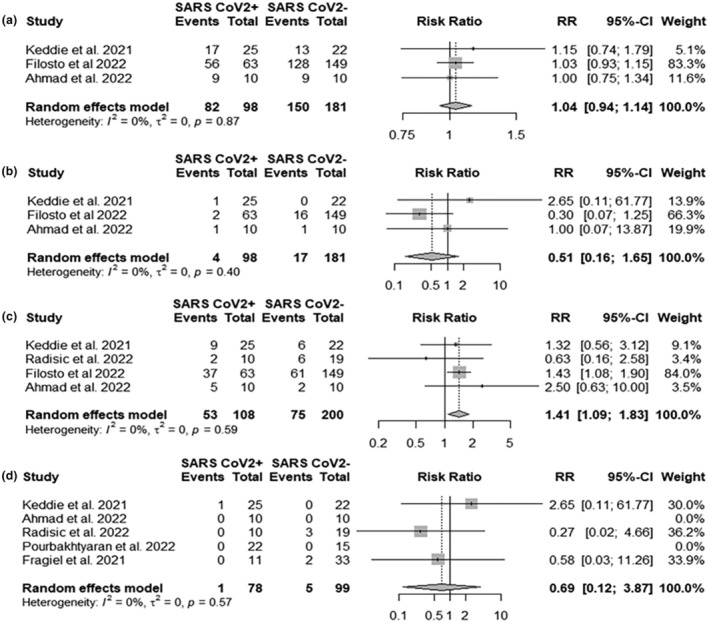
In all, 209 case reports/series (304 patients) and 26 cohort studies were included. The risk of GBS in northern Italy during the first pandemic wave was 2.85 times increased (95% confidence interval [CI] 1.54; 5.25) whereas in some countries the risk during the first pandemic year was 0.17 times reduced (risk ratio 0.83, 95% CI 0.75; 0.93). The incidence of GBS in SARS-CoV-2 Italian hospitalized cohorts was 8.55 per 1000 (95% CI 5.33; 12.49) with an estimated incidence of 0.13 GBS per 1000 in the SARS-CoV-2 infected population. In European cohorts the pooled rate of GBS with SARS-CoV-2 infection was 61.3% of the total. GBS patients with SARS-CoV-2 infection showed more frequently, but not differently from non-infected patients, the classical clinical presentation and the demyelinating subtype. Cranial nerves were more frequently involved in SARS-CoV-2 infected patients.
An increased risk of GBS occurred in northern Italy during early COVID-19 pandemic. The recognition of the 'Italian factor' reconciles contrasting results of the epidemiological studies. The slightly reduced GBS risk in other countries and the relatively high frequency of GBS associated with SARS-CoV-2 infection can be explained by the adopted health measures that decreased the circulation of other GBS infective antecedents.
Guillain-Barré 综合征(GBS)与严重急性呼吸综合征冠状病毒 2(SARS-CoV-2)之间的关联存在争议。本研究在经历了三年大流行后,重新评估了 SARS-CoV-2 患者中 GBS 的流行病学数据和特征。
对 2020 年 1 月 1 日至 2023 年 4 月 19 日期间发表的病例报告/系列和队列研究进行了系统回顾和荟萃分析。
共纳入 209 篇病例报告/系列(304 例患者)和 26 项队列研究。在意大利北部,第一次大流行期间 GBS 的风险增加了 2.85 倍(95%置信区间 [CI] 1.54;5.25),而在某些国家,第一年大流行期间的风险降低了 0.17 倍(风险比 0.83,95%CI 0.75;0.93)。意大利 SARS-CoV-2 住院患者队列中 GBS 的发病率为每 1000 人 8.55 例(95%CI 5.33;12.49),SARS-CoV-2 感染人群中估计的 GBS 发病率为每 1000 人 0.13 例。在欧洲队列中,SARS-CoV-2 感染相关 GBS 的总发病率为 61.3%。与未感染患者相比,感染 SARS-CoV-2 的 GBS 患者更常出现但无差异的经典临床表现和脱髓鞘亚型。感染 SARS-CoV-2 的患者更常累及颅神经。
在 SARS-CoV-2 大流行早期,意大利北部 GBS 的风险增加。“意大利因素”的认识调和了流行病学研究的矛盾结果。其他国家 GBS 风险略有降低以及 SARS-CoV-2 感染相关 GBS 相对较高的频率,可归因于降低其他 GBS 感染性前驱因素传播的所采取的卫生措施。