Abalde Samuel, Tellgren-Roth Christian, Heintz Julia, Vinnere Pettersson Olga, Jondelius Ulf
Department of Zoology, Swedish Museum of Natural History, Stockholm, Sweden.
Department of Immunology, Genetics and Pathology, SciLifeLab, Uppsala University, Uppsala, Sweden.
Front Genet. 2023 Sep 26;14:1244493. doi: 10.3389/fgene.2023.1244493. eCollection 2023.
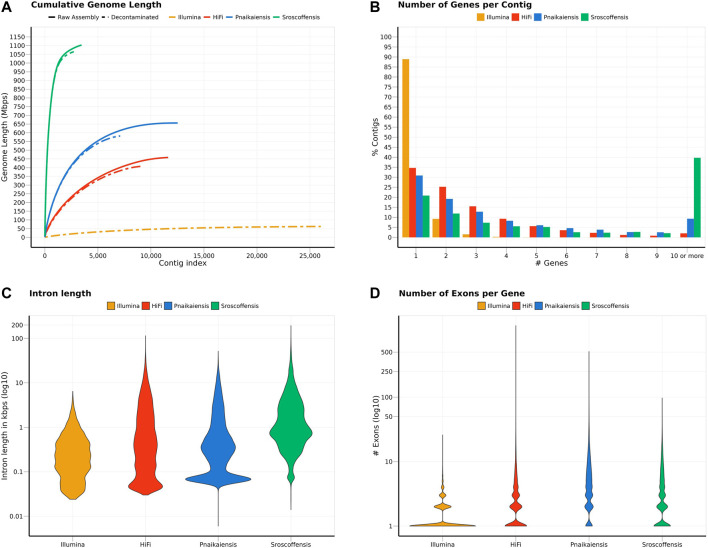
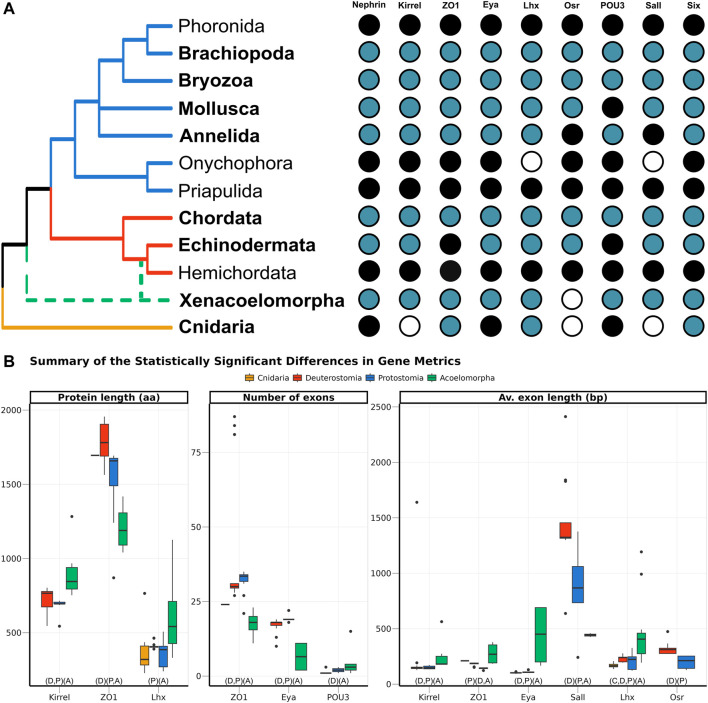
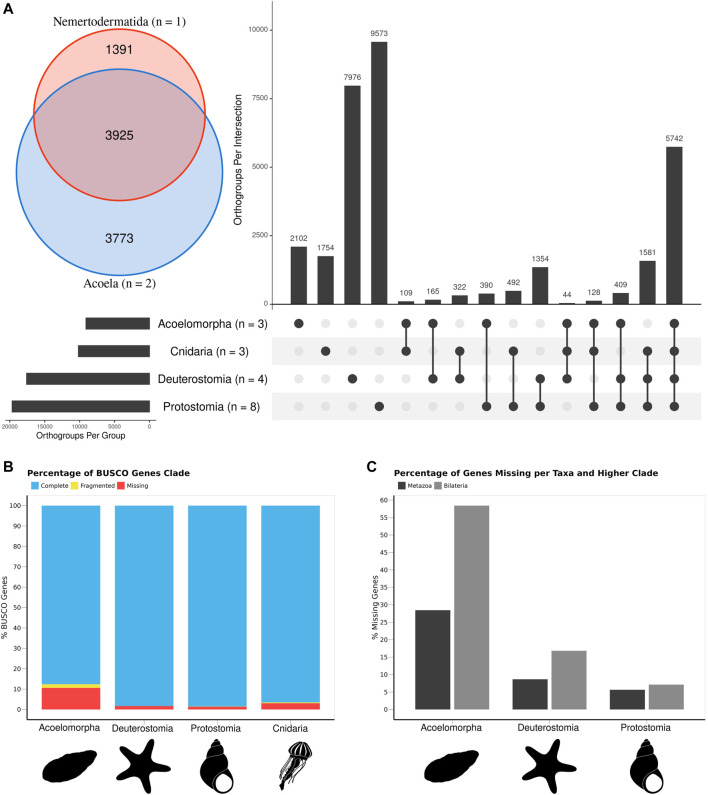
Xenacoelomorpha is a marine clade of microscopic worms that is an important model system for understanding the evolution of key bilaterian novelties, such as the excretory system. Nevertheless, Xenacoelomorpha genomics has been restricted to a few species that either can be cultured in the lab or are centimetres long. Thus far, no genomes are available for Nemertodermatida, one of the group's main clades and whose origin has been dated more than 400 million years ago. DNA was extracted from a single specimen and sequenced with HiFi following the PacBio Ultra-Low DNA Input protocol. After genome assembly, decontamination, and annotation, the genome quality was benchmarked using two acoel genomes and one Illumina genome as reference. The gene content of three cnidarians, three acoelomorphs, four deuterostomes, and eight protostomes was clustered in orthogroups to make inferences of gene content evolution. Finally, we focused on the genes related to the ultrafiltration excretory system to compare patterns of presence/absence and gene architecture among these clades. We present the first nemertodermatid genome sequenced from a single specimen of . Although genome contiguity remains challenging (N50: 60 kb), it is very complete (BUSCO: 80.2%, Metazoa; 88.6%, Eukaryota) and the quality of the annotation allows fine-detail analyses of genome evolution. Acoelomorph genomes seem to be relatively conserved in terms of the percentage of repeats, number of genes, number of exons per gene and intron size. In addition, a high fraction of genes present in both protostomes and deuterostomes are absent in Acoelomorpha. Interestingly, we show that all genes related to the excretory system are present in Xenacoelomorpha except , a key element in the development of these organs and whose acquisition seems to be interconnected with the origin of the specialised excretory system. Overall, these analyses highlight the potential of the Ultra-Low Input DNA protocol and HiFi to generate high-quality genomes from single animals, even for relatively large genomes, making it a feasible option for sequencing challenging taxa, which will be an exciting resource for comparative genomics analyses.
异涡虫纲是一类海洋微小动物类群,是理解关键两侧对称动物新特征(如排泄系统)进化的重要模型系统。然而,异涡虫纲的基因组学研究仅限于少数几种要么能在实验室培养要么长达几厘米的物种。到目前为止,该类群的主要分支之一纽形扁虫目还没有可用的基因组,其起源可追溯到4亿多年前。按照PacBio超低DNA输入方案,从单个标本中提取DNA并用高保真(HiFi)技术进行测序。在进行基因组组装、净化和注释后,以两个无肠目基因组和一个Illumina基因组作为参考对基因组质量进行了评估。将三种刺胞动物、三种无肠目动物、四种后口动物和八种原口动物的基因内容聚类到直系同源组中,以推断基因内容的进化。最后,我们聚焦于与超滤排泄系统相关的基因,以比较这些类群中基因的有无模式和基因结构。我们展示了首个从单个标本测序得到的纽形扁虫目基因组。尽管基因组的连续性仍然具有挑战性(N50:60 kb),但它非常完整(BUSCO:后生动物80.2%;真核生物88.6%),并且注释质量允许对基因组进化进行精细分析。就重复序列百分比、基因数量、每个基因的外显子数量和内含子大小而言,无肠目动物的基因组似乎相对保守。此外,原口动物和后口动物中都存在的很大一部分基因在无肠目动物中缺失。有趣的是,我们发现除了 之外,与排泄系统相关的所有基因在异涡虫纲中都存在, 是这些器官发育中的关键要素,其获得似乎与专门排泄系统的起源相互关联。总体而言,这些分析突出了超低输入DNA方案和高保真技术从单个动物生成高质量基因组的潜力,即使对于相对较大的基因组也是如此,使其成为对具有挑战性的分类群进行测序的可行选择,这将是比较基因组学分析的一个令人兴奋的资源。