Howard Hughes Medical Institute, Carnegie Institution for Science, Baltimore, United States.
Elife. 2023 Oct 13;12:RP90509. doi: 10.7554/eLife.90509.
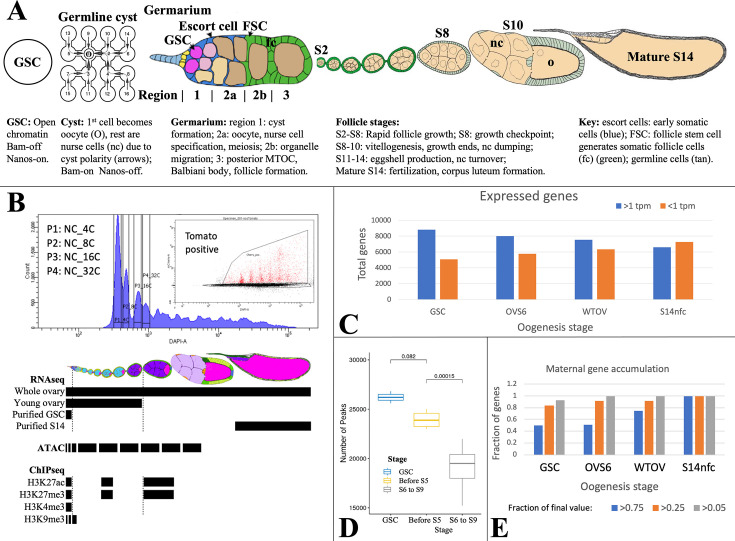
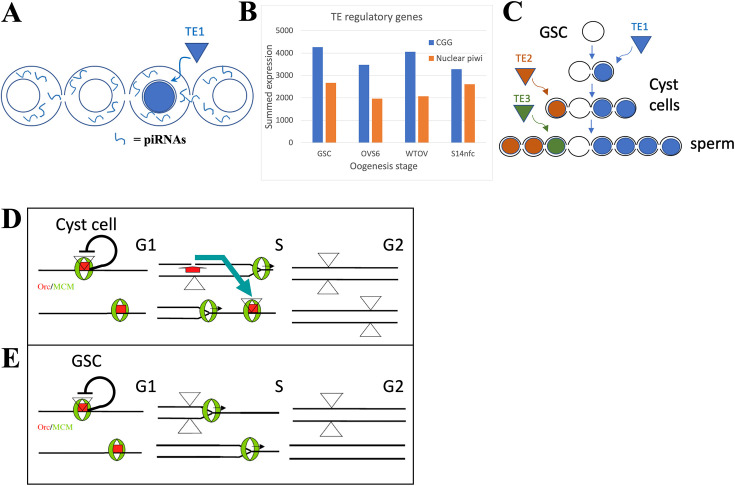
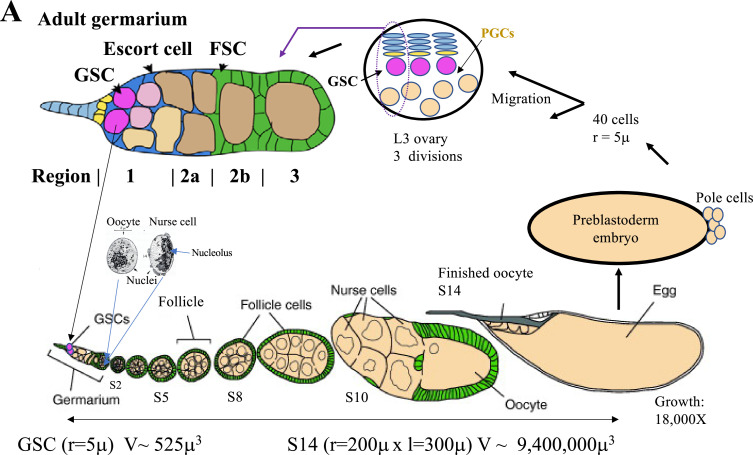
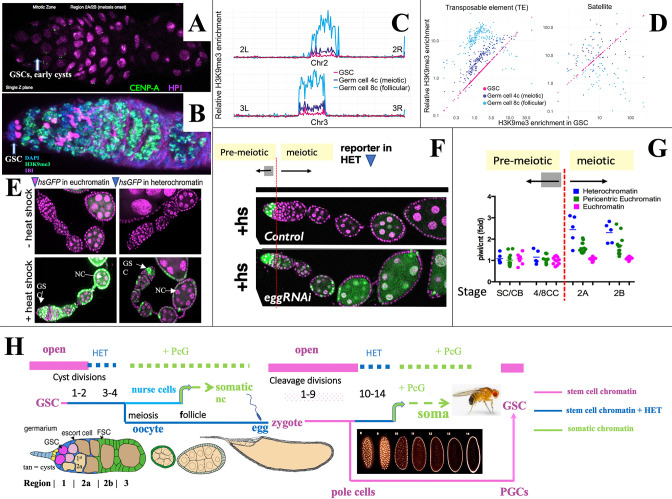
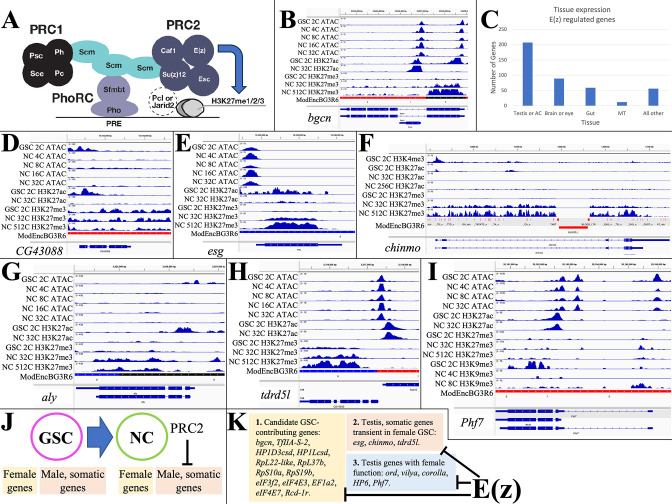
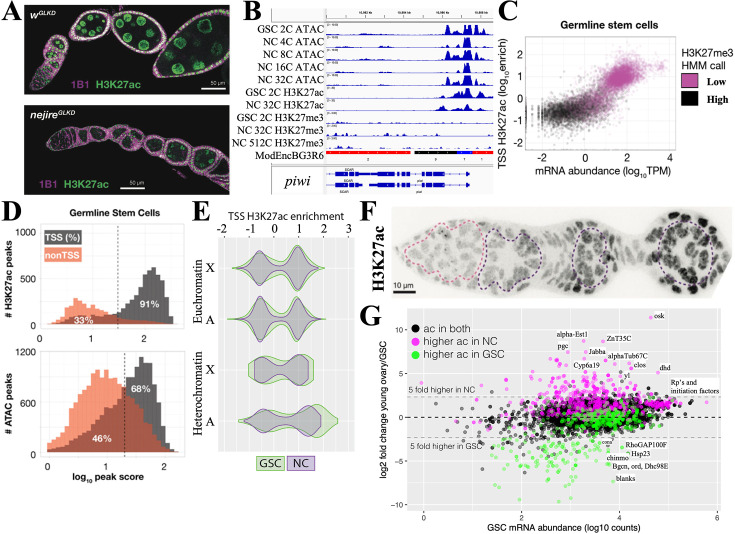
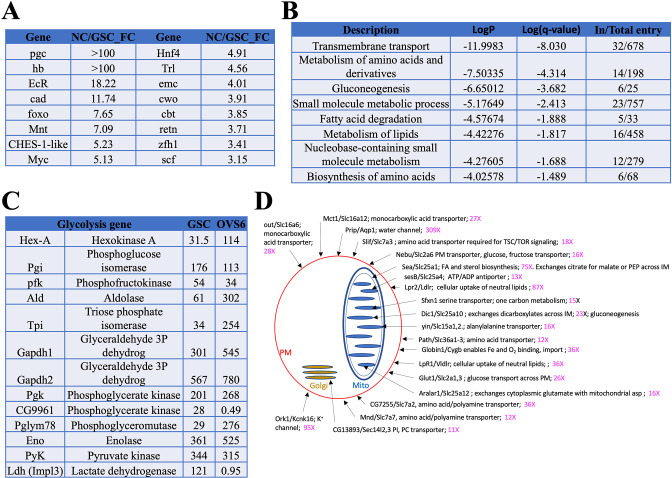
Highly potent animal stem cells either self renew or launch complex differentiation programs, using mechanisms that are only partly understood. female germline stem cells (GSCs) perpetuate without change over evolutionary time and generate cystoblast daughters that develop into nurse cells and oocytes. Cystoblasts initiate differentiation by generating a transient syncytial state, the germline cyst, and by increasing pericentromeric H3K9me3 modification, actions likely to suppress transposable element activity. Relatively open GSC chromatin is further restricted by Polycomb repression of testis or somatic cell-expressed genes briefly active in early female germ cells. Subsequently, Neijre/CBP and Myc help upregulate growth and reprogram GSC metabolism by altering mitochondrial transmembrane transport, gluconeogenesis, and other processes. In all these respects GSC differentiation resembles development of the totipotent zygote. We propose that the totipotent stem cell state was shaped by the need to resist transposon activity over evolutionary timescales.
高效的动物干细胞要么自我更新,要么启动复杂的分化程序,其机制尚不完全清楚。雌性生殖干细胞 (GSCs) 在进化过程中保持不变,并产生囊胚母细胞,这些细胞进一步发育为滋养细胞和卵母细胞。囊胚母细胞通过产生短暂的合胞体状态即生殖囊,以及增加着丝粒周围 H3K9me3 修饰来启动分化,这些作用可能会抑制转座元件的活性。相对开放的 GSC 染色质通过 Polycomb 对睾丸或体细胞表达的基因的抑制进一步受到限制,这些基因在早期雌性生殖细胞中短暂活跃。随后,Neijre/CBP 和 Myc 通过改变线粒体跨膜转运、糖异生和其他过程,帮助上调生长并重新编程 GSC 代谢。在所有这些方面,GSC 分化都类似于全能性合子的发育。我们提出,全能性干细胞状态是通过在进化时间尺度上抵抗转座子活性的需要而形成的。