Sami-Sabinsa Group Limited, Peenya Industrial Area, Bangalore, Karnataka, India.
Sabinsa Corporation, East Windsor, NJ, USA.
Medicine (Baltimore). 2023 Oct 13;102(41):e35521. doi: 10.1097/MD.0000000000035521.
The coronavirus disease-2019 (COVID-19) pandemic has resulted in a surge in stress, anxiety, and depression worldwide. Ashwagandha, an ayurvedic adaptogen has been traditionally used to manage stress, anxiety, and general well-being.
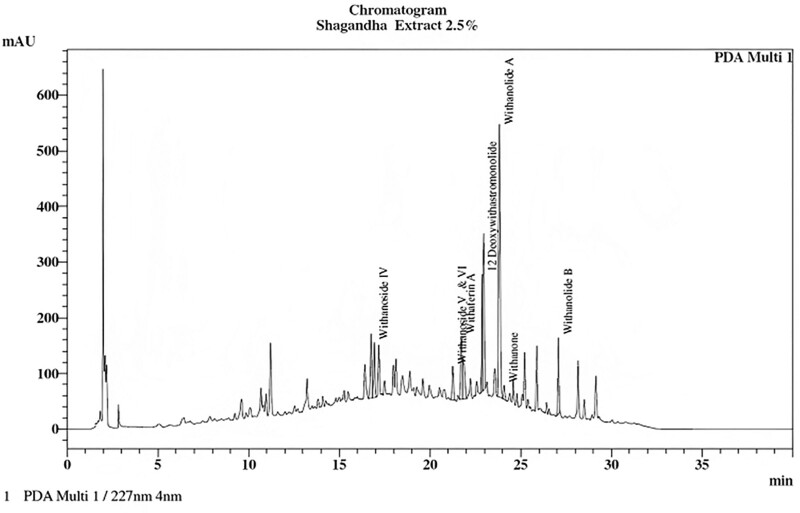
We assessed the effect of Ashwagandha root extract (ARE-500 mg) standardized for 2.5% withanolides as per USP protocol with piperine (5 mg of 95% piperine) once daily for 60 days (12.5 mg withanolides/day) to alleviate stress and anxiety in healthy individuals with mild to moderate symptoms.
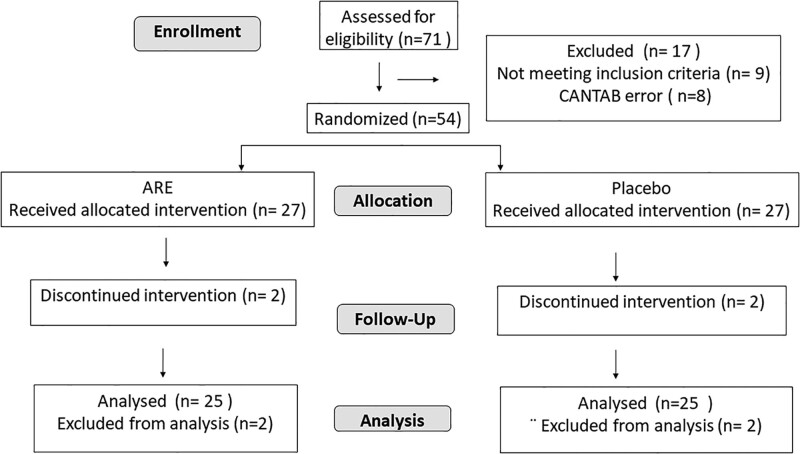
A randomized, double-blind, placebo-controlled study was conducted for 60 days using ARE (n = 27) and placebo (n = 27) once daily at night at Narayana Institute of Cardiac Sciences, Bangalore, and Vijaya Super Specialty Hospital, Nellore, in India. The objectives of this study were to assess an improvement in perceived stress scale (PSS), generalized anxiety disorder (GAD-7), quality of life (QOL), cognitive scores in the Cambridge Neuropsychological Test Automated Battery (CANTAB), changes in salivary cortisol, urinary serotonin, dopamine, serum levels of nitric oxide (NO), glutathione (GSH) and malondialdehyde (MDA) from baseline to end of the study. Safety was evaluated by laboratory parameters, and by monitoring any incidence of adverse events.
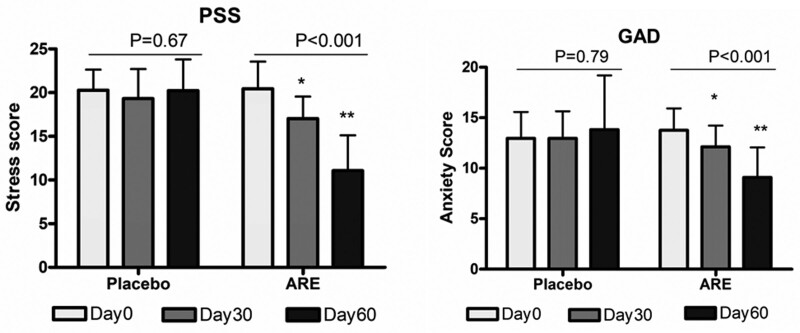
54 individuals were randomized and 50 of them completed the study. The PSS, GAD-7, and QOL scores improved significantly in all the participants taking ARE compared to the placebo. The CANTAB analysis revealed a significant improvement in multitasking, concentration, and decision taking time in ARE compared to placebo. ARE was also associated with a greater reduction in the morning salivary cortisol and an increase in urinary serotonin compared to placebo. Serum levels of NO, GSH, and MDA were not significantly different. Biochemical and hematological parameters remained in the normal range in all participants and ARE was well tolerated during the study.
The results of the study suggest that ARE with 2.5% withanolides can effectively improve stress and anxiety by reducing cortisol and increasing serotonin in healthy individuals with mild to moderate symptoms.
2019 年冠状病毒病(COVID-19)大流行导致全球范围内的压力、焦虑和抑郁急剧增加。阿育吠陀适应原 Ashwagandha 传统上用于管理压力、焦虑和整体健康。
我们评估了 Ashwagandha 根提取物(ARE,根据美国药典协议标准化为 2.5% withanolides,并用胡椒碱(5mg 95%胡椒碱)每天一次,持续 60 天(每天 12.5mg withanolides),以减轻有轻度至中度症状的健康个体的压力和焦虑。
在印度班加罗尔的 Narayana 心脏科学研究所和 Nellore 的 Vijaya 专科医院进行了一项为期 60 天的随机、双盲、安慰剂对照研究,使用 ARE(n=27)和安慰剂(n=27),每晚一次。本研究的目的是评估感知压力量表(PSS)、广泛性焦虑症(GAD-7)、生活质量(QOL)、剑桥神经心理学测试自动化电池(CANTAB)中的认知评分的改善情况,以及唾液皮质醇、尿 5-羟色胺、多巴胺、血清一氧化氮(NO)、谷胱甘肽(GSH)和丙二醛(MDA)水平从基线到研究结束的变化。通过实验室参数和监测任何不良事件的发生来评估安全性。
共有 54 人被随机分配,其中 50 人完成了研究。与安慰剂相比,所有服用 ARE 的参与者的 PSS、GAD-7 和 QOL 评分均显著改善。CANTAB 分析显示,与安慰剂相比,ARE 组在多重任务处理、注意力集中和决策时间方面有显著改善。与安慰剂相比,ARE 还与早晨唾液皮质醇的降低幅度更大和尿 5-羟色胺的增加有关。血清 NO、GSH 和 MDA 水平无显著差异。所有参与者的生化和血液参数均保持在正常范围内,ARE 在研究期间耐受良好。
研究结果表明,含有 2.5% withanolides 的 ARE 可通过降低皮质醇和增加轻度至中度症状健康个体的 5-羟色胺来有效改善压力和焦虑。