Evans Cassandra, Kalman Douglas
Health and Human Performance, Nova Southeastern University, Davie, USA.
Human and Sport Performance, Rocky Mountain University of Health Professions, Provo, USA.
Cureus. 2024 Aug 12;16(8):e66698. doi: 10.7759/cureus.66698. eCollection 2024 Aug.
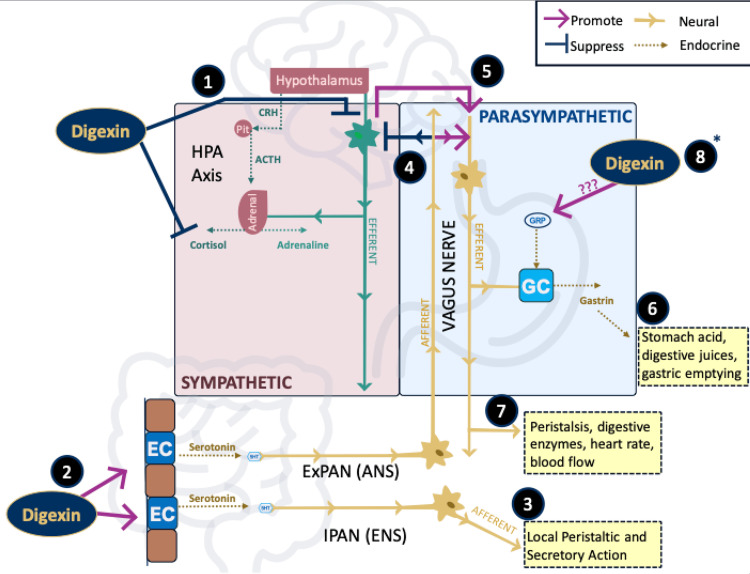
Functional gastrointestinal disorders (FGIDs) refer to a group of disorders with chronic symptoms, such as abdominal pain, dysphagia, dyspepsia, diarrhea, constipation, and bloating. Among these, functional constipation significantly impacts the quality of life and is linked with comorbidities, such as anxiety and depression. The exact pathophysiology remains unclear despite the widespread occurrence. Research suggests that the gut-brain axis plays a role in FGIDs. Disruptions in the bidirectional communication between the brain and gastrointestinal (GI) tract contribute to GI symptoms and mood disturbances. The incomplete understanding of FGID pathophysiology has led to limited treatment options. Traditional treatments often focus on single symptoms and come with side effects, prompting the need for alternative approaches that address both GI and psychological components. Alternative approaches including herbal supplements offer a natural alternative to conventional medicine by promoting regularity and gut health. L. or okra has a history of use in traditional medicine. Bioactive compounds such as polysaccharides and fibers found in okra offer gastroprotective benefits. is a plant commonly referred to as ashwagandha. The plant root has been used for its health-promoting effects. Research supports the use of to help with stress and sleep. Digexin is a herbal supplement combining (ashwagandha) and (okra). It has shown promise in improving both GI regularity and mood by modulating the gut-brain axis. Clinical studies support the potential of a novel herbal supplement that aids in the management of FGIDs. This narrative review looks at FGIDs, etiologies, current treatment, and possible therapeutic supplements to aid in symptom management.
功能性胃肠疾病(FGIDs)是指一组具有慢性症状的疾病,如腹痛、吞咽困难、消化不良、腹泻、便秘和腹胀。其中,功能性便秘严重影响生活质量,并与焦虑和抑郁等合并症有关。尽管其广泛发生,但其确切的病理生理学仍不清楚。研究表明,肠-脑轴在功能性胃肠疾病中起作用。大脑与胃肠道(GI)之间双向通信的中断会导致胃肠道症状和情绪障碍。对功能性胃肠疾病病理生理学的不完全理解导致治疗选择有限。传统治疗通常侧重于单一症状,且有副作用,这促使人们需要同时解决胃肠道和心理因素的替代方法。包括草药补充剂在内的替代方法通过促进规律排便和肠道健康,为传统医学提供了一种天然的替代方案。秋葵在传统医学中有使用历史。秋葵中发现的多糖和纤维等生物活性化合物具有胃保护作用。南非醉茄是一种通常被称为印度人参的植物。其植物根因其促进健康的作用而被使用。研究支持使用南非醉茄来帮助缓解压力和改善睡眠。Digexin是一种将南非醉茄和秋葵结合的草药补充剂。它已显示出通过调节肠-脑轴来改善胃肠道规律性和情绪的潜力。临床研究支持一种新型草药补充剂在管理功能性胃肠疾病方面的潜力。这篇叙述性综述探讨了功能性胃肠疾病、病因、当前治疗方法以及有助于症状管理的可能治疗性补充剂。