Laboratory of Neuroinformatics, IRCCS Istituto Centro San Giovanni di Dio Fatebenefratelli, Brescia, Italy.
ASST Bergamo Ovest, Bergamo, Italy.
Sci Rep. 2023 Oct 13;13(1):17355. doi: 10.1038/s41598-023-43706-6.
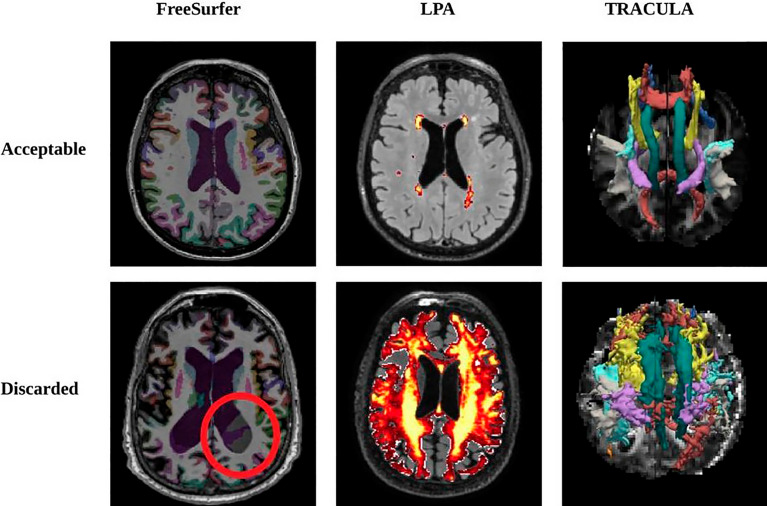
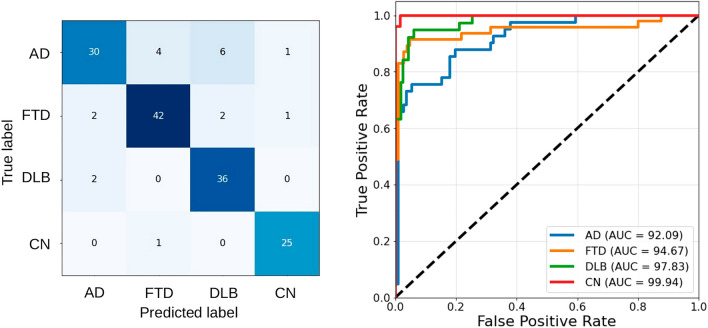
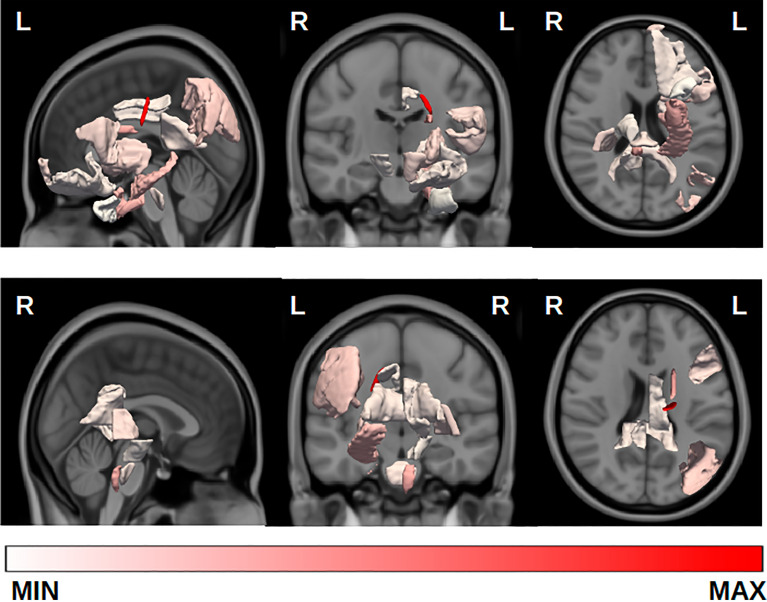
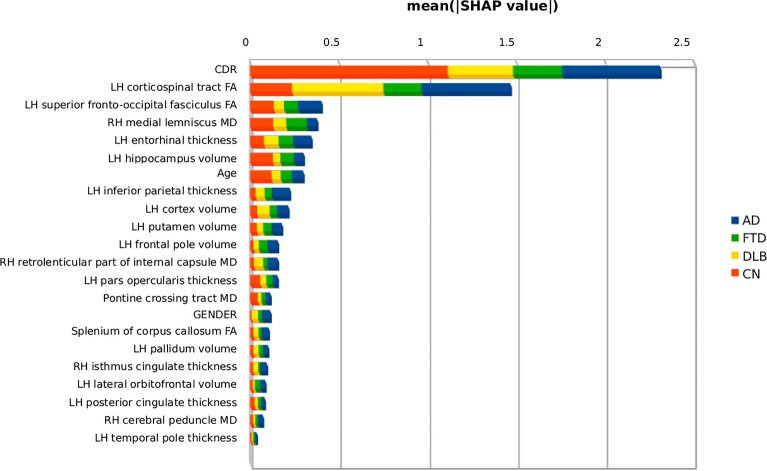
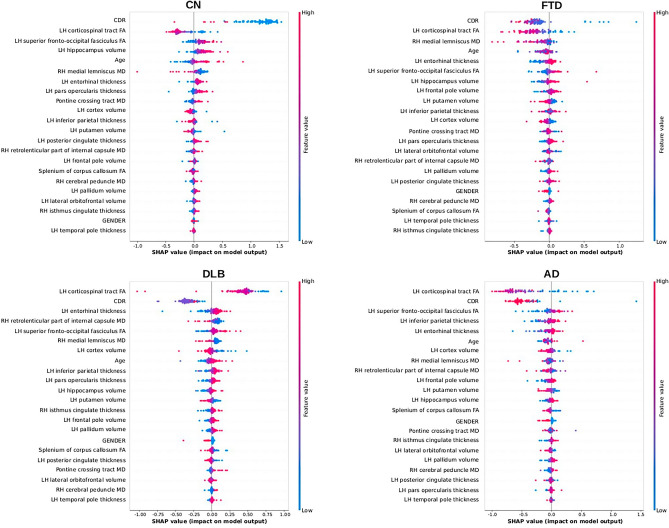
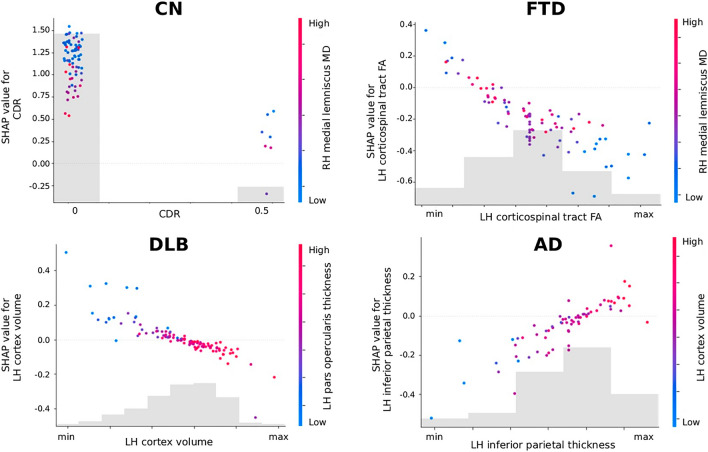
Biomarker-based differential diagnosis of the most common forms of dementia is becoming increasingly important. Machine learning (ML) may be able to address this challenge. The aim of this study was to develop and interpret a ML algorithm capable of differentiating Alzheimer's dementia, frontotemporal dementia, dementia with Lewy bodies and cognitively normal control subjects based on sociodemographic, clinical, and magnetic resonance imaging (MRI) variables. 506 subjects from 5 databases were included. MRI images were processed with FreeSurfer, LPA, and TRACULA to obtain brain volumes and thicknesses, white matter lesions and diffusion metrics. MRI metrics were used in conjunction with clinical and demographic data to perform differential diagnosis based on a Support Vector Machine model called MUQUBIA (Multimodal Quantification of Brain whIte matter biomArkers). Age, gender, Clinical Dementia Rating (CDR) Dementia Staging Instrument, and 19 imaging features formed the best set of discriminative features. The predictive model performed with an overall Area Under the Curve of 98%, high overall precision (88%), recall (88%), and F1 scores (88%) in the test group, and good Label Ranking Average Precision score (0.95) in a subset of neuropathologically assessed patients. The results of MUQUBIA were explained by the SHapley Additive exPlanations (SHAP) method. The MUQUBIA algorithm successfully classified various dementias with good performance using cost-effective clinical and MRI information, and with independent validation, has the potential to assist physicians in their clinical diagnosis.
基于生物标志物的常见痴呆症类型鉴别诊断正变得越来越重要。机器学习(ML)可能能够解决这一挑战。本研究旨在开发和解释一种 ML 算法,该算法能够基于社会人口统计学、临床和磁共振成像(MRI)变量区分阿尔茨海默病、额颞叶痴呆、路易体痴呆和认知正常对照。共有来自 5 个数据库的 506 名受试者被纳入研究。使用 FreeSurfer、LPA 和 TRACULA 对 MRI 图像进行处理,以获取脑容量和厚度、白质病变和扩散指标。将 MRI 指标与临床和人口统计学数据结合起来,基于称为 MUQUBIA(脑白质生物标志物的多模态定量)的支持向量机模型进行鉴别诊断。年龄、性别、临床痴呆评定量表(CDR)痴呆分期量表和 19 项成像特征构成了最佳的鉴别特征组合。在测试组中,预测模型的整体曲线下面积为 98%,整体精度(88%)、召回率(88%)和 F1 分数(88%)均较高,在一组经神经病理学评估的患者中,标签排序平均精度评分(0.95)也较好。MUQUBIA 的结果通过 SHapley Additive exPlanations(SHAP)方法进行了解释。MUQUBIA 算法成功地使用具有成本效益的临床和 MRI 信息对各种痴呆症进行了分类,具有良好的性能,并且经过独立验证,具有辅助医生进行临床诊断的潜力。