Department of Pathology, Tianjin Union Medical Center, Nankai University, Tianjin, 300071, People's Republic of China.
Graduate School, Tianjin Medical University, Tianjin, 301617, China.
J Transl Med. 2023 Oct 13;21(1):719. doi: 10.1186/s12967-023-04585-7.
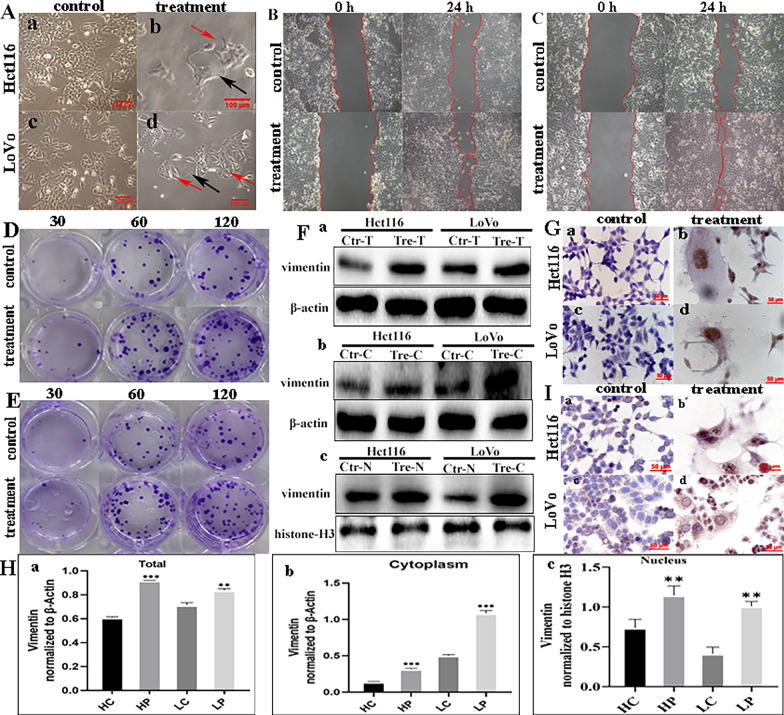
Polyploid giant cancer cells (PGCCs), a specific type of cancer stem cells (CSCs), can be induced by hypoxic microenvironments, chemical reagents, radiotherapy, and Chinese herbal medicine. Moreover, PGCCs can produce daughter cells that undergo epithelial-mesenchymal transition, which leads to cancer recurrence and disseminated metastasis. Vimentin, a mesenchymal cell marker, is highly expressed in PGCCs and their daughter cells (PDCs) and drives migratory persistence. This study explored the molecular mechanisms by which vimentin synergistically regulates PGCCs to generate daughter cells with enhanced invasive and metastatic properties.
Arsenic trioxide (ATO) was used to induce the formation of PGCCs in Hct116 and LoVo cells. Immunocytochemical and immunohistochemical assays were performed to determine the subcellular localization of vimentin. Cell function assays were performed to compare the invasive metastatic abilities of the PDCs and control cells. The molecular mechanisms underlying vimentin expression and nuclear translocation were investigated by real-time polymerase chain reaction, western blotting, cell function assays, cell transfection, co-immunoprecipitation, and chromatin immunoprecipitation, followed by sequencing. Finally, animal xenograft experiments and clinical colorectal cancer samples were used to study vimentin expression in tumor tissues.
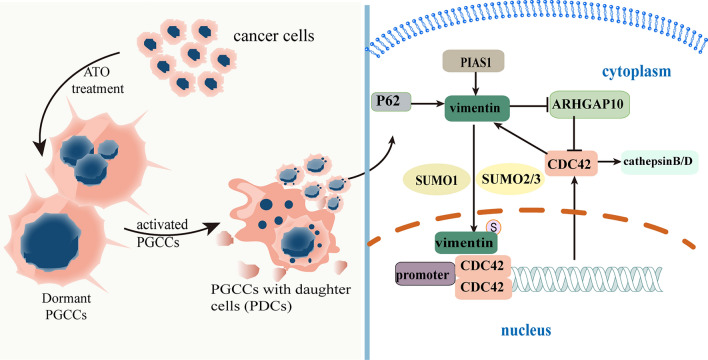
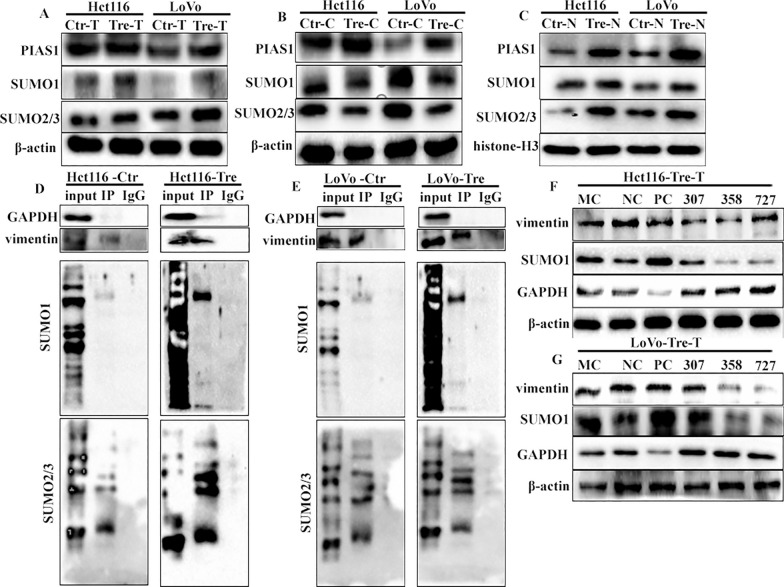
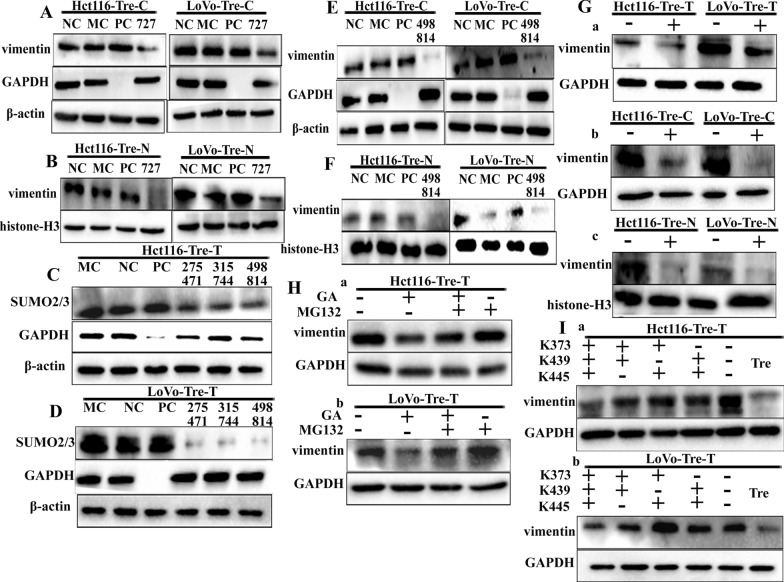
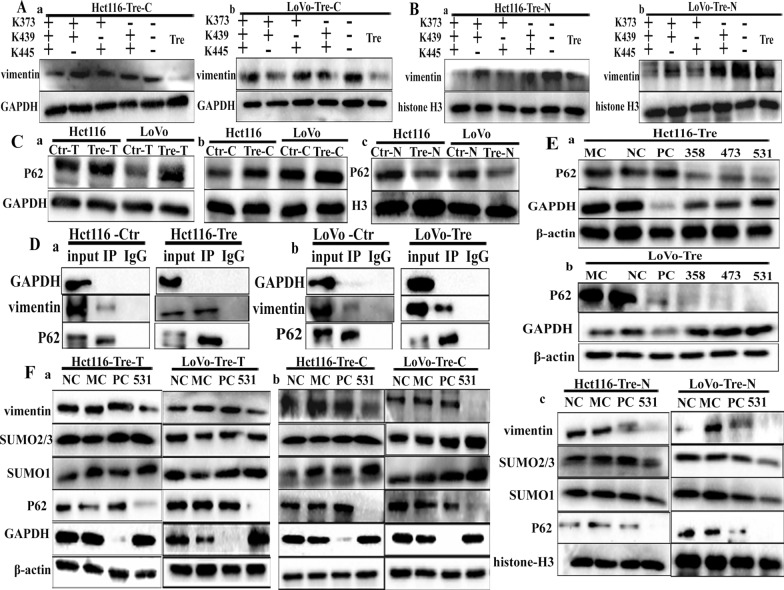
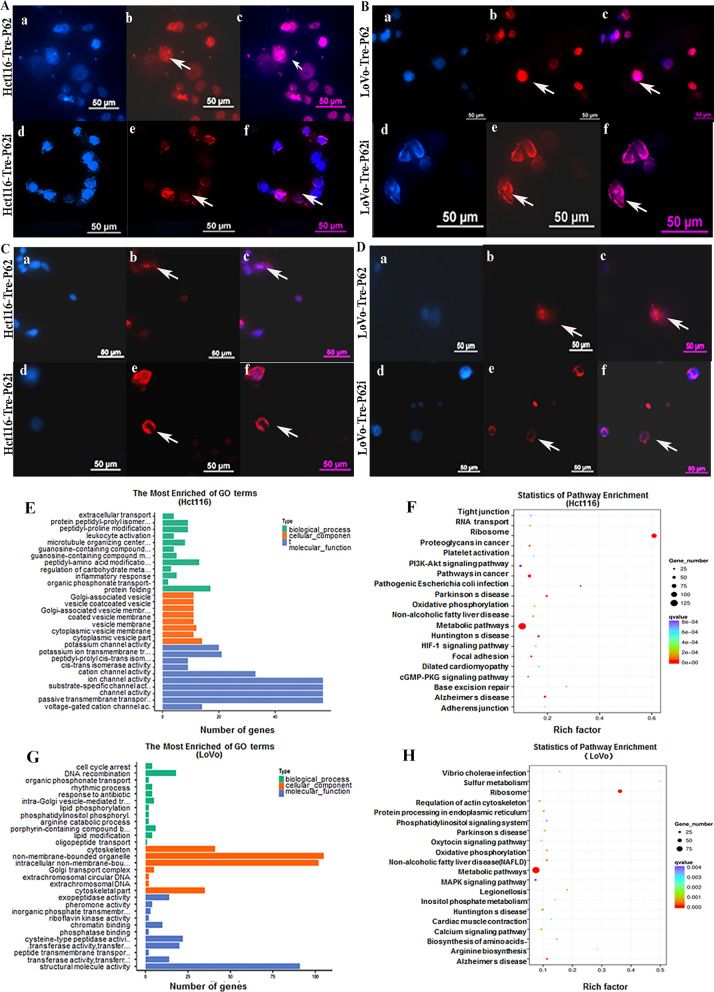
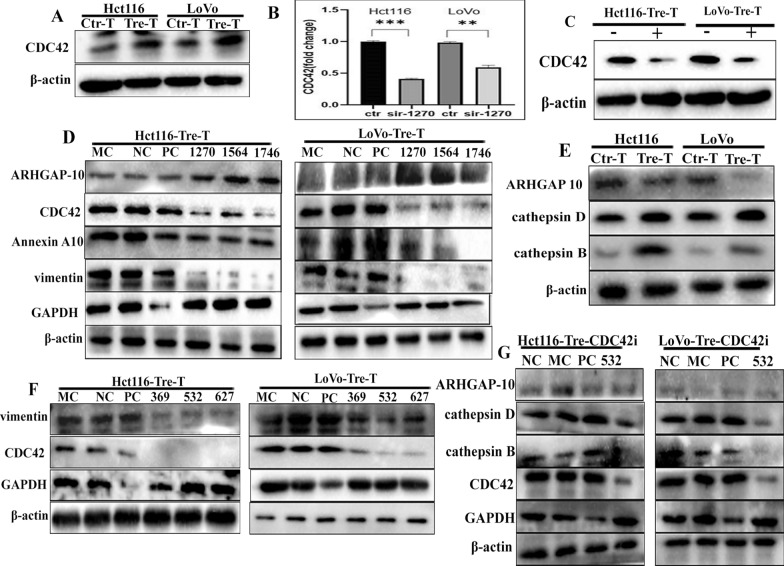
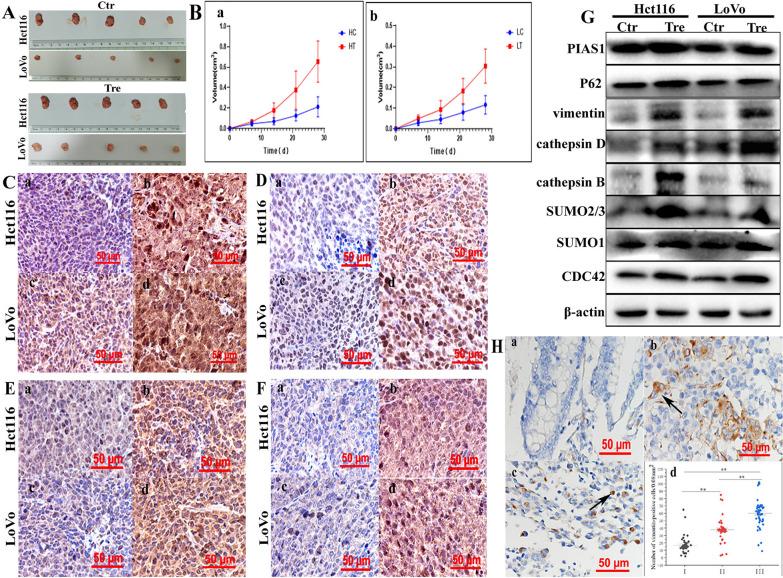
Daughter cells derived from PGCCs showed strong proliferative, migratory, and invasive abilities, in which vimentin was highly expressed and located in both the cytoplasm and nucleus. Vimentin undergoes small ubiquitin-like modification (SUMOylation) by interacting with SUMO1 and SUMO2/3, which are associated with nuclear translocation. P62 regulates nuclear translocation of vimentin by controlling SUMO1 and SUMO2/3 expression. In the nucleus, vimentin acts as a transcription factor that regulates CDC42, cathepsin B, and cathepsin D to promote PDC invasion and migration. Furthermore, animal experiments and human colorectal cancer specimens have confirmed the nuclear translocation of vimentin.
P62-dependent SUMOylation of vimentin plays an important role in PDC migration and invasion. Vimentin nuclear translocation and overexpressed P62 of cancer cells may be used to predict patient prognosis, and targeting vimentin nuclear translocation may be a promising therapeutic strategy for metastatic cancers.
多倍体巨大癌细胞(PGCCs)是一种特殊类型的癌症干细胞(CSCs),可以被低氧微环境、化学试剂、放射治疗和中药诱导。此外,PGCC 可以产生经历上皮-间充质转化(EMT)的子细胞,从而导致癌症复发和扩散转移。波形蛋白是间充质细胞的标志物,在 PGCCs 及其子细胞(PDCs)中高度表达,并驱动迁移持久性。本研究探讨了波形蛋白协同调节 PGCC 产生具有增强侵袭和转移特性的子细胞的分子机制。
三氧化二砷(ATO)用于诱导 Hct116 和 LoVo 细胞中 PGCC 的形成。免疫细胞化学和免疫组织化学检测用于确定波形蛋白的亚细胞定位。细胞功能检测用于比较 PDCs 和对照细胞的侵袭转移能力。通过实时聚合酶链反应、western blot、细胞功能检测、细胞转染、共免疫沉淀和染色质免疫沉淀,随后进行测序,研究波形蛋白表达和核转位的分子机制。最后,通过动物异种移植实验和临床结直肠癌样本研究肿瘤组织中波形蛋白的表达。
PGCC 衍生的子细胞表现出强烈的增殖、迁移和侵袭能力,其中波形蛋白高度表达并位于细胞质和细胞核中。波形蛋白通过与 SUMO1 和 SUMO2/3 相互作用发生小泛素样修饰(SUMOylation),从而与核转位相关。P62 通过控制 SUMO1 和 SUMO2/3 的表达来调节波形蛋白的核转位。在细胞核中,波形蛋白作为转录因子调节 CDC42、组织蛋白酶 B 和组织蛋白酶 D,促进 PDC 的侵袭和迁移。此外,动物实验和人类结直肠癌标本证实了波形蛋白的核转位。
P62 依赖性的波形蛋白 SUMOylation 在 PDC 的迁移和侵袭中发挥重要作用。癌细胞中波形蛋白的核转位和过表达的 P62 可能用于预测患者的预后,而靶向波形蛋白核转位可能是转移性癌症有前途的治疗策略。