Gallo Giovana Gonçalves, Curado Daniela Fernandez, Machado Mayra Pires Alves, Espíndola Marília Ignácio, Scattone Vitor Villar, Noto Ana Regina
Departamento de Psicobiologia, NEPSIS - Núcleo de Pesquisa em Saúde de Uso de Substâncias - MBRP Brasil - Centro Brasileiro de Pesquisa e Formação em Prevenção de Recaídas Baseada em Mindfulness (MBRP), Universidade Federal de São Paulo, São Paulo, 04023-062, SP, Brazil.
Int J Ment Health Syst. 2023 Oct 13;17(1):32. doi: 10.1186/s13033-023-00604-8.
The development of mental health disorders is common in the university population, and mindfulness-based interventions (MBIs) seem to be effective in addressing them in different contexts. Thus, this study investigated the impact of an 8-week MBI adapted to university students from the Mindfulness-Based Relapse Prevention (MBSR) on different symptoms related to mental health problems, specifically symptoms of anxiety, depression, stress and insomnia.
University students (n = 136) were randomized into MBI group (n = 71) or wait-list group (n = 65). All participants completed self-administered questionnaires before and after the intervention, and the experimental group answered questionnaires weekly during intervention. Generalized mixed models were used to assess the effects of the intervention.
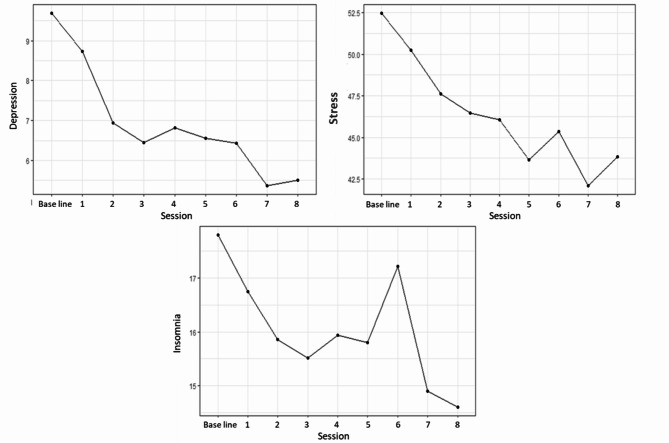
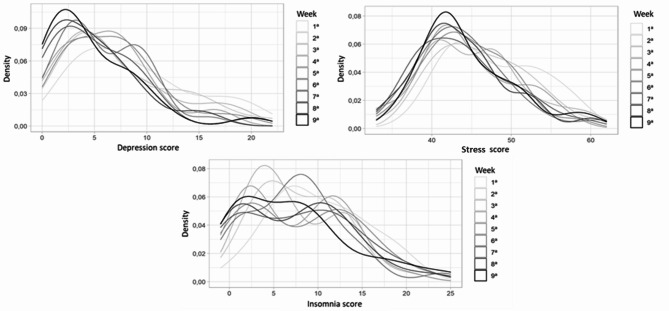
There were improvements in the symptoms of stress (B = 5.76, p < 0.001), depression (B = 1.55, p < 0.01) and insomnia (B = 1.35, p = 0.020) from the beginning of the intervention to the final assessment when it was compared to the control group. No effect was found in respect of trait anxiety. The MBI was found to be effective in reducing important symptoms related to university students' mental health, possibly grounding further research on the intervention's potential of preventing the development of mental disorders.
The research was registered in the Brazilian Registry of Clinical Trials (ReBEC) - number RBR-63qsqx, approved at 09/16/2019.
心理健康障碍在大学生群体中很常见,基于正念的干预措施(MBIs)似乎在不同情境下对解决这些问题有效。因此,本研究调查了一项基于正念复发预防(MBSR)并针对大学生调整的为期8周的MBI对与心理健康问题相关的不同症状,特别是焦虑、抑郁、压力和失眠症状的影响。
将大学生(n = 136)随机分为MBI组(n = 71)或等待列表组(n = 65)。所有参与者在干预前后均完成了自我管理问卷,实验组在干预期间每周回答问卷。使用广义混合模型评估干预效果。
与对照组相比,从干预开始到最终评估,压力(B = 5.76,p < 0.001)、抑郁(B = 1.55,p < 0.01)和失眠(B = 1.35,p = 0.020)症状有所改善。在特质焦虑方面未发现效果。发现MBI在减轻与大学生心理健康相关的重要症状方面有效,这可能为进一步研究该干预措施预防精神障碍发展的潜力奠定基础。
该研究已在巴西临床试验注册中心(ReBEC)注册 - 编号RBR-63qsqx,于2019年9月16日获得批准。