Lu Jian, Kornmann Marko, Traub Benno
Department of General and Visceral Surgery, Ulm University Hospital, Albert-Einstein-Allee 23, 89081 Ulm, Germany.
Int J Mol Sci. 2023 Oct 1;24(19):14815. doi: 10.3390/ijms241914815.
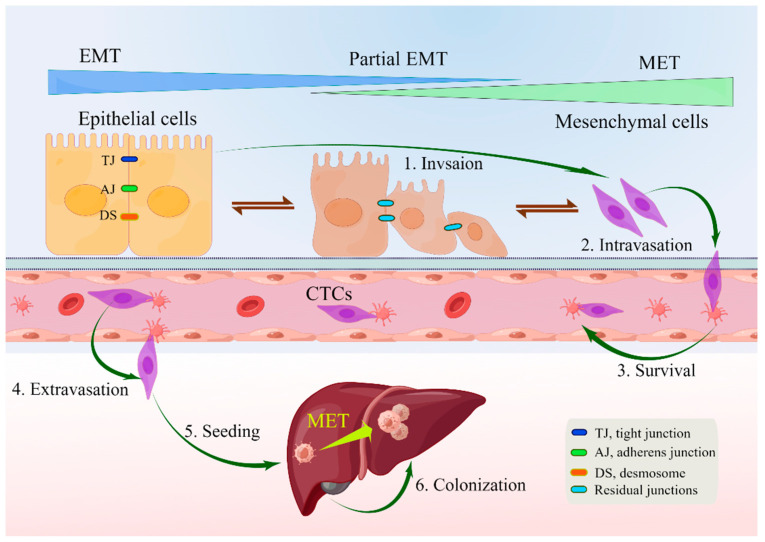
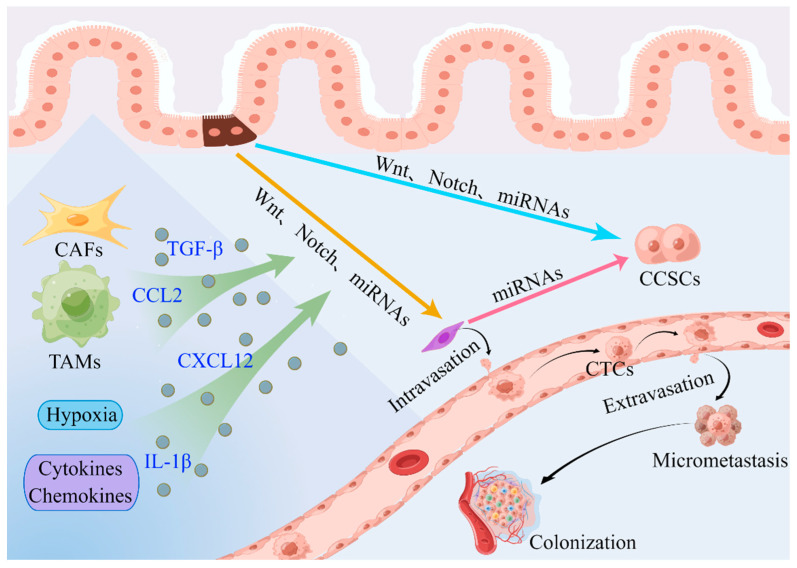
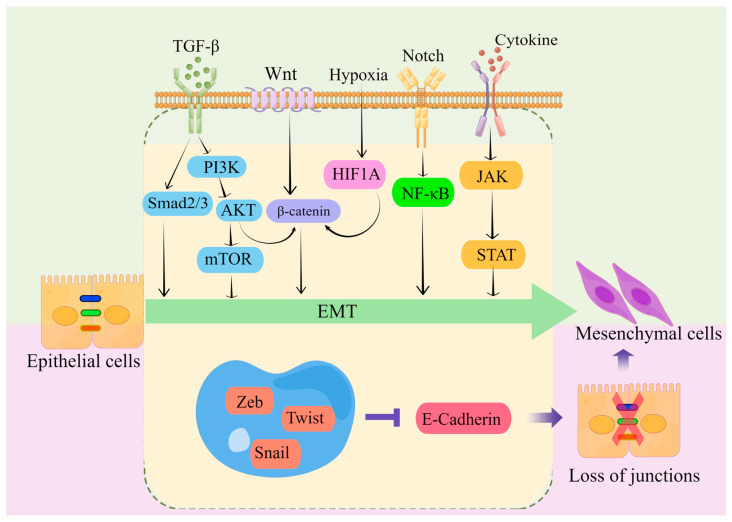
The epithelial-mesenchymal transition (EMT) is a cellular reprogramming process that occurs during embryonic development and adult tissue homeostasis. This process involves epithelial cells acquiring a mesenchymal phenotype. Through EMT, cancer cells acquire properties associated with a more aggressive phenotype. EMT and its opposite, mesenchymal-epithelial transition (MET), have been described in more tumors over the past ten years, including colorectal cancer (CRC). When EMT is activated, the expression of the epithelial marker E-cadherin is decreased and the expression of the mesenchymal marker vimentin is raised. As a result, cells temporarily take on a mesenchymal phenotype, becoming motile and promoting the spread of tumor cells. Epithelial-mesenchymal plasticity (EMP) has become a hot issue in CRC because strong inducers of EMT (such as transforming growth factor β, TGF-β) can initiate EMT and regulate metastasis, microenvironment, and immune system resistance in CRC. In this review, we take into account the significance of EMT-MET in CRC and the impact of the epithelial cells' plasticity on the prognosis of CRC. The analysis of connection between EMT and colorectal cancer stem cells (CCSCs) will help to further clarify the current meager understandings of EMT. Recent advances affecting important EMT transcription factors and EMT and CCSCs are highlighted. We come to the conclusion that the regulatory network for EMT in CRC is complicated, with a great deal of crosstalk and alternate paths. More thorough research is required to more effectively connect the clinical management of CRC with biomarkers and targeted treatments associated with EMT.
上皮-间质转化(EMT)是一种细胞重编程过程,发生于胚胎发育和成人组织稳态维持期间。该过程涉及上皮细胞获得间质表型。通过EMT,癌细胞获得与更具侵袭性表型相关的特性。在过去十年中,包括结直肠癌(CRC)在内的更多肿瘤中都描述了EMT及其相反过程,即间质-上皮转化(MET)。当EMT被激活时,上皮标志物E-钙黏蛋白的表达降低,间质标志物波形蛋白的表达升高。结果,细胞暂时呈现间质表型,变得具有运动性并促进肿瘤细胞的扩散。上皮-间质可塑性(EMP)已成为结直肠癌研究中的一个热点问题,因为EMT的强诱导剂(如转化生长因子β,TGF-β)可启动EMT并调节结直肠癌的转移、微环境和免疫系统抗性。在本综述中,我们考虑了EMT-MET在结直肠癌中的意义以及上皮细胞可塑性对结直肠癌预后的影响。对EMT与结直肠癌干细胞(CCSCs)之间联系的分析将有助于进一步阐明目前对EMT的有限认识。重点介绍了影响重要EMT转录因子以及EMT和CCSCs的最新进展。我们得出结论,结直肠癌中EMT的调控网络复杂,存在大量的相互作用和替代途径。需要更深入的研究,以便更有效地将结直肠癌的临床管理与与EMT相关的生物标志物和靶向治疗联系起来。