Dominguez Juan, Mendes Ana I, Pacheco Ana R, Peixoto Maria J, Pedrosa Jorge, Fraga Alexandra G
Life and Health Sciences Research Institute (ICVS), School of Medicine, University of Minho, Braga, Portugal.
ICVS/3B's - PT Government Associate Laboratory, Braga/Guimarães, Portugal.
Front Microbiol. 2023 Sep 29;14:1266261. doi: 10.3389/fmicb.2023.1266261. eCollection 2023.
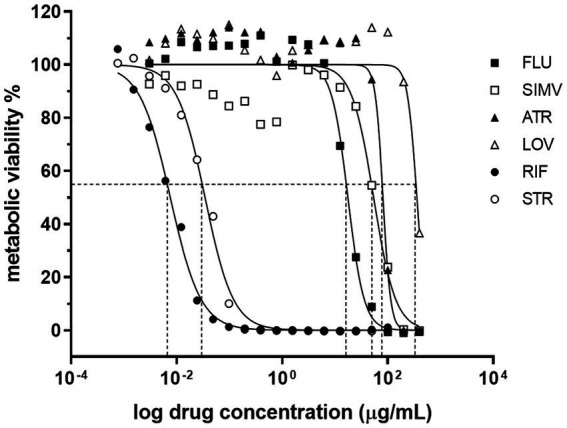
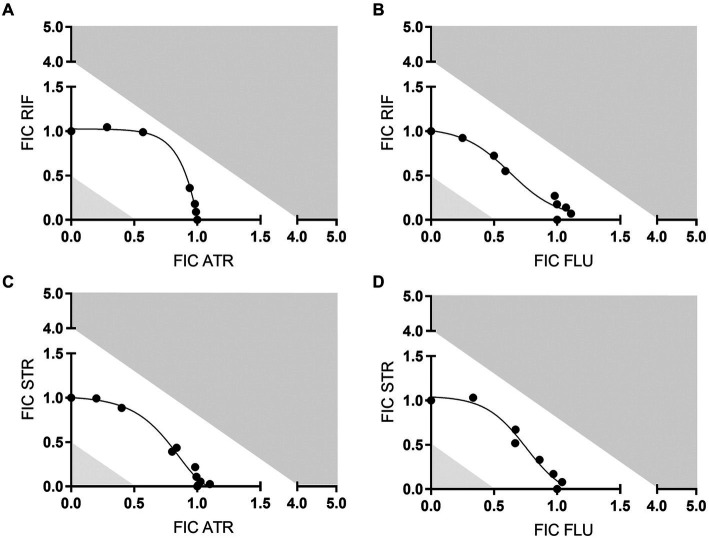
causes Buruli Ulcer, a neglected infectious skin disease that typically progresses from an early non-ulcerative lesion to an ulcer with undermined edges. If not promptly treated, these lesions can lead to severe disfigurement and disability. The standard antibiotic regimen for Buruli Ulcer treatment has been oral rifampicin combined with intramuscular streptomycin administered daily for 8 weeks. However, there has been a recent shift toward replacing streptomycin with oral clarithromycin. Despite the advantages of this antibiotic regimen, it is limited by low compliance, associated side effects, and refractory efficacy for severe ulcerative lesions. Therefore, new drug candidates with a safer pharmacological spectrum and easier mode of administration are needed. Statins are lipid-lowering drugs broadly used for dyslipidemia treatment but have also been reported to have several pleiotropic effects, including antimicrobial activity against fungi, parasites, and bacteria. In the present study, we tested the susceptibility of to several statins, namely atorvastatin, simvastatin, lovastatin and fluvastatin. Using broth microdilution assays and cultures of -infected macrophages, we found that atorvastatin, simvastatin and fluvastatin had antimicrobial activity against . Furthermore, when using the checkerboard assay, the combinatory additive effect of atorvastatin and fluvastatin with the standard antibiotics used for Buruli Ulcer treatment highlighted the potential of statins as adjuvant drugs. In conclusion, statins hold promise as potential treatment options for Buruli Ulcer. Further studies are necessary to validate their effectiveness and understand the mechanism of action of statins against .
引起布鲁里溃疡,这是一种被忽视的传染性皮肤病,通常从早期的非溃疡性病变发展为边缘呈潜行性的溃疡。如果不及时治疗,这些病变会导致严重的毁容和残疾。治疗布鲁里溃疡的标准抗生素方案是口服利福平联合每日肌内注射链霉素,持续8周。然而,最近出现了用口服克拉霉素替代链霉素的趋势。尽管这种抗生素方案有优点,但它受到依从性低、相关副作用以及对严重溃疡性病变疗效不佳的限制。因此,需要具有更安全药理谱和更简便给药方式的新候选药物。他汀类药物是广泛用于治疗血脂异常的降脂药物,但也有报道称其具有多种多效性作用,包括对真菌、寄生虫和细菌的抗菌活性。在本研究中,我们测试了几种他汀类药物(即阿托伐他汀、辛伐他汀、洛伐他汀和氟伐他汀)对[具体病原体未提及]的敏感性。通过肉汤微量稀释试验和[具体病原体未提及]感染的巨噬细胞培养,我们发现阿托伐他汀、辛伐他汀和氟伐他汀对[具体病原体未提及]具有抗菌活性。此外,当使用棋盘法时,阿托伐他汀和氟伐他汀与用于治疗布鲁里溃疡的标准抗生素的联合相加作用突出了他汀类药物作为辅助药物的潜力。总之,他汀类药物有望成为治疗布鲁里溃疡的潜在选择。有必要进行进一步研究以验证其有效性并了解他汀类药物对[具体病原体未提及]的作用机制。