Boness Cassandra L, Votaw Victoria R, Schwebel Frank J, Moniz-Lewis David I K, McHugh R Kathryn, Witkiewitz Katie
Center on Alcohol, Substance use, And Addictions (CASAA), University of New Mexico.
Department of Psychology, University of New Mexico.
Clin Psychol (New York). 2023 Jun;30(2):129-142. doi: 10.1037/cps0000131. Epub 2023 Feb 27.
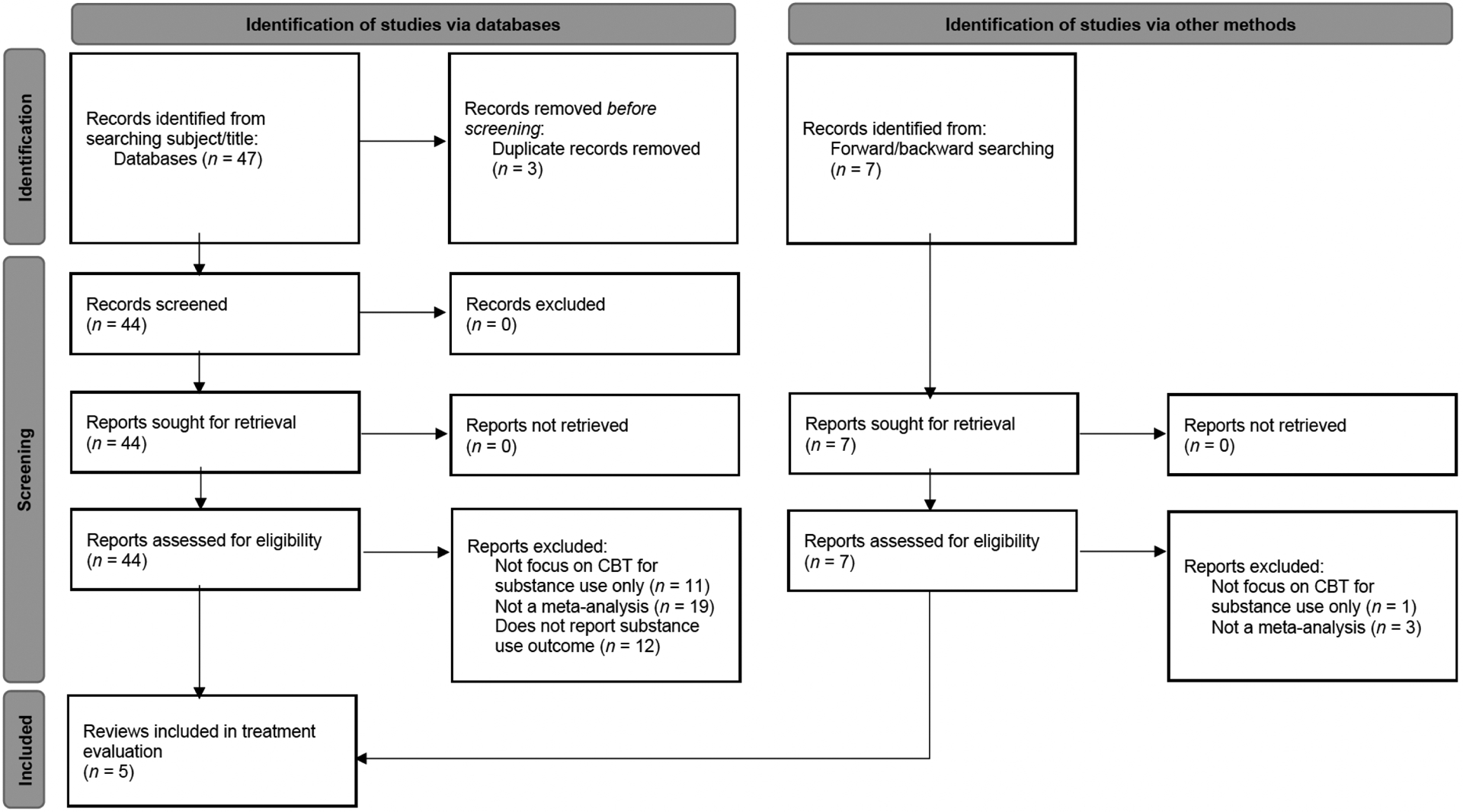
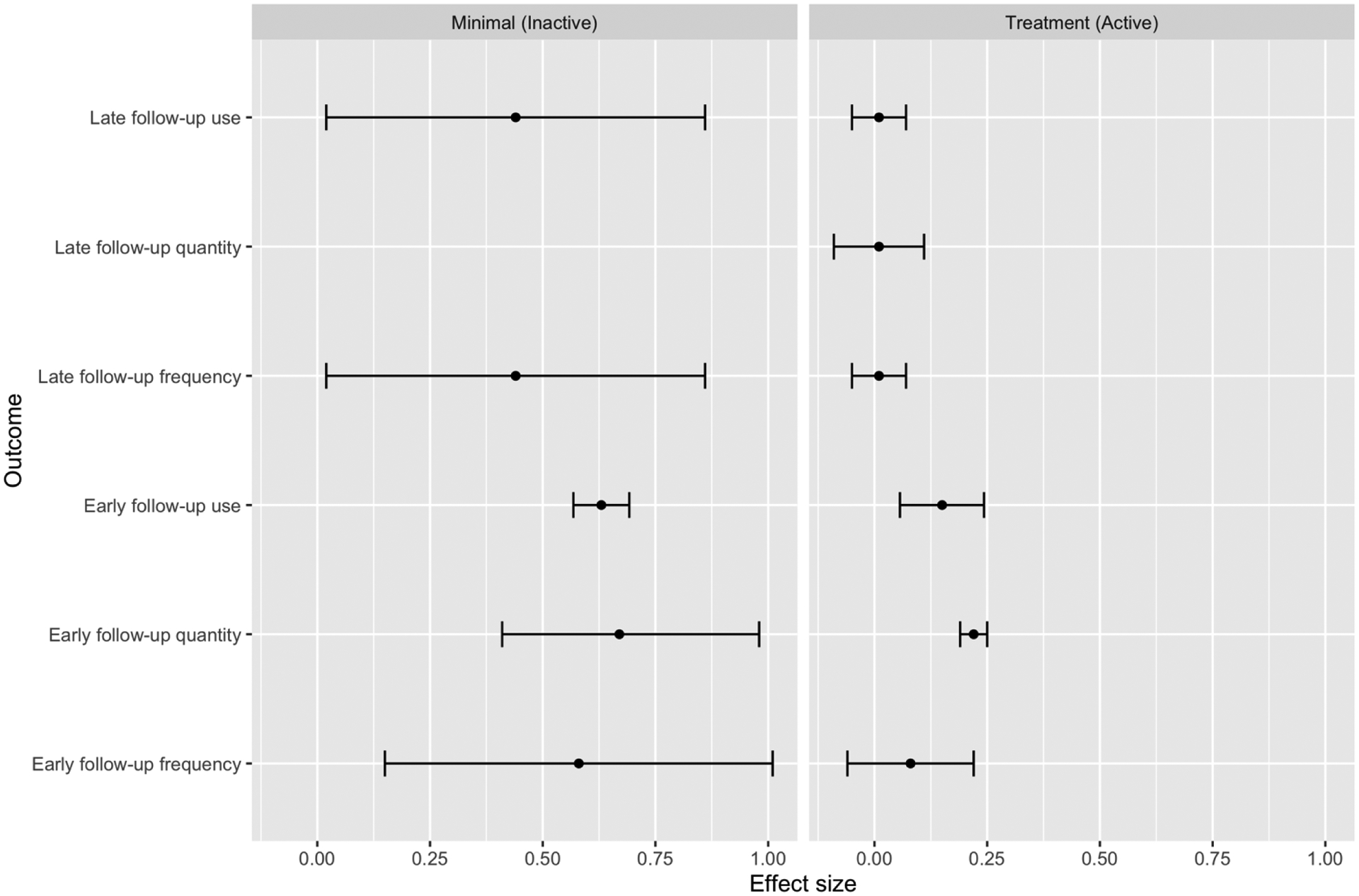
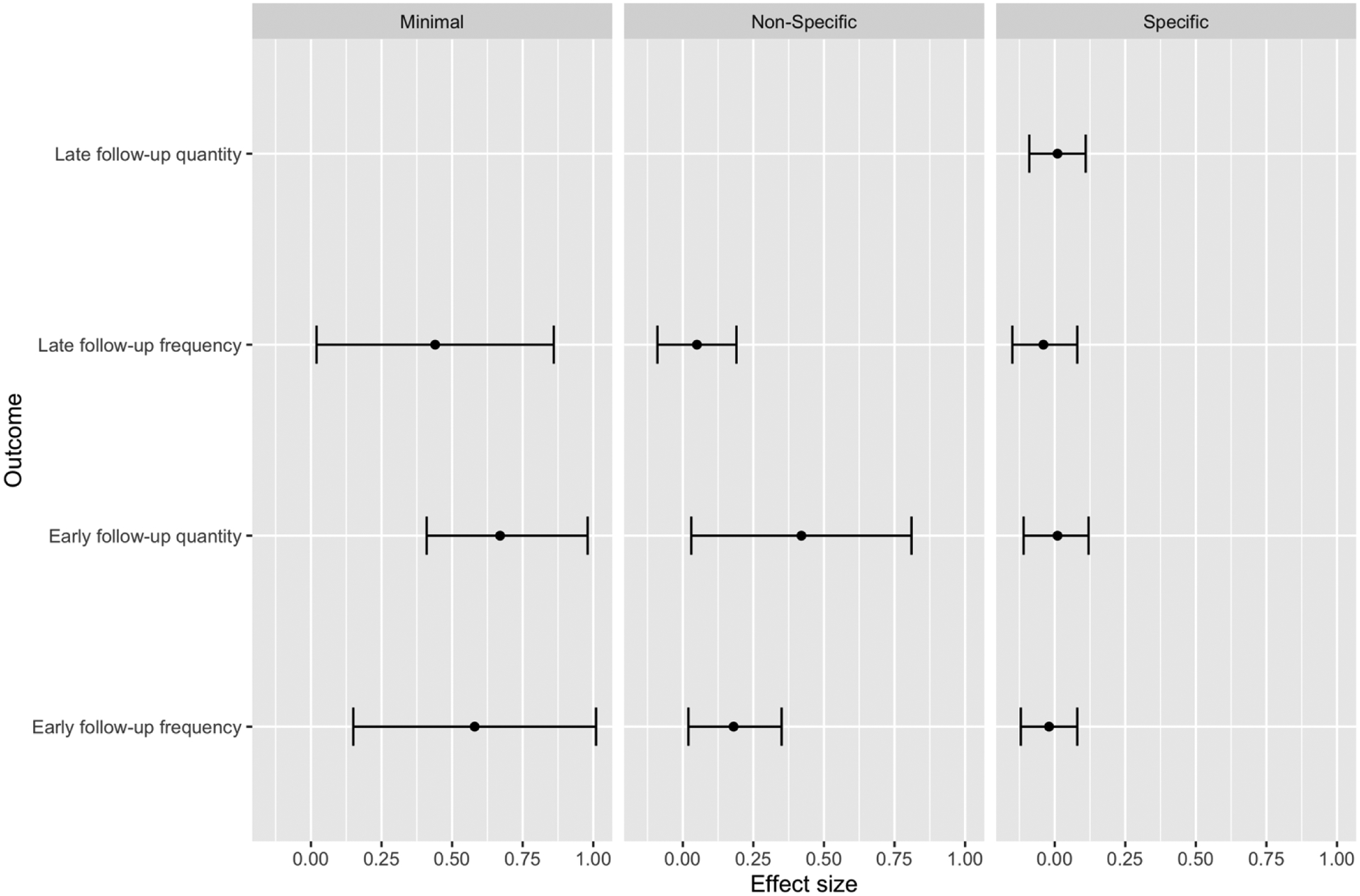
Cognitive behavioral therapy (CBT) is a commonly used treatment for substance use disorders (SUDs) but has not been evaluated using the American Psychological Association's "Tolin Criteria" for determining the empirical basis of psychological treatments. The current systematic review evaluated five meta-analyses of CBT for SUD. One meta-analysis had sufficient quality to be considered in the evaluation of effect sizes. CBT produced small to moderate effects on substance use when compared to inactive treatment and was most effective at early follow-up (1-6 months post-treatment) compared to late follow-up (8+ months post-treatment). Sensitivity analyses including all five meta-analyses found similar results. A "strong recommendation" was provided for CBT as an empirically supported treatment for SUD, based on effects on substance use, quality of evidence, and consideration of contextual factors (e.g., efficacy in diverse populations).
认知行为疗法(CBT)是治疗物质使用障碍(SUDs)的常用方法,但尚未依据美国心理学会的“托林标准”来评估其确定心理治疗实证基础的情况。当前的系统评价评估了五项关于CBT治疗SUD的荟萃分析。其中一项荟萃分析质量足够高,可用于效应量评估。与无活性治疗相比,CBT对物质使用产生了小到中等程度的效果,且与后期随访(治疗后8个月以上)相比,在早期随访(治疗后1 - 6个月)时最为有效。纳入所有五项荟萃分析的敏感性分析得出了相似的结果。基于对物质使用的影响、证据质量以及对背景因素的考量(例如在不同人群中的疗效),为CBT作为一种有实证支持的SUD治疗方法提供了“强烈推荐”。