Department of Functional Neurosurgery and Neuromodulation, SI "Romodanov Neurosurgery Institute NAMS of Ukraine", Kyiv, Ukraine.
Stereotact Funct Neurosurg. 2023;101(6):359-368. doi: 10.1159/000534084. Epub 2023 Oct 16.
Parkinson's disease (PD) is one of the most common neurodegenerative progressive disorders. Despite the dominance of neurostimulation technology, stereotactic lesioning operations play a significant role in the treatment of PD. The aim of the study was to evaluate the effectiveness and safety of staged bilateral asymmetric radiofrequency (RF) stereotactic lesioning in a highly selected group of PD patients.
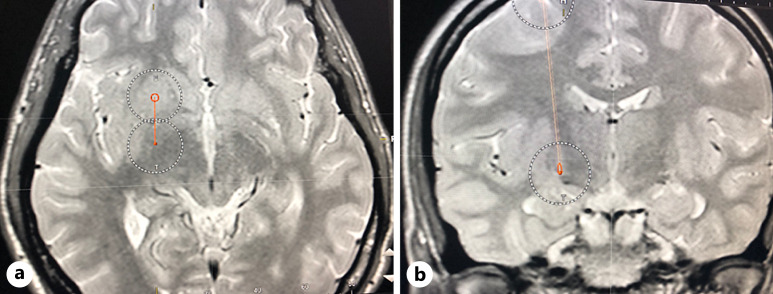
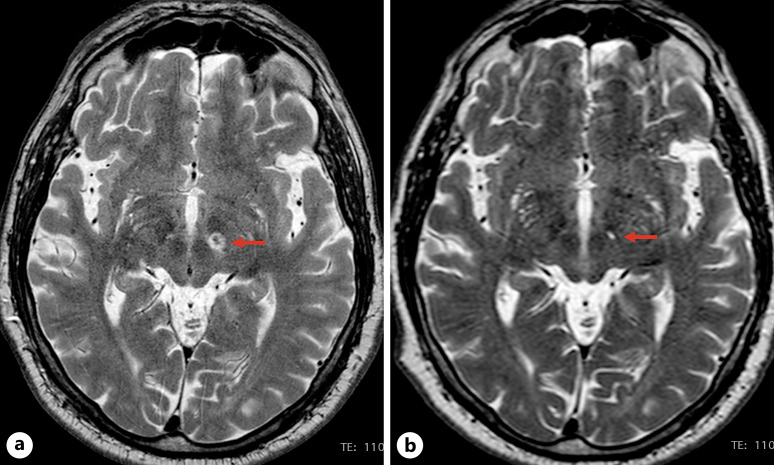
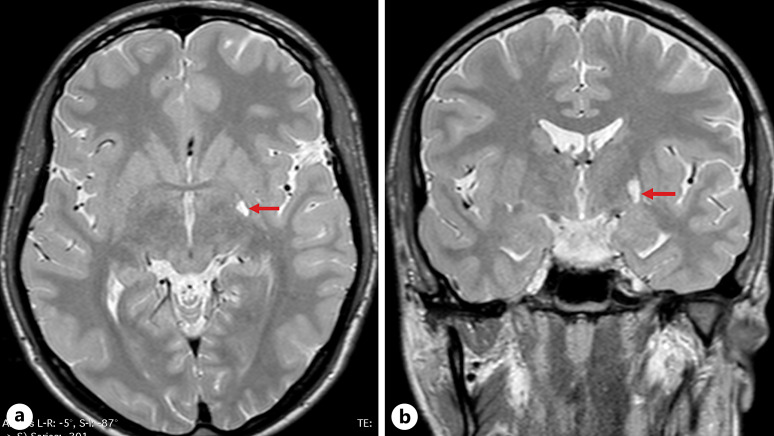
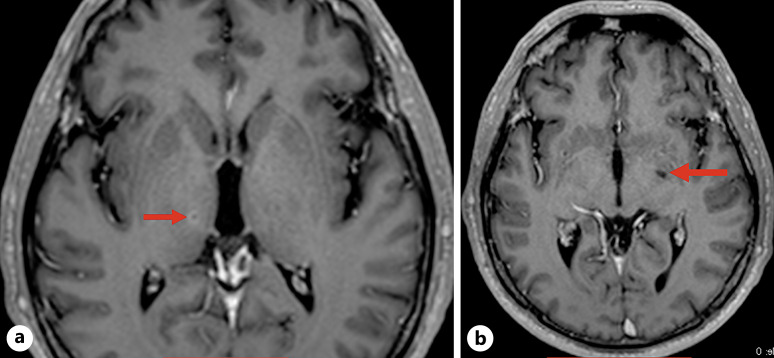
A retrospective review of 418 consecutive patients undergoing stereotactic ablation for advanced PD at our institution revealed 28 patients who underwent staged asymmetric bilateral ablation. In this subset, after initial RF thalamotomy, contralateral pallidotomy was performed in 16 (57.1%) patients (group Vim-GPi), and contralateral lesion of the subthalamic nucleus (STN) was performed in 12 (32.9%) patients (group Vim-STN). The mean duration of disease before the first surgery was 9.9 ± 0.8 years. The mean interval between the two operations was 3.5 ± 0.4 years (range, 1-10 years); in the Vim-GPi group, it was 3.1 ± 0.4 years; and in the Vim-STN group, it was 4.3 ± 0.1 years. After the second operation, the long-term follow-up lasted from 1 to 8 years (mean 4.8 ± 0.5 years). All patients were evaluated 1 year after the second operation.
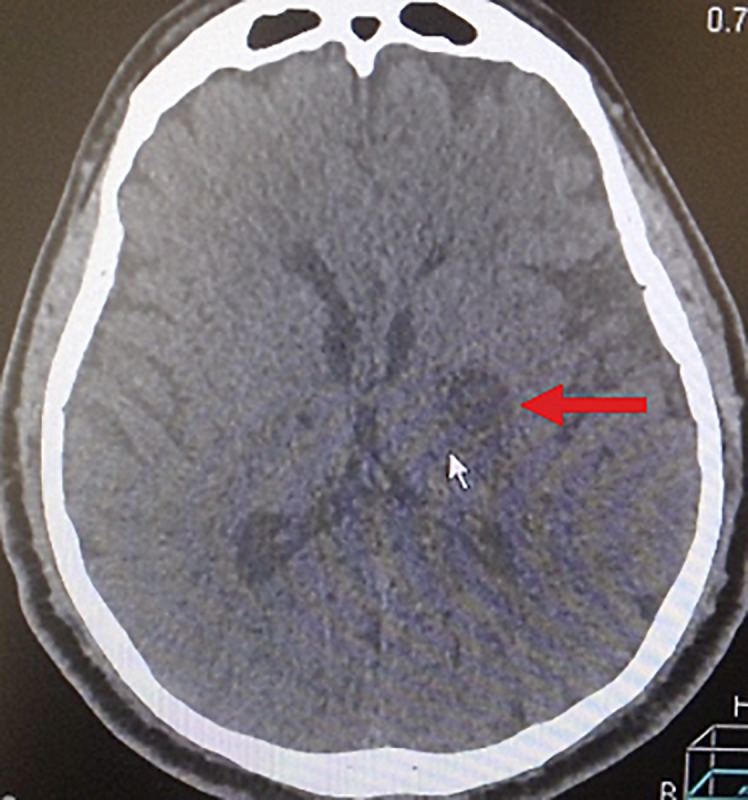
One year after staged bilateral lesioning, the mean tremor score improved from baseline, prior to the first operation, from 19.8 to 3.8 (improvement of 81%), the overall mean rigidity score improved from 11.0 to 3.7 (improvement of 66%), and hypokinesia improved from 14.8 to 8.9 (improvement of 40%). One year after staged bilateral lesioning, the total UPDRS score improved in the Vim-GPi group by 47% in the OFF and 45.9% in the ON states. In the Vim-STN group, the total UPDRS score improved from baseline, prior to the first operation, by 44.8% in the OFF and 51.6% in the ON states. Overall, levodopa dose was reduced by 43.4%. Neurological complications were observed in 4 (14.3%) cases; among them, 1 (3.6%) patient had permanent events related to local ischemia after pallidotomy.
Staged asymmetric bilateral stereotactic RF lesioning can be a safe and effective method in highly selected patients with advanced PD, particularly where deep brain stimulation is not available or desirable. Careful identification and selection of patients for ablative surgery allow achieving optimal results in the treatment of PD with bilateral symptoms.
帕金森病(PD)是最常见的神经退行性进行性疾病之一。尽管神经刺激技术占据主导地位,但立体定向损毁手术在 PD 的治疗中仍具有重要作用。本研究旨在评估高度选择的 PD 患者接受分阶段双侧不对称射频(RF)立体定向损毁术的有效性和安全性。
对在我院接受立体定向消融术治疗晚期 PD 的 418 例连续患者进行回顾性分析,发现 28 例患者接受了分阶段双侧不对称消融术。在这个亚组中,在初次 RF 丘脑切开术之后,16 例(57.1%)患者(Vim-GPi 组)接受了对侧苍白球毁损术,12 例(32.9%)患者(Vim-STN 组)接受了对侧丘脑底核(STN)损毁术。第一次手术前疾病的平均病程为 9.9 ± 0.8 年。两次手术之间的平均间隔为 3.5 ± 0.4 年(范围为 1-10 年);在 Vim-GPi 组中,间隔为 3.1 ± 0.4 年;在 Vim-STN 组中,间隔为 4.3 ± 0.1 年。第二次手术后,长期随访时间为 1 至 8 年(平均 4.8 ± 0.5 年)。所有患者均在第二次手术后 1 年进行评估。
分阶段双侧损毁术后 1 年,震颤评分从基线(第一次手术前)的 19.8 分改善至 3.8 分(改善 81%),总体僵直评分从 11.0 分改善至 3.7 分(改善 66%),运动迟缓评分从 14.8 分改善至 8.9 分(改善 40%)。在 Vim-GPi 组中,分阶段双侧损毁术后 1 年,OFF 状态下 UPDRS 总评分改善了 47%,ON 状态下改善了 45.9%。在 Vim-STN 组中,在 OFF 状态下,总 UPDRS 评分从基线(第一次手术前)改善了 44.8%,在 ON 状态下改善了 51.6%。左旋多巴剂量总体减少了 43.4%。观察到 4 例(14.3%)患者出现神经并发症;其中,1 例(3.6%)患者在苍白球毁损术后出现与局部缺血相关的永久性事件。
分阶段双侧不对称立体定向 RF 损毁术对于晚期 PD 高度选择的患者,尤其是深部脑刺激不可用或不期望使用的患者,是一种安全有效的方法。对消融手术的患者进行仔细识别和选择,可使双侧症状 PD 的治疗获得最佳效果。