Department of General Internal Medicine and Psychosomatics, Heidelberg University Hospital Psychosocial Medicine Center, Heidelberg, Germany
Department of General Internal Medicine and Psychosomatics, Heidelberg University Hospital Psychosocial Medicine Center, Heidelberg, Germany.
BMJ Ment Health. 2023 Oct;26(1). doi: 10.1136/bmjment-2023-300831.
Targeted mental health interventions are increasingly described as individualised, personalised or person-centred approaches. However, the definitions for these terms vary significantly. Their interchangeable use prevents operationalisations and measures.
This scoping review provides a synthesis of key concepts, definitions and the language used in the context of these terms in an effort to delineate their use for future research.
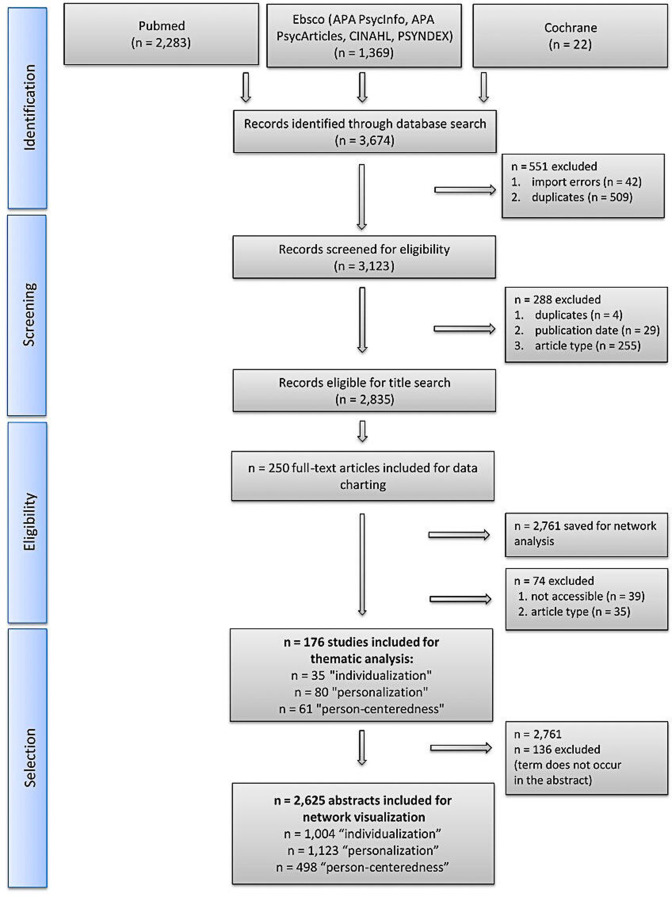
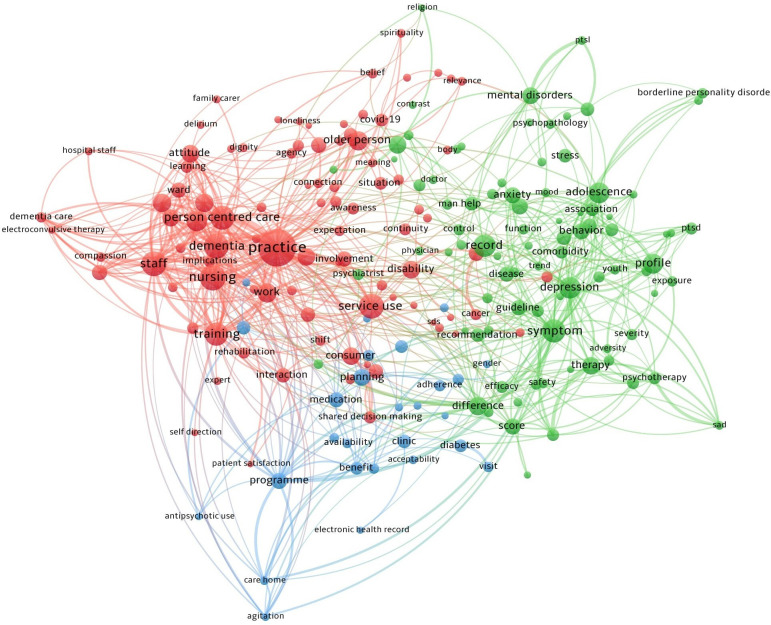
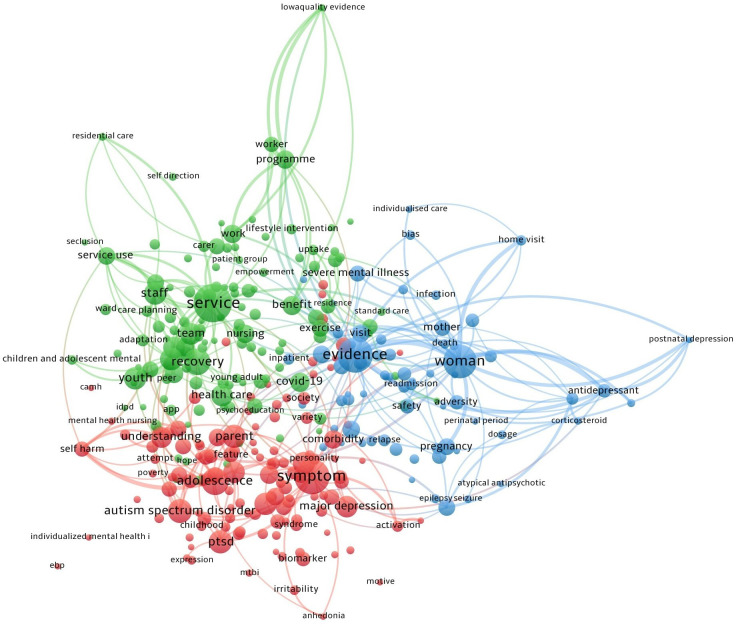
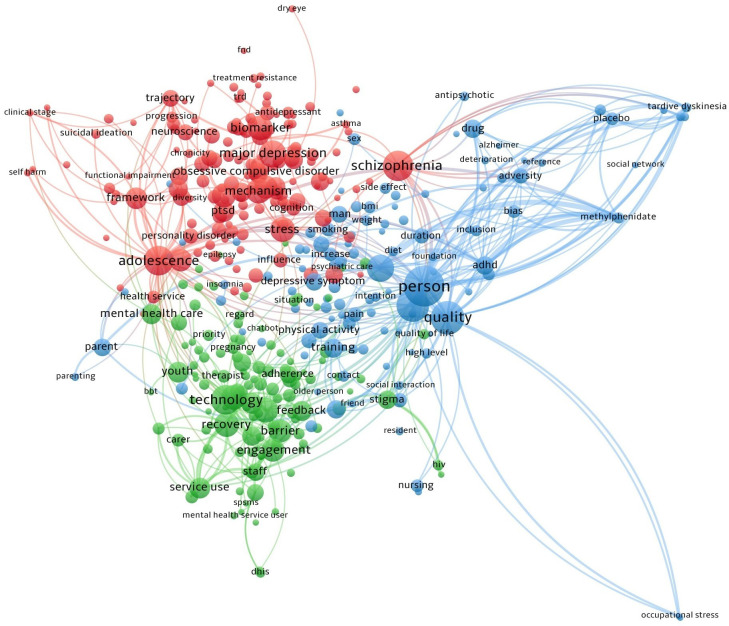
Our search on PubMed, EBSCO and Cochrane provided 2835 relevant titles. A total of 176 titles were found eligible for extracting data. A thematic analysis was conducted to synthesise the underlying aspects of individualisation, personalisation and person-centredness. Network visualisations of co-occurring words in 2625 abstracts were performed using VOSViewer.
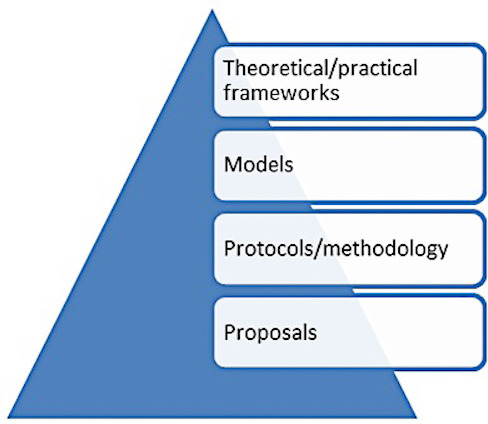
Overall, 106 out of 176 (60.2%) articles provided concepts for individualisation, personalisation and person-centredness. Studies using person-centredness provided a conceptualisation more often than the others. A thematic analysis revealed medical, psychological, sociocultural, biological, behavioural, economic and environmental dimensions of the concepts. Practical frameworks were mostly found related to person-centredness, while theoretical frameworks emerged in studies on personalisation. Word co-occurrences showed common psychiatric words in all three network visualisations, but differences in further contexts.
The use of individualisation, personalisation and person-centredness in mental healthcare is multifaceted. While individualisation was the most generic term, personalisation was often used in biomedical or technological studies. Person-centredness emerged as the most well-defined concept, with many frameworks often related to dementia care. We recommend that the use of these terms follows a clear definition within the context of their respective disorders, treatments or medical settings.
Open Science Framework: osf.io/uatsc.
靶向心理健康干预措施越来越多地被描述为个体化、个性化或以人为中心的方法。然而,这些术语的定义差异很大。它们的可互换使用妨碍了操作和衡量。
本范围综述提供了这些术语在背景下的关键概念、定义和所用语言的综合,以努力划定它们在未来研究中的用途。
我们在 PubMed、EBSCO 和 Cochrane 上的搜索提供了 2835 个相关标题。共有 176 个标题被发现符合提取数据的条件。进行了主题分析以综合个体化、个性化和以人为中心的基本方面。使用 VosViewer 对 2625 个摘要中的共现词进行网络可视化。
总体而言,176 篇文章中有 106 篇(60.2%)提供了个体化、个性化和以人为中心的概念。使用以人为中心的研究比其他研究更经常提供概念化。主题分析揭示了这些概念的医学、心理、社会文化、生物、行为、经济和环境方面。实践框架主要与以人为中心有关,而理论框架则出现在个性化研究中。词共现显示在所有三个网络可视化中都有常见的精神科词汇,但在进一步的上下文中存在差异。
在精神保健中使用个体化、个性化和以人为中心是多方面的。虽然个体化是最通用的术语,但个性化在生物医学或技术研究中经常使用。以人为中心是最明确的概念,许多框架通常与痴呆症护理有关。我们建议在各自疾病、治疗或医疗环境的背景下,使用这些术语遵循明确的定义。
开放科学框架:osf.io/uatsc。