Verna and Marrs McLean Department of Biochemistry and Molecular Pharmacology, Baylor College of Medicine, Houston, TX, USA.
Virology Institute and Technology Innovation, IVIT, CONICET-INTA, Hurlingham, Buenos Aires, Argentina.
Nat Commun. 2023 Oct 16;14(1):6516. doi: 10.1038/s41467-023-42146-0.
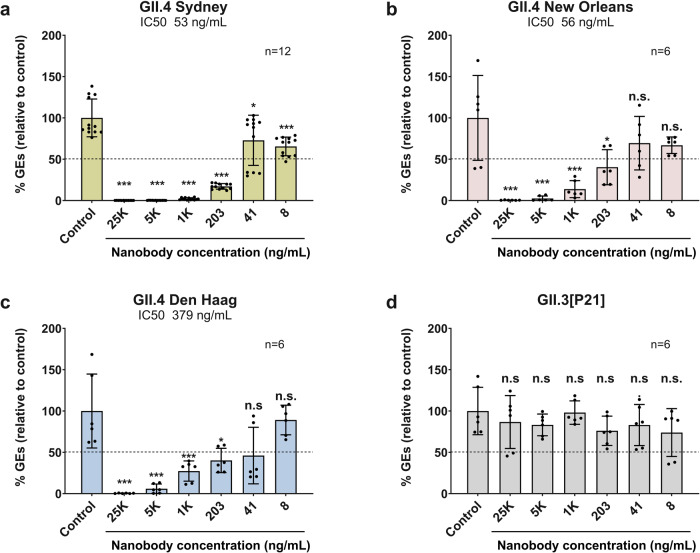
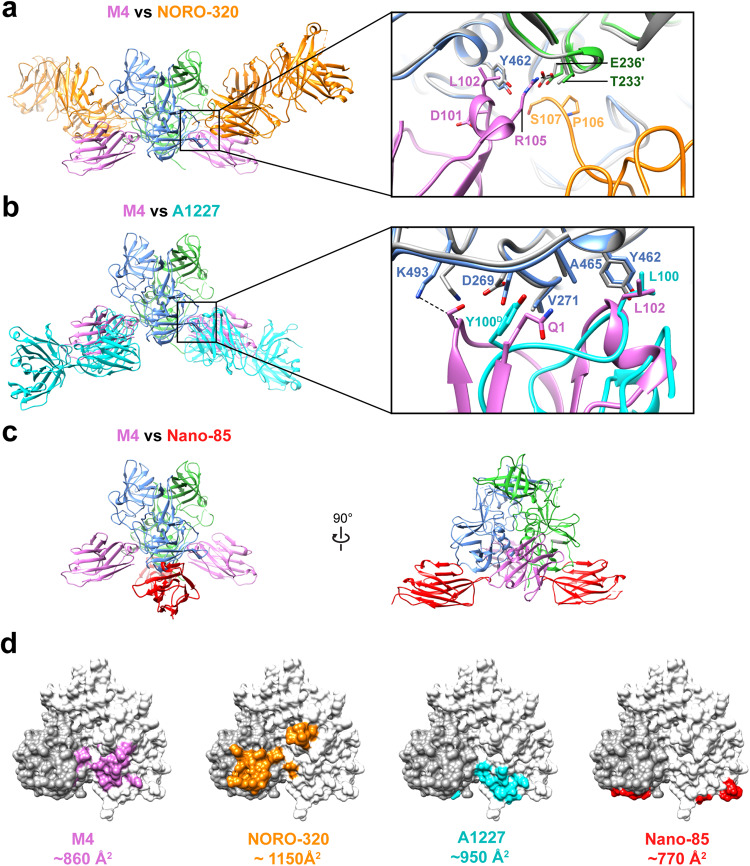
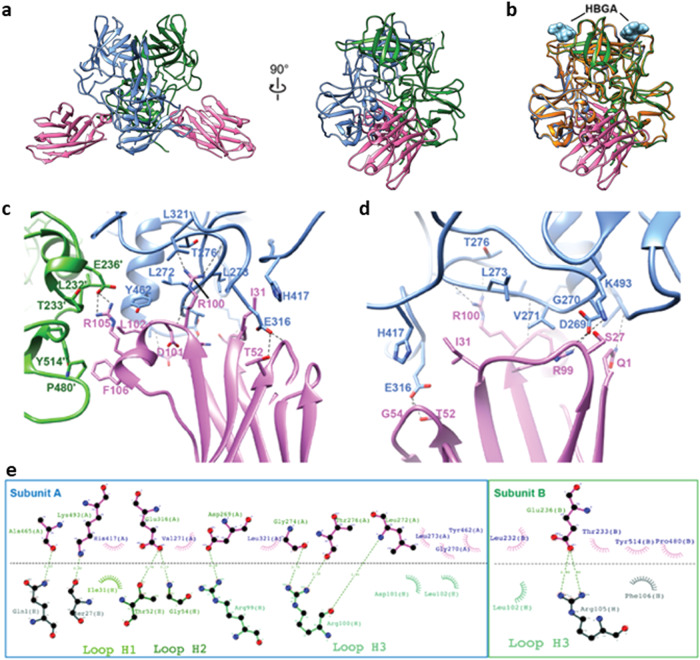
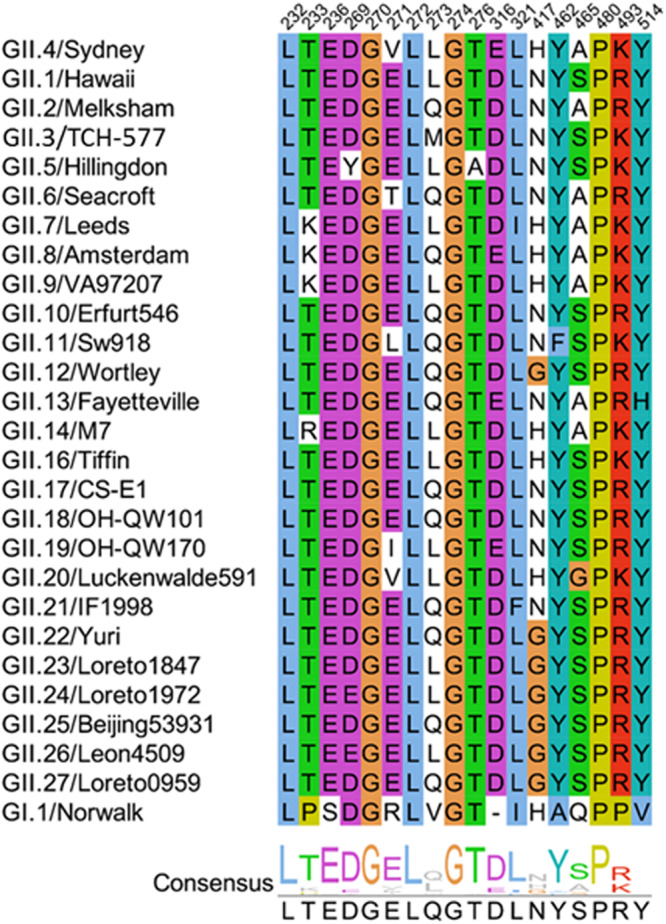
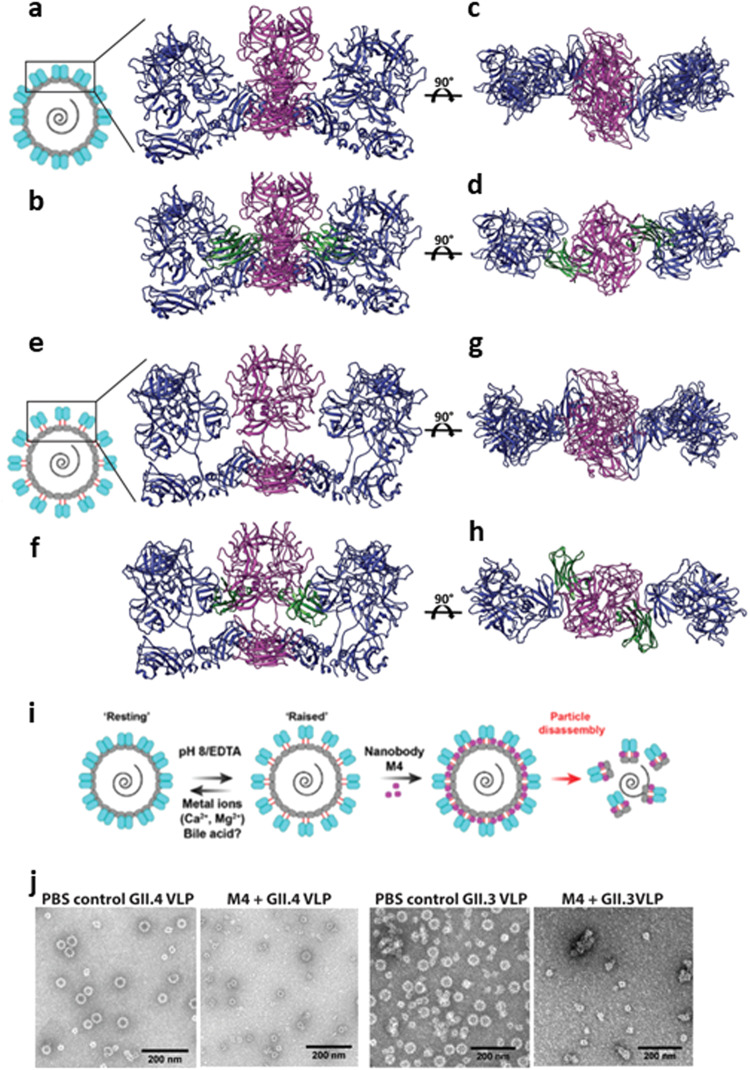
Acute gastroenteritis caused by human noroviruses (HuNoVs) is a significant global health and economic burden and is without licensed vaccines or antiviral drugs. The GII.4 HuNoV causes most epidemics worldwide. This virus undergoes epochal evolution with periodic emergence of variants with new antigenic profiles and altered specificity for histo-blood group antigens (HBGA), the determinants of cell attachment and susceptibility, hampering the development of immunotherapeutics. Here, we show that a llama-derived nanobody M4 neutralizes multiple GII.4 variants with high potency in human intestinal enteroids. The crystal structure of M4 complexed with the protruding domain of the GII.4 capsid protein VP1 revealed a conserved epitope, away from the HBGA binding site, fully accessible only when VP1 transitions to a "raised" conformation in the capsid. Together with dynamic light scattering and electron microscopy of the GII.4 VLPs, our studies suggest a mechanism in which M4 accesses the epitope by altering the conformational dynamics of the capsid and triggering its disassembly to neutralize GII.4 infection.
人类诺如病毒(HuNoVs)引起的急性肠胃炎是一项重大的全球健康和经济负担,目前尚无许可疫苗或抗病毒药物。GII.4 型 HuNoV 导致了全球大多数疫情。该病毒经历了阶段性进化,周期性出现具有新抗原谱的变异体,改变了对组织血型抗原(HBGA)的特异性,而 HBGA 是细胞附着和易感性的决定因素,从而阻碍了免疫疗法的发展。在这里,我们表明,一种来自羊驼的纳米抗体 M4 能够以高亲和力中和多种 GII.4 变异体。M4 与 GII.4 衣壳蛋白 VP1 的突出结构域复合物的晶体结构揭示了一个保守的表位,远离 HBGA 结合位点,只有当 VP1 在衣壳中转变为“凸起”构象时,该表位才完全可及。结合 GII.4 VLPs 的动态光散射和电子显微镜研究,我们的研究表明了一种机制,其中 M4 通过改变衣壳的构象动力学并触发其解体来中和 GII.4 感染,从而能够接触到表位。