Moghadam Reza Zarei, Dizagi Hamid Rezagholipour, Agren Hans, Ehsani Mohammad Hossein
Department of Physics, Faculty of Science, Arak University, Arak, 38156-88349, Iran.
Department of Theoretical Chemistry and Biology, KTH Royal Institute of Technology, 10691, Stockholm, Sweden.
Sci Rep. 2023 Oct 16;13(1):17556. doi: 10.1038/s41598-023-44947-1.
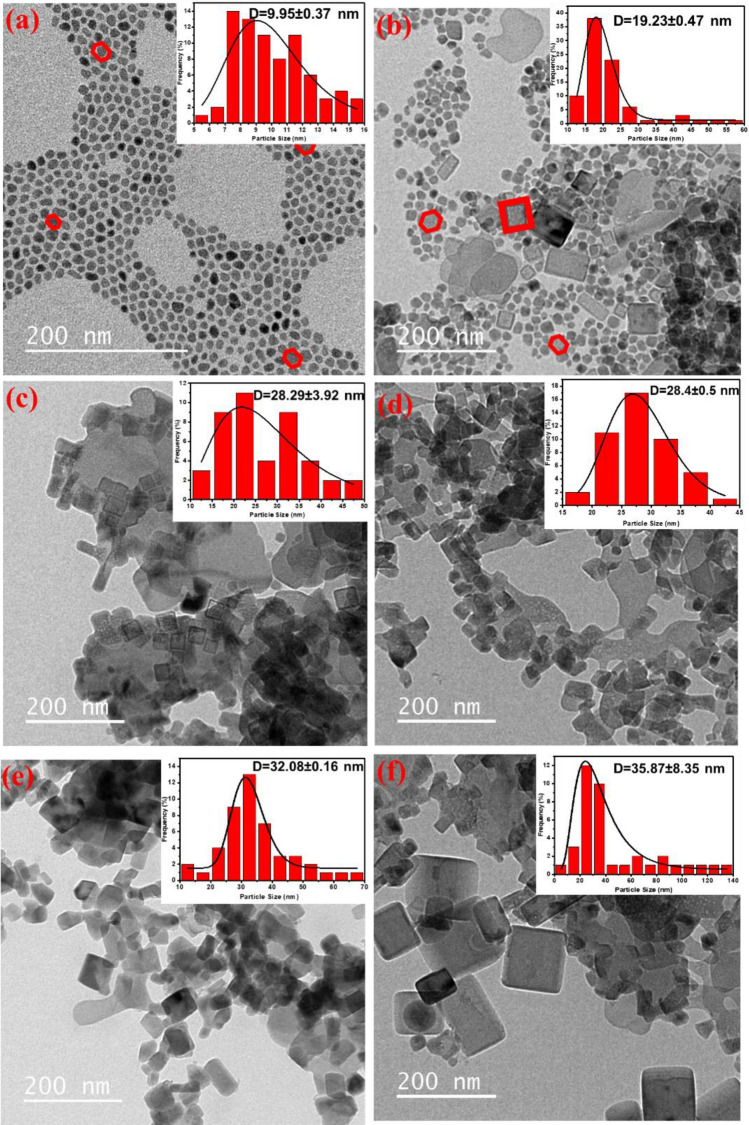
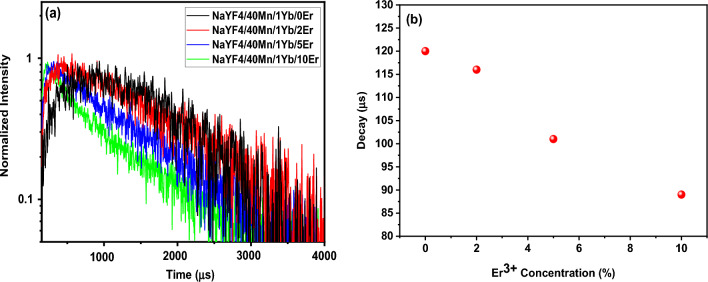
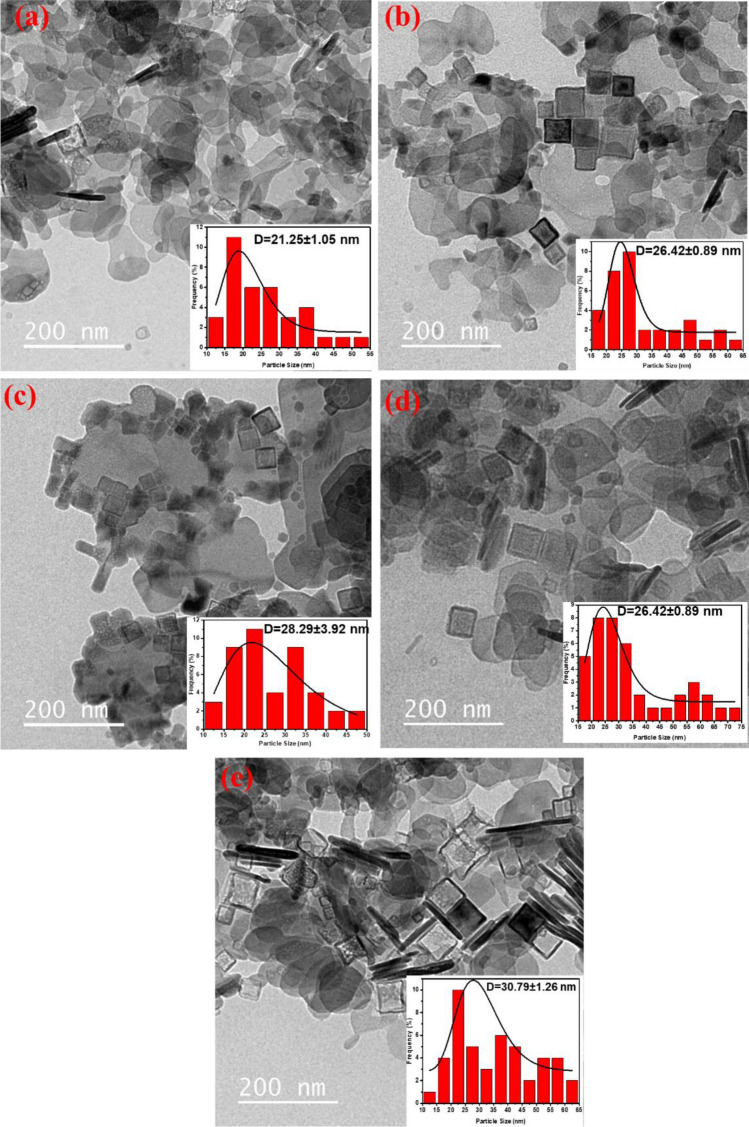
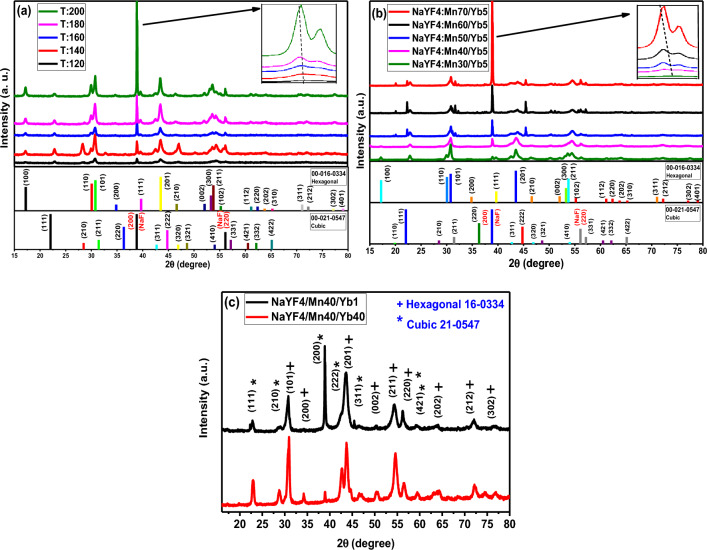
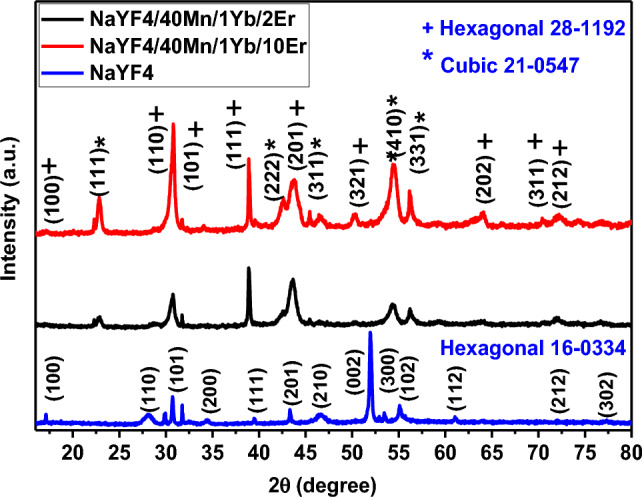
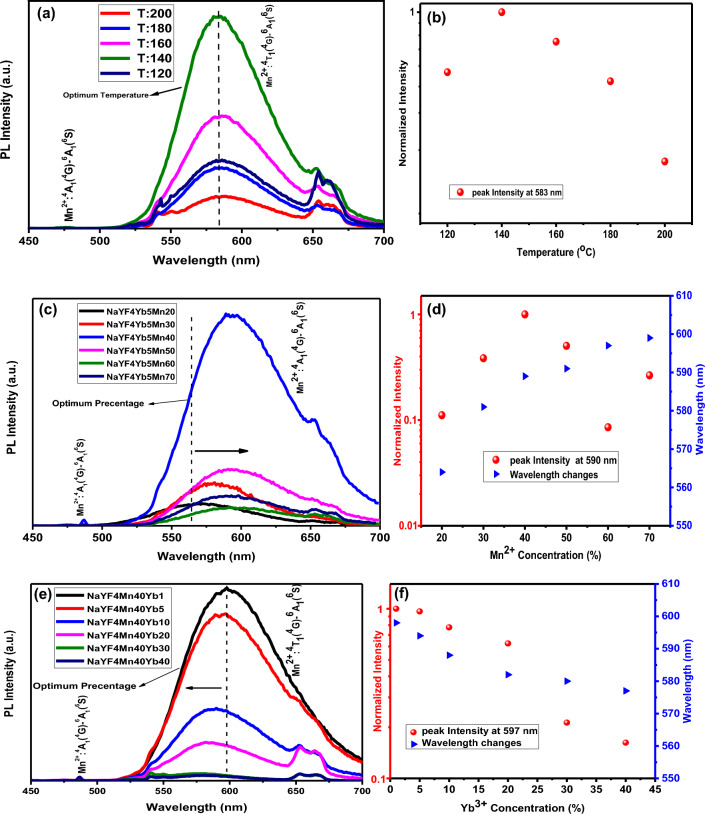
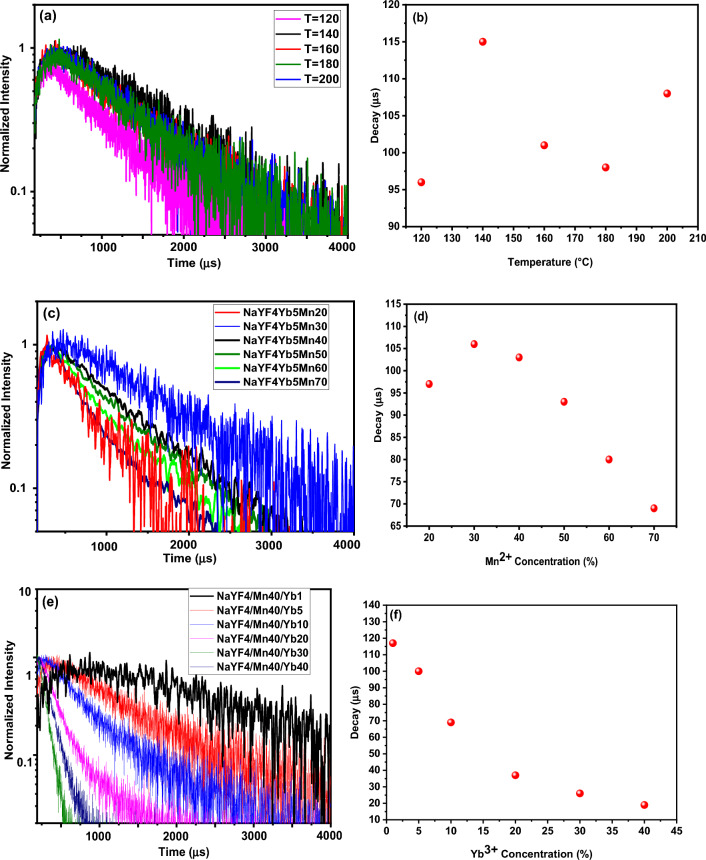
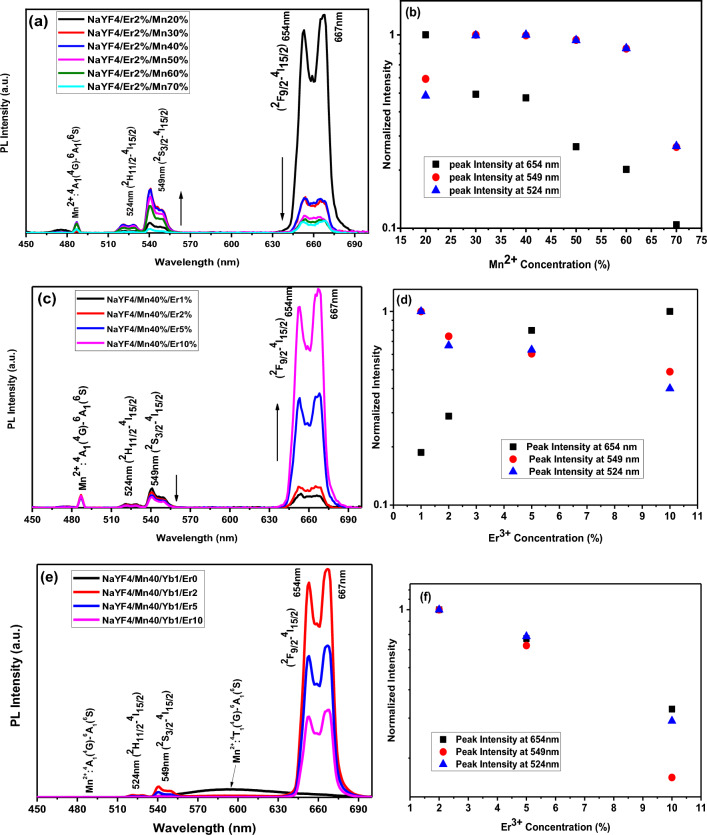
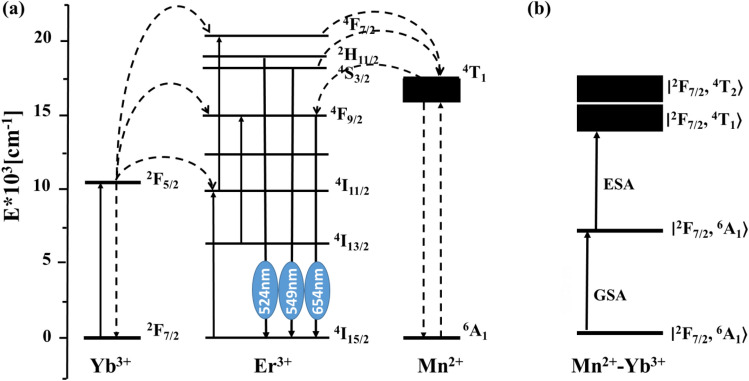
In this work, we investigated in detail the upconversion properties of several types of nanoparticles, including NaYF:5%Yb/30%Mn, NaYF:40%Mn/x%Yb (x% = 1, 5, 10, 20, 30, and 40), NaYF:2%Er/x%Mn (x% = 20, 30, 40, 50, 60, and 70), NaYF:40%Mn/x%Er (x% = 1, 2, 5, and 10), and NaYF:40%Mn/1%Yb/x%Er (x% = 0, 2, 5, and 10). We studied their upconversion emission under 980 nm excitation in both pulsed and continuous wave modes at different synthesis temperatures. The nanoparticles were characterized using transmission electron microscopy (TEM), X-ray diffraction (XRD), and photoluminescence (PL) spectroscopy. The doping of Yb and Mn ions resulted in the nanoparticles assuming cubic and hexagonal crystal structures. The emission intensity increased (106.4 (a.u.*10) to 334.4(a.u.*10)) with increasing synthesis temperature from 120 to 140 °C, while a sharp decrease was observed when the synthesis temperature was increased to 200 °C. The gradual decrease in peak intensity with increasing Mn concentration from 20 to 70% was attributed to energy transfer from Mn to Yb. In NaYF:Mn/Yb/Er UCNPs, increasing the Er concentration from 0 to 10% led to the disappearance of the blue, orange, and green emission bands. The intense upconversion luminescence pattern with high spatial resolution indicates excellent potential for applications in displays, biological sensors, photodetectors, and solar energy converters.
在这项工作中,我们详细研究了几种类型纳米颗粒的上转换特性,包括NaYF:5%Yb/30%Mn、NaYF:40%Mn/x%Yb(x% = 1、5、10、20、30和40)、NaYF:2%Er/x%Mn(x% = 20、30、40、50、60和70)、NaYF:40%Mn/x%Er(x% = 1、2、5和10)以及NaYF:40%Mn/1%Yb/x%Er(x% = 0、2、5和10)。我们在不同合成温度下,以脉冲和连续波模式研究了它们在980 nm激发下的上转换发射。使用透射电子显微镜(TEM)、X射线衍射(XRD)和光致发光(PL)光谱对纳米颗粒进行了表征。Yb和Mn离子掺杂导致纳米颗粒呈现立方和六方晶体结构。随着合成温度从120℃升高到140℃,发射强度增加(从106.4(a.u.*10)增加到334.4(a.u.*10)),而当合成温度升高到200℃时观察到急剧下降。随着Mn浓度从20%增加到70%,峰值强度逐渐降低归因于从Mn到Yb的能量转移。在NaYF:Mn/Yb/Er上转换纳米颗粒中,将Er浓度从0%增加到10%导致蓝色、橙色和绿色发射带消失。具有高空间分辨率的强烈上转换发光图案表明在显示器、生物传感器、光电探测器和太阳能转换器中的应用具有巨大潜力。