Derrick Daniel K, Fanous Noah, Wells Anne, Lopera Jorge
Department of Radiology, UT Health San Antonio, San Antonio, TX, USA.
J Interv Med. 2023 Jul 7;6(3):137-139. doi: 10.1016/j.jimed.2023.07.001. eCollection 2023 Aug.
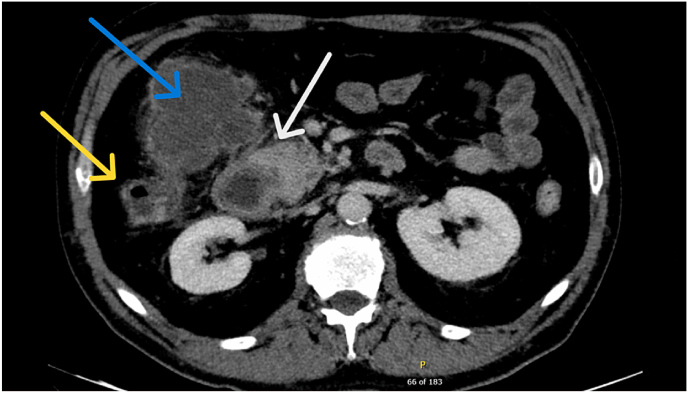
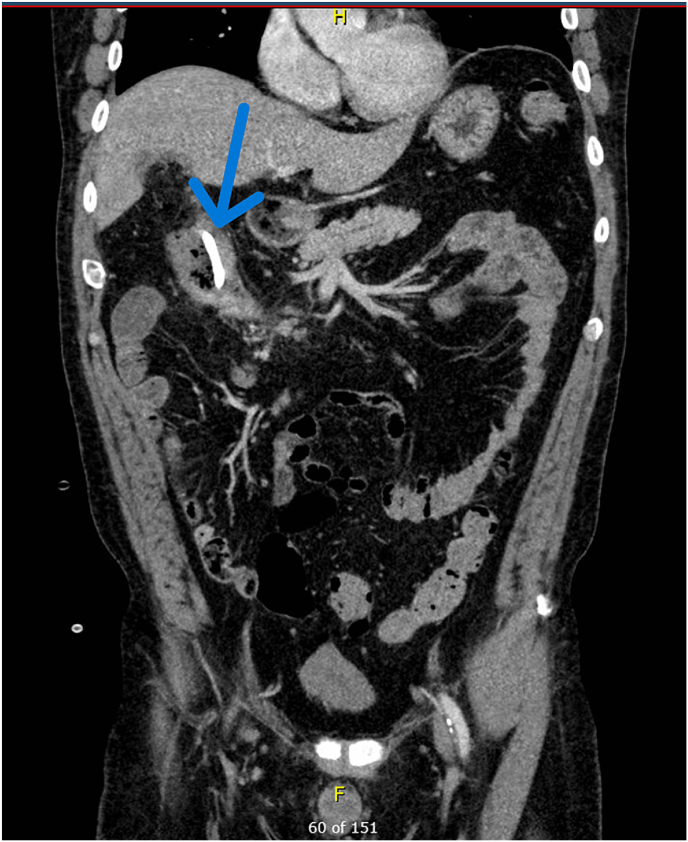
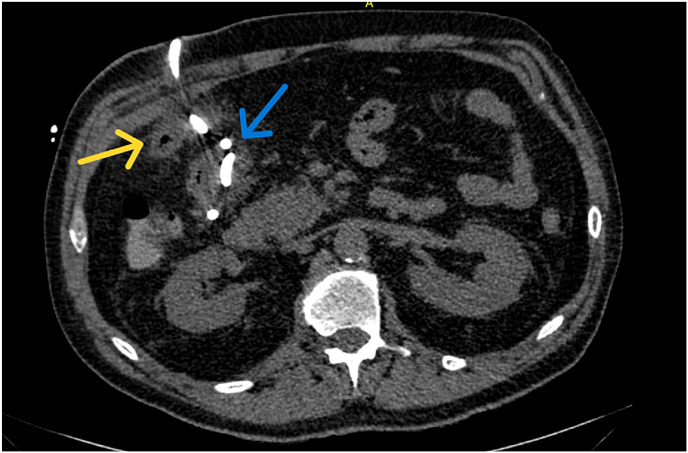
Percutaneous abscess drainage is a procedure commonly performed by interventional radiologists to provide source control on infections using CT or ultrasound guidance. The interventionalist has many different sizes and shapes of catheters to treat abscesses of varying sizes and locations, but the general approach to each abscess is similar: provide a percutaneous route for purulence, bacteria, necrotic tissue, and other debris to escape the body. While generally considered a low-risk procedure, adverse events can occur due to operator error or other means. We present a unique case of an abscess drain placed into a right upper quadrant abscess that formed following laparoscopic cholecystectomy that perforated and entered the colon. Astute physicians, both in the emergency department and the radiology reading room, were able to rapidly rule out more common post-operative complications and make the correct diagnosis, likely preventing dangerous sequelae from developing in this patient.
经皮脓肿引流术是介入放射科医生常用的一种操作,用于在CT或超声引导下对感染进行源头控制。介入医生有许多不同尺寸和形状的导管,以治疗不同大小和位置的脓肿,但对每个脓肿的一般处理方法相似:为脓液、细菌、坏死组织和其他碎片提供一条经皮途径,使其排出体外。虽然该操作通常被认为风险较低,但由于操作者失误或其他原因仍可能发生不良事件。我们报告了一例独特的病例,在腹腔镜胆囊切除术后形成的右上腹脓肿放置了脓肿引流管,该脓肿穿孔并进入结肠。急诊科和放射科阅片室的敏锐医生能够迅速排除更常见的术后并发症并做出正确诊断,这可能避免了该患者出现危险的后遗症。