Snyder Kara, Gorse Kiersten, Kochanek Patrick M, Jackson Travis C
University of South Florida, Morsani College of Medicine, USF Health Heart Institute, MDD 0630, 560 Channelside Dr, Tampa, FL, 33602, USA.
University of South Florida, Morsani College of Medicine, Department of Molecular Pharmacology & Physiology, 12901 Bruce B Downs Blvd, Tampa, FL, 33612, USA.
Cell Death Discov. 2023 Oct 17;9(1):379. doi: 10.1038/s41420-023-01677-7.
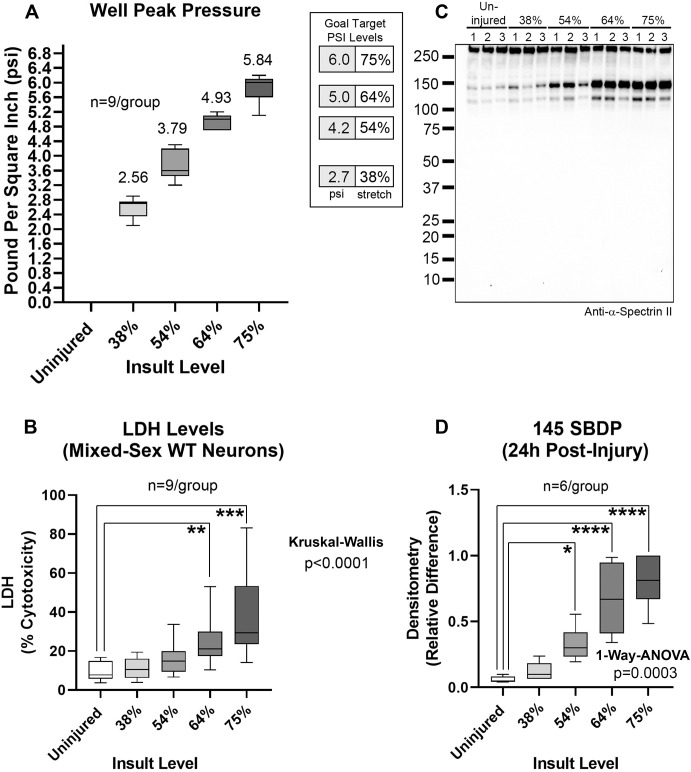
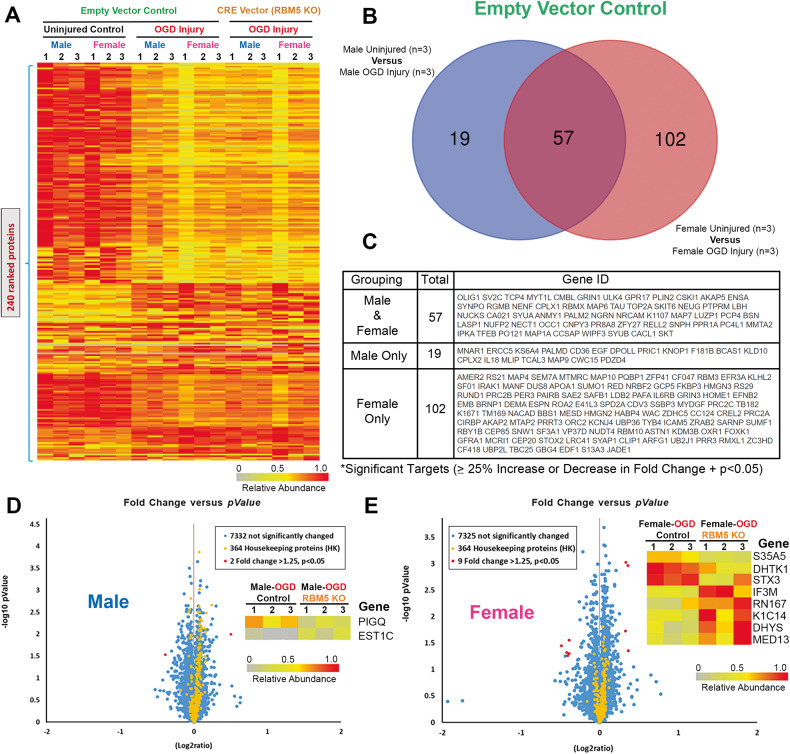
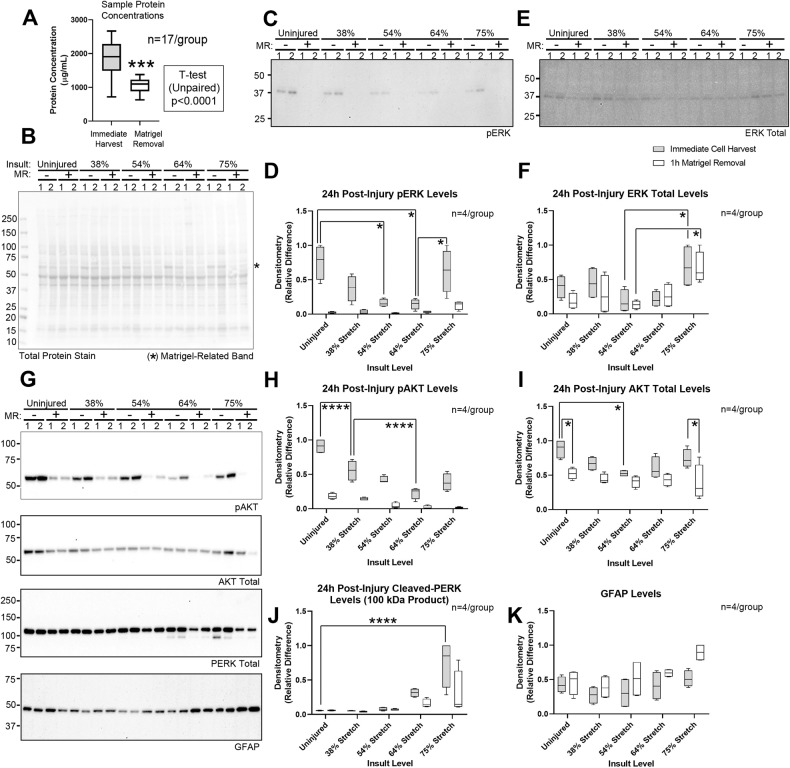
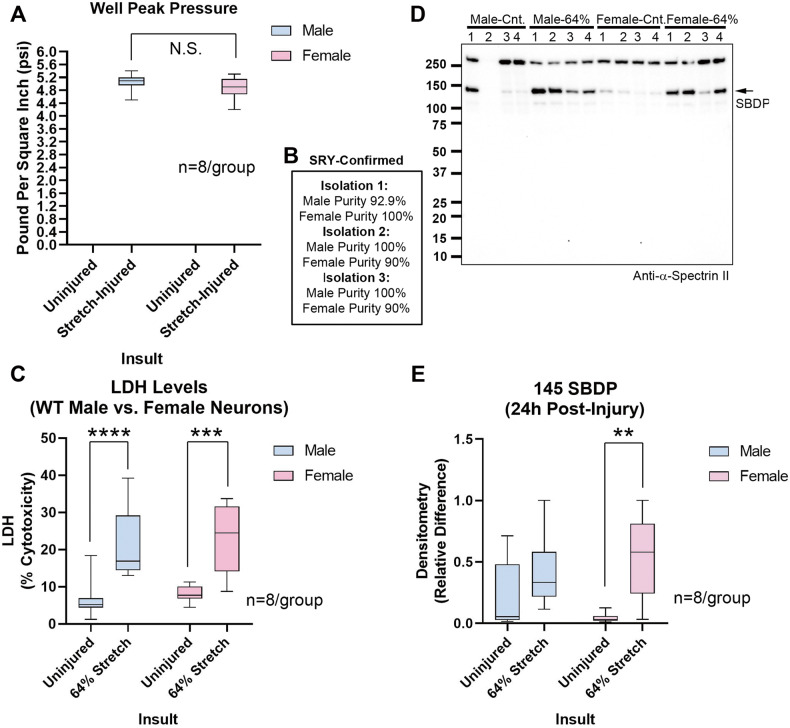
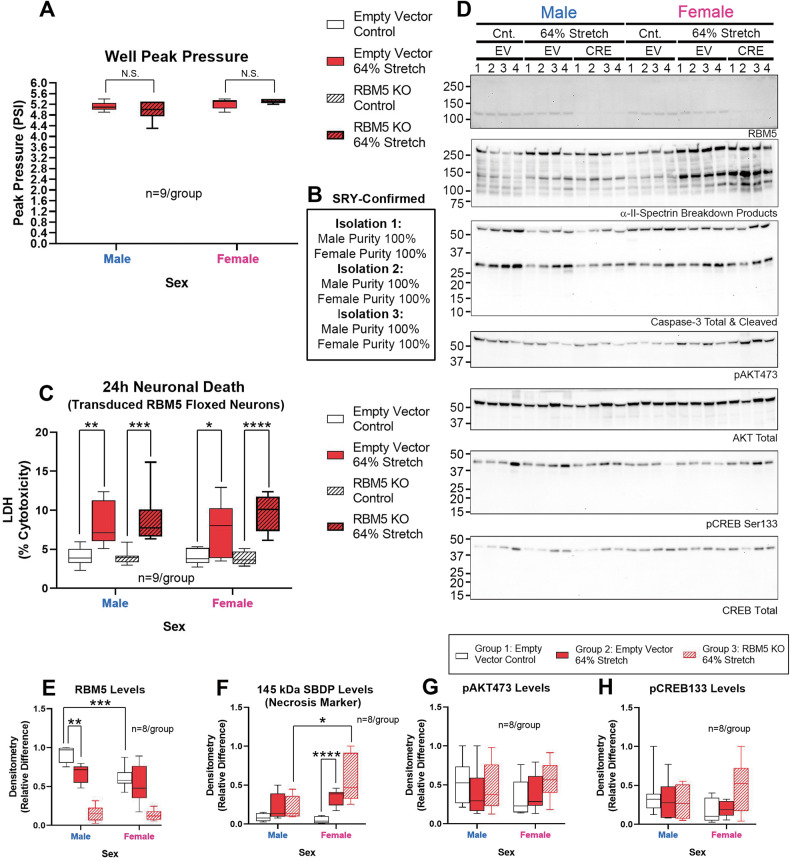
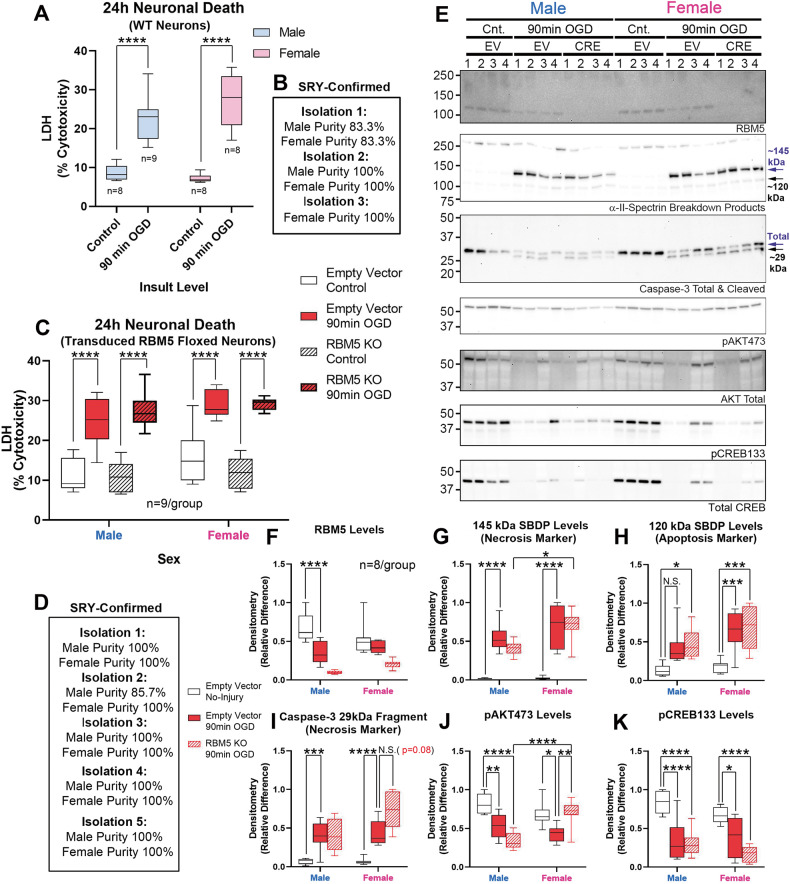
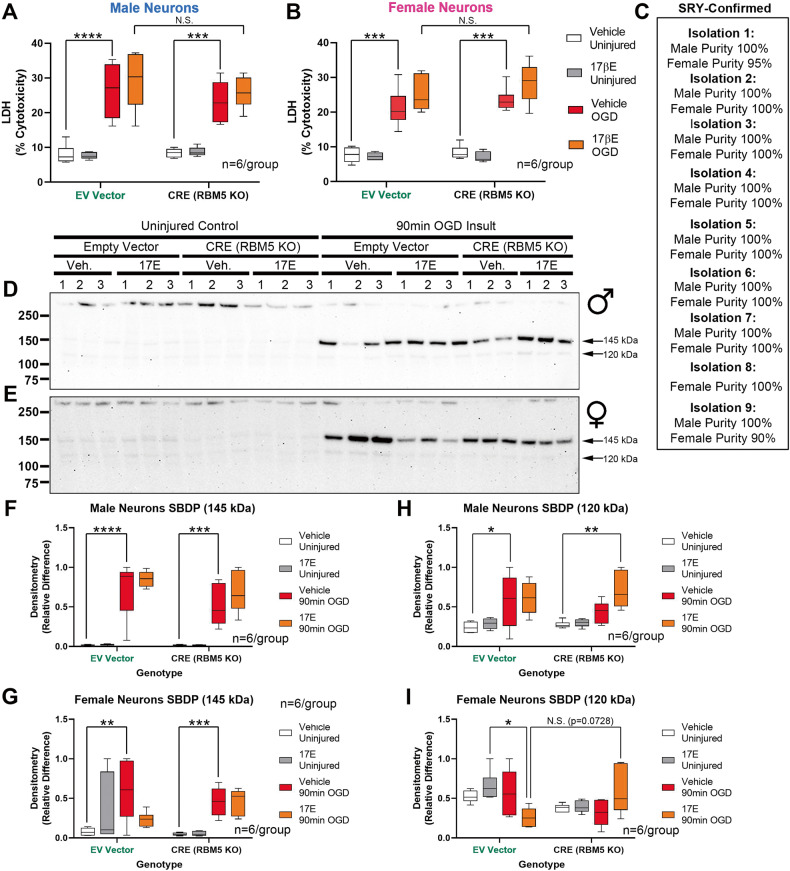
It is not clear if inhibiting the pro-death gene RNA binding motif 5 (RBM5) is neuroprotective in isolated primary neurons or if it regulates cell survival in a sex-dependent manner. Here we established sex-dichotomized primary cortical neuron cultures from transgenic mice harboring a floxed RBM5 gene-trap. Lentivirus-mediated expression of CRE was used to silence RBM5 expression. Male and female neurons were maintained in next-generation Neurobasal-Plus media and subjected to a mechanical stretch-injury (to model traumatic brain injury) or oxygen-glucose deprivation/OGD (to model ischemia). RBM5 KO did not affect 24 h post-injury survival as determined by lactate dehydrogenase (LDH) release, in either paradigm. In contrast, female KO neurons had increased spectrin breakdown products post-insult (in both models). Furthermore, in OGD, RBM5 KO in male neurons exacerbated injury-induced downregulation of pro-survival AKT activation (pAKT473) but conversely led to pAKT473 sparing in female neurons. Moreover, global proteomics identified 19 differentially expressed (DE) proteins in OGD-injured male neurons, and 102 DE proteins in injured female neurons. Two novel RBM5-regulated proteins (PIGQ and EST1C) were identified in injured male KO neurons, and 8 novel proteins identified in injured female KO neurons (S35A5, DHTK1, STX3, IF3M, RN167, K1C14, DYHS, and MED13). In summary, RBM5 inhibition does not modify neuronal survival in primary mouse neurons in 2 clinically relevant models of excitotoxic insult, but RBM5 does regulate intracellular responses to injury in a sex-dependent manner.
目前尚不清楚抑制促死亡基因RNA结合基序5(RBM5)对原代分离神经元是否具有神经保护作用,也不清楚它是否以性别依赖的方式调节细胞存活。在此,我们从携带RBM5基因陷阱的转基因小鼠中建立了性别二分的原代皮质神经元培养物。使用慢病毒介导的CRE表达来沉默RBM5表达。雄性和雌性神经元在下一代Neurobasal-Plus培养基中培养,并接受机械拉伸损伤(模拟创伤性脑损伤)或氧糖剥夺/OGD(模拟缺血)。在这两种模式中,通过乳酸脱氢酶(LDH)释放测定,RBM5基因敲除均不影响损伤后24小时的存活率。相比之下,雌性基因敲除神经元在损伤后(在两种模型中)血影蛋白降解产物增加。此外,在OGD中,雄性神经元中的RBM5基因敲除加剧了损伤诱导的促存活AKT激活(pAKT473)的下调,但相反地导致雌性神经元中pAKT473的保留。此外,全局蛋白质组学鉴定出OGD损伤的雄性神经元中有19种差异表达(DE)蛋白,损伤的雌性神经元中有102种DE蛋白。在损伤的雄性基因敲除神经元中鉴定出两种新的RBM5调节蛋白(PIGQ和EST1C),在损伤的雌性基因敲除神经元中鉴定出8种新蛋白(S35A5、DHTK1、STX3、IF3M、RN167、K1C14、DYHS和MED13)。总之,在两种临床相关的兴奋性毒性损伤模型中,RBM5抑制不会改变原代小鼠神经元的存活,但RBM5确实以性别依赖的方式调节细胞内对损伤的反应。