Discipline of Clinical Medicine, School of Medicine, Trinity College Dublin Trinity Centre for Health Sciences, St James's Hospital, Dublin 8, Ireland.
Wolfson Institute for Population Health, Queen Mary University, Charterhouse Square, London, EC1M 6BQ, UK.
Int J Equity Health. 2023 Oct 17;22(1):218. doi: 10.1186/s12939-023-02029-8.
People experiencing long-term homelessness face significant difficulties accessing appropriate healthcare at the right time and place. This study explores how and why healthcare performance management and funding arrangements contribute to healthcare accessibility or the lack thereof using long-term homeless adults as an example of a population experiencing social exclusion.
A realist evaluation was undertaken. Thirteen realist interviews were conducted after which data were transcribed, coded, and analysed.
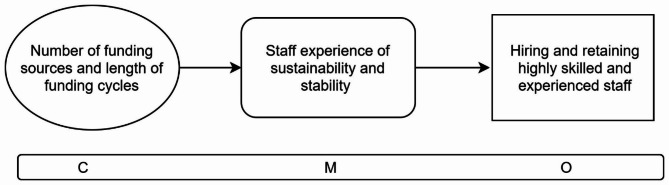
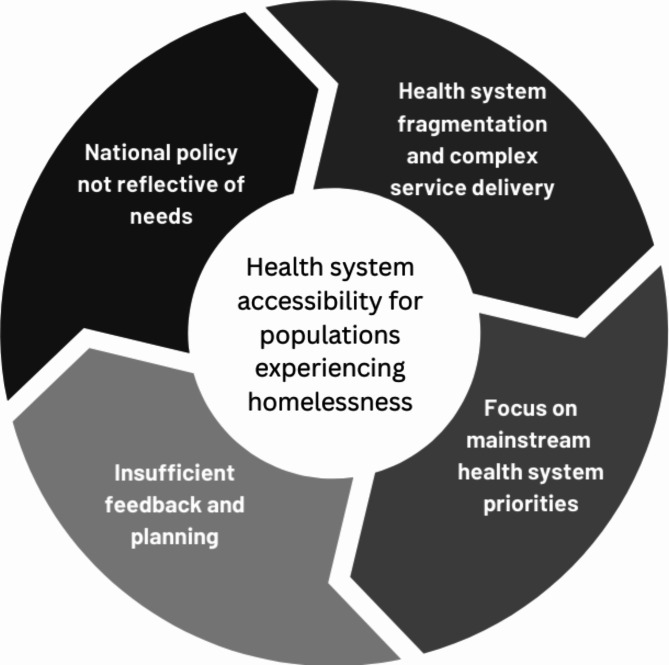
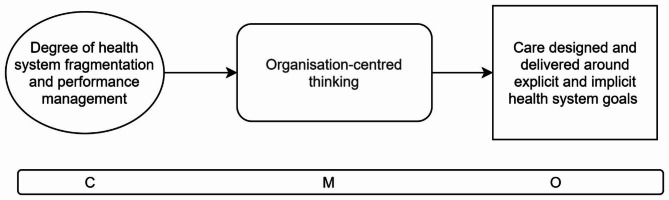
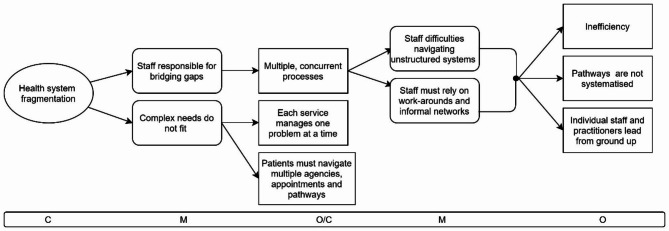
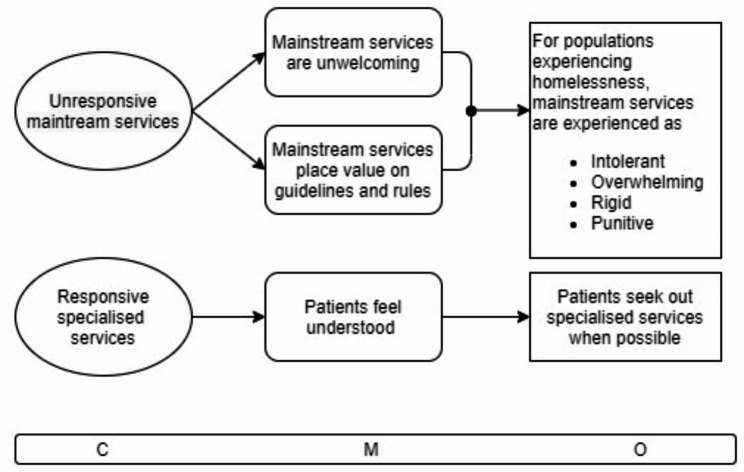
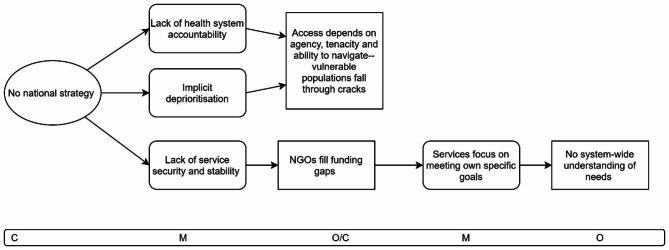
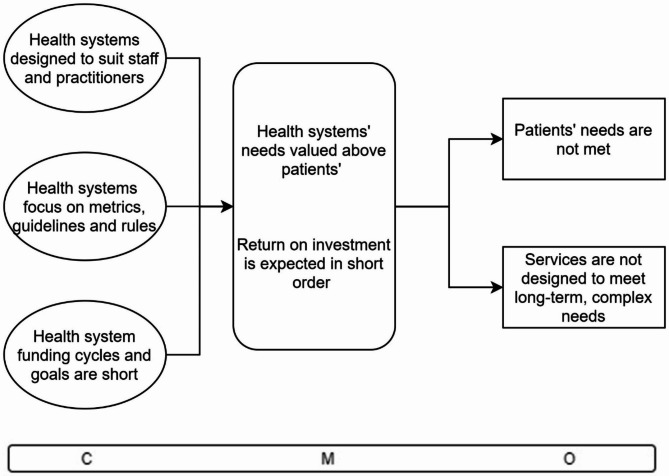
Fourteen CMOCs were created based on analysis of the data collected. These were then consolidated into four higher-level CMOCs. They show that health systems characterised by fragmentation are designed to meet their own needs above the needs of patients, and they rely on practitioners with a special interest and specialised services to fill the gaps in the system. Key contexts identified in the study include: health system fragmentation; health service fragmentation; bio-medical, one problem at a time model; responsive specialised services; unresponsive mainstream services; national strategy; short health system funding cycles; and short-term goals.
When health services are fragmented and complex, the needs of socially excluded populations such as those experiencing homelessness are not met. Health systems focus on their own metrics and rely on separate actors such as independent NGOs to fill gaps when certain people are not accommodated in the mainstream health system. As a result, health systems lack a comprehensive understanding of the needs of all population groups and fail to plan adequately, which maintains fragmentation. Policy makers must set policy and plan health services based on a full understanding of needs of all population groups.
长期无家可归的人在适当的时间和地点获得适当的医疗保健方面面临重大困难。本研究以社会排斥人群为例,探讨医疗保健绩效管理和资金安排如何以及为何有助于获得或缺乏医疗保健。
进行了一项实际评估。在进行了 13 次实际访谈后,对数据进行了转录、编码和分析。
根据收集的数据进行分析后创建了 14 个 CMOC。然后将它们合并为四个更高层次的 CMOC。它们表明,以碎片化为特征的卫生系统旨在满足自身需求,而不是满足患者的需求,并且依赖具有特殊利益和专业服务的从业者来填补系统中的空白。研究中确定的关键背景包括:卫生系统碎片化;卫生服务碎片化;生物医学,一次一个问题的模式;响应式专业服务;无响应的主流服务;国家战略;短期卫生系统资金周期;和短期目标。
当卫生服务碎片化且复杂时,无家可归等社会排斥人群的需求得不到满足。卫生系统关注自身指标,并依赖独立的非政府组织等独立行为者在某些人无法融入主流卫生系统时填补空白。因此,卫生系统对所有人群的需求缺乏全面了解,也无法进行充分规划,从而导致碎片化。政策制定者必须在充分了解所有人群需求的基础上制定政策和规划卫生服务。