Howard Hughes Medical Institute, Department of Biology, Massachusetts Institute of Technology, Cambridge, MA, 02139, USA.
Nat Commun. 2023 Oct 18;14(1):6593. doi: 10.1038/s41467-023-42345-9.
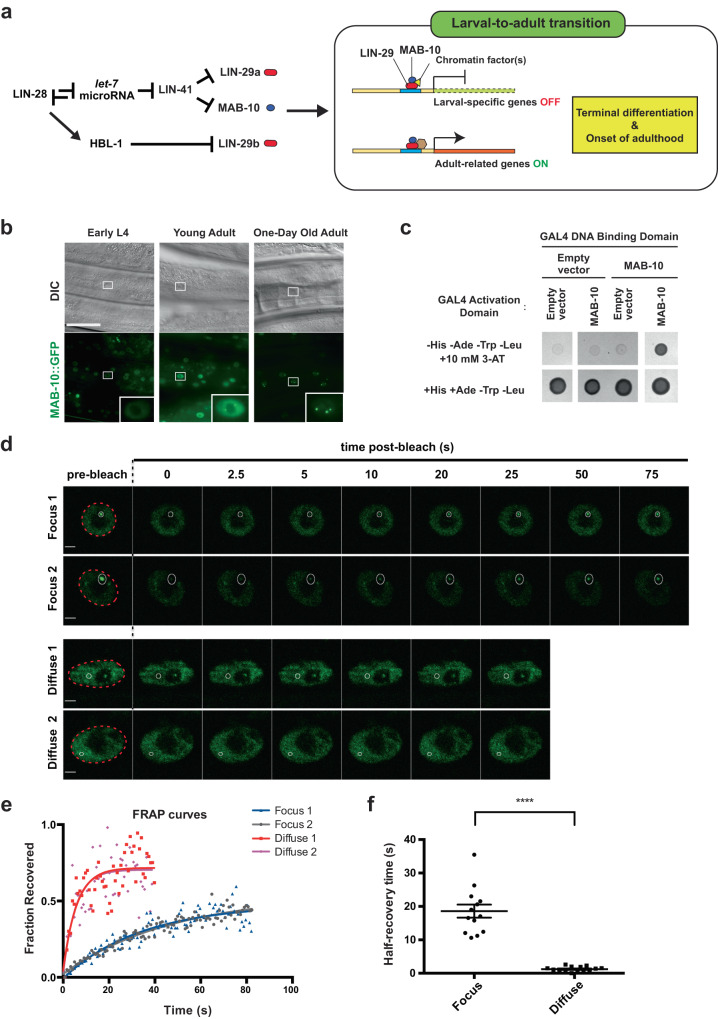
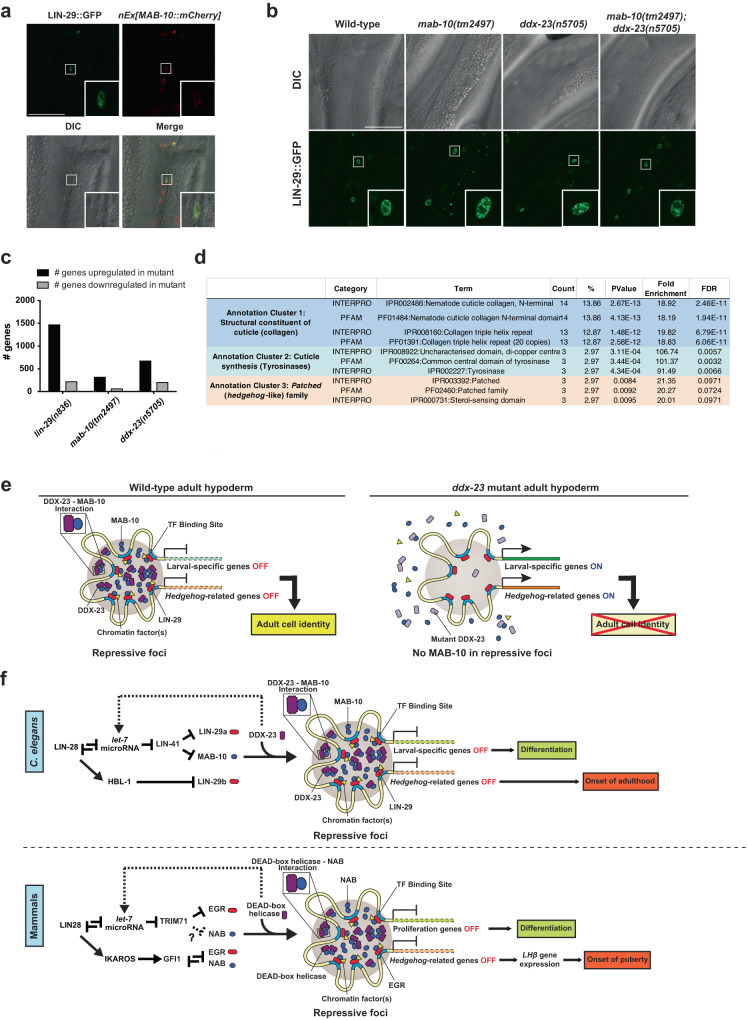
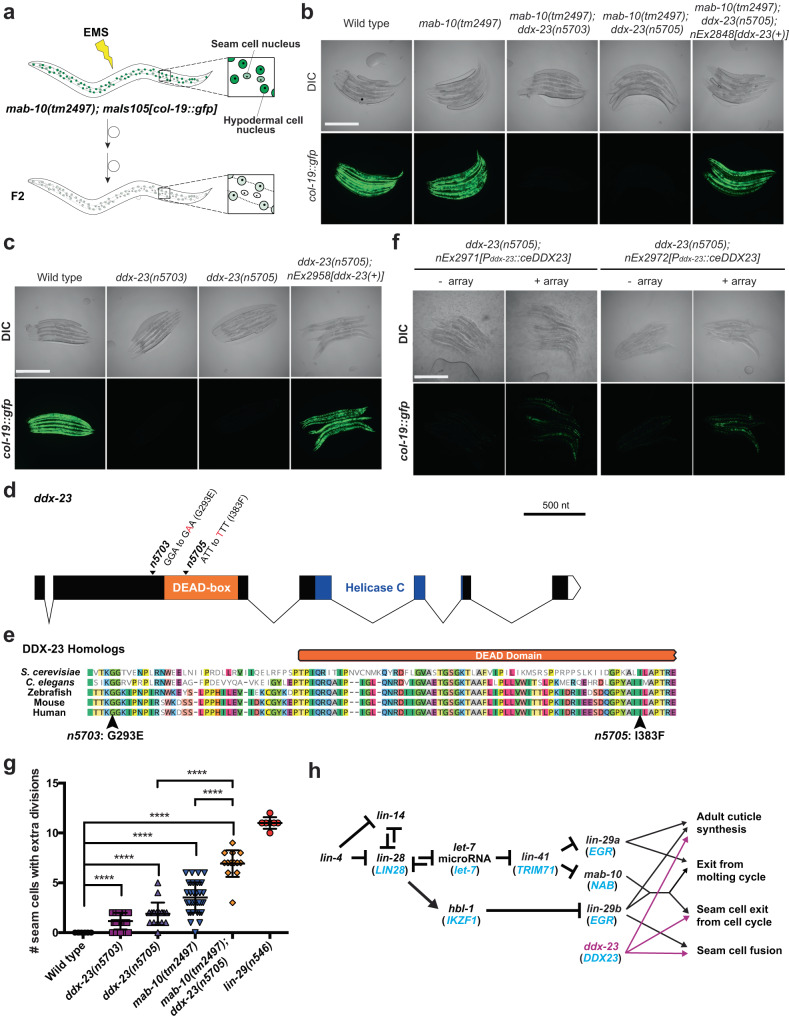
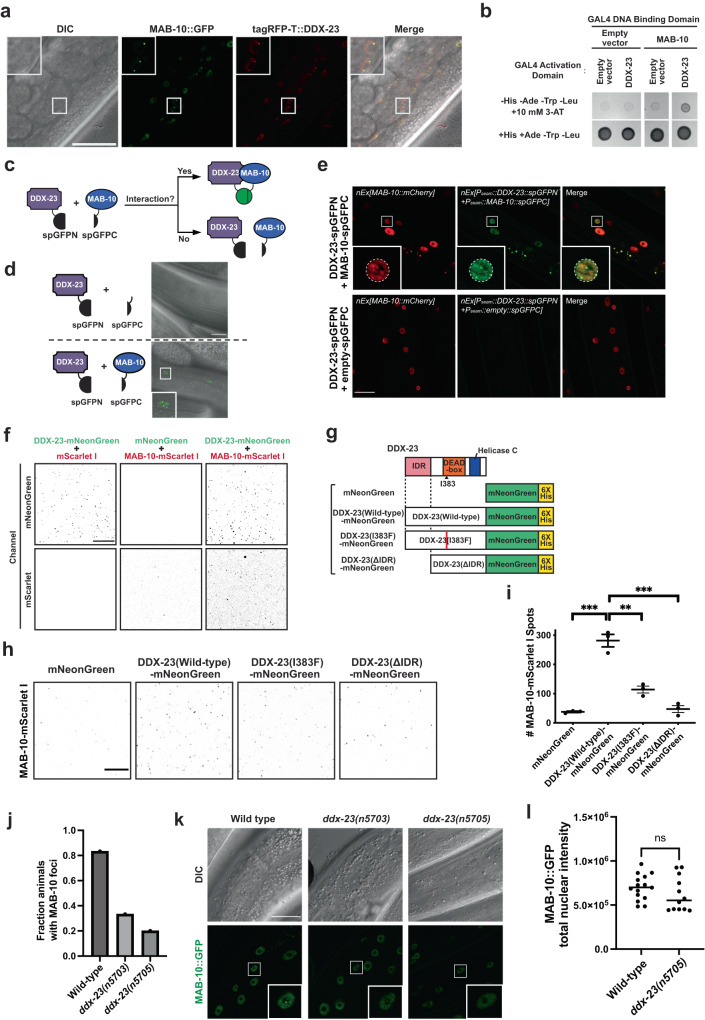
How cells regulate gene expression in a precise spatiotemporal manner during organismal development is a fundamental question in biology. Although the role of transcriptional condensates in gene regulation has been established, little is known about the function and regulation of these molecular assemblies in the context of animal development and physiology. Here we show that the evolutionarily conserved DEAD-box helicase DDX-23 controls cell fate in Caenorhabditis elegans by binding to and facilitating the condensation of MAB-10, the C. elegans homolog of mammalian NGFI-A-binding (NAB) protein. MAB-10 is a transcriptional cofactor that functions with the early growth response (EGR) protein LIN-29 to regulate the transcription of genes required for exiting the cell cycle, terminal differentiation, and the larval-to-adult transition. We suggest that DEAD-box helicase proteins function more generally during animal development to control the condensation of NAB proteins important in cell identity and that this mechanism is evolutionarily conserved. In mammals, such a mechanism might underlie terminal cell differentiation and when dysregulated might promote cancerous growth.
细胞如何在生物发育过程中以精确的时空方式调控基因表达,是生物学中的一个基本问题。尽管转录凝聚物在基因调控中的作用已经得到确立,但对于这些分子组装在动物发育和生理学背景下的功能和调节知之甚少。在这里,我们表明,进化上保守的 DEAD-box 解旋酶 DDX-23 通过与线虫 NGFI-A 结合蛋白 (NAB) 蛋白的同源物 MAB-10 结合并促进其凝聚,从而控制秀丽隐杆线虫中的细胞命运。MAB-10 是一种转录共因子,与早期生长反应 (EGR) 蛋白 LIN-29 一起作用,调节退出细胞周期、终末分化和幼虫到成虫过渡所需基因的转录。我们认为,DEAD-box 解旋酶蛋白在动物发育过程中更普遍地发挥作用,以控制对细胞身份很重要的 NAB 蛋白的凝聚,并且这种机制在进化上是保守的。在哺乳动物中,这种机制可能是细胞终末分化的基础,而当失调时,可能会促进癌症生长。