Department of Chemical Engineering, Massachusetts Institute of Technology, Cambridge, MA 02139, USA; Institute for Medical Engineering and Science, Massachusetts Institute of Technology, Cambridge, MA 02139, USA.
Whitehead Institute for Biomedical Research, 455 Main Street, Cambridge, MA 02142, USA.
Mol Cell. 2019 Aug 8;75(3):549-561.e7. doi: 10.1016/j.molcel.2019.07.009.
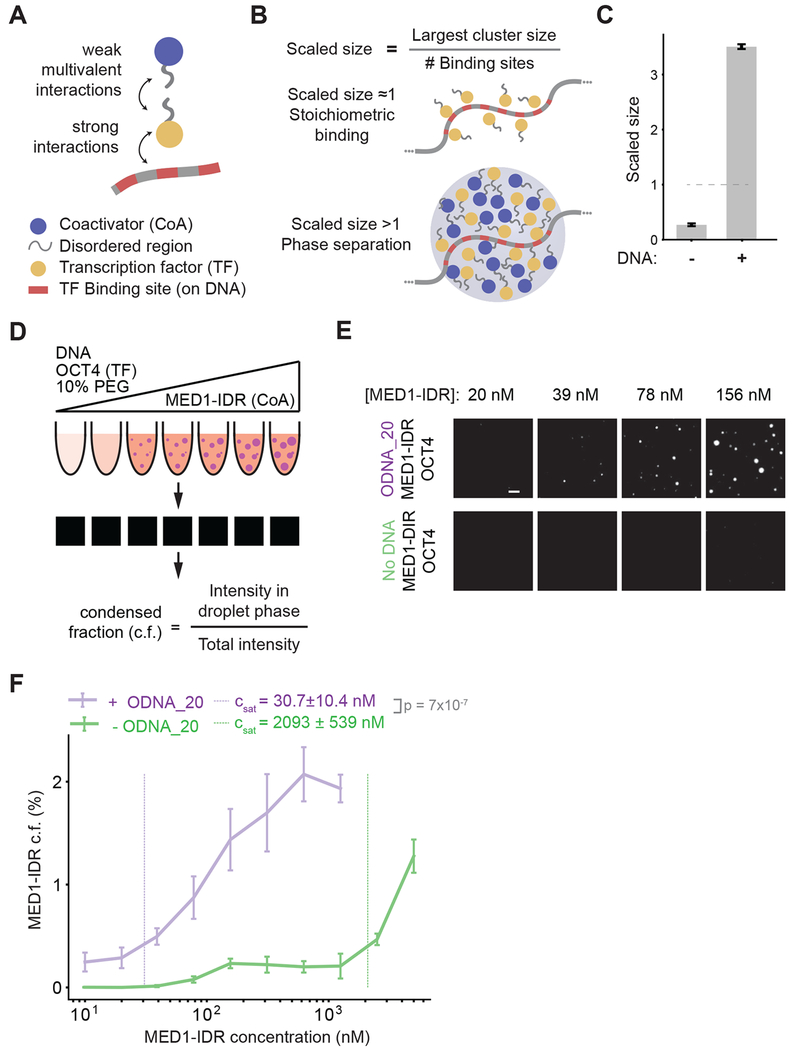
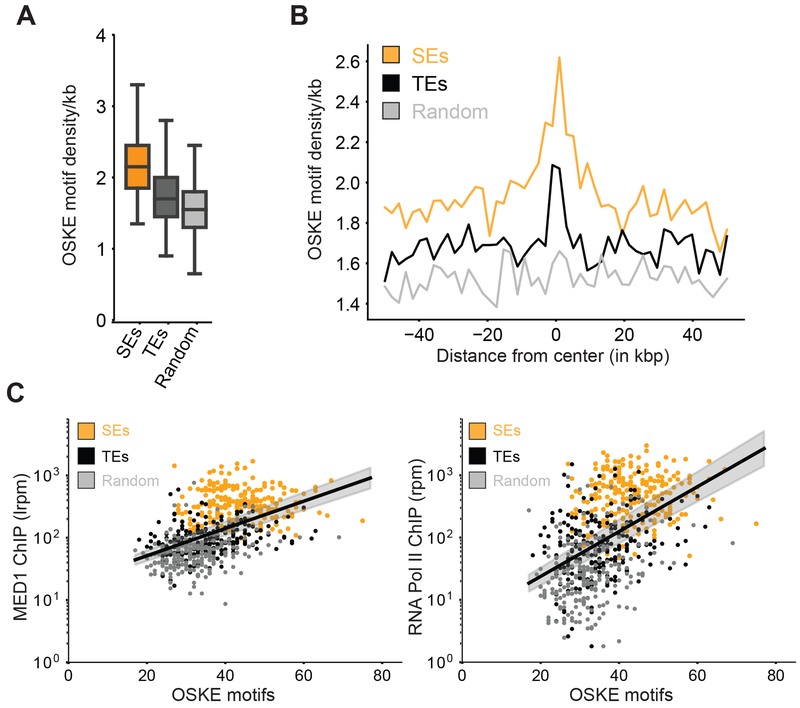
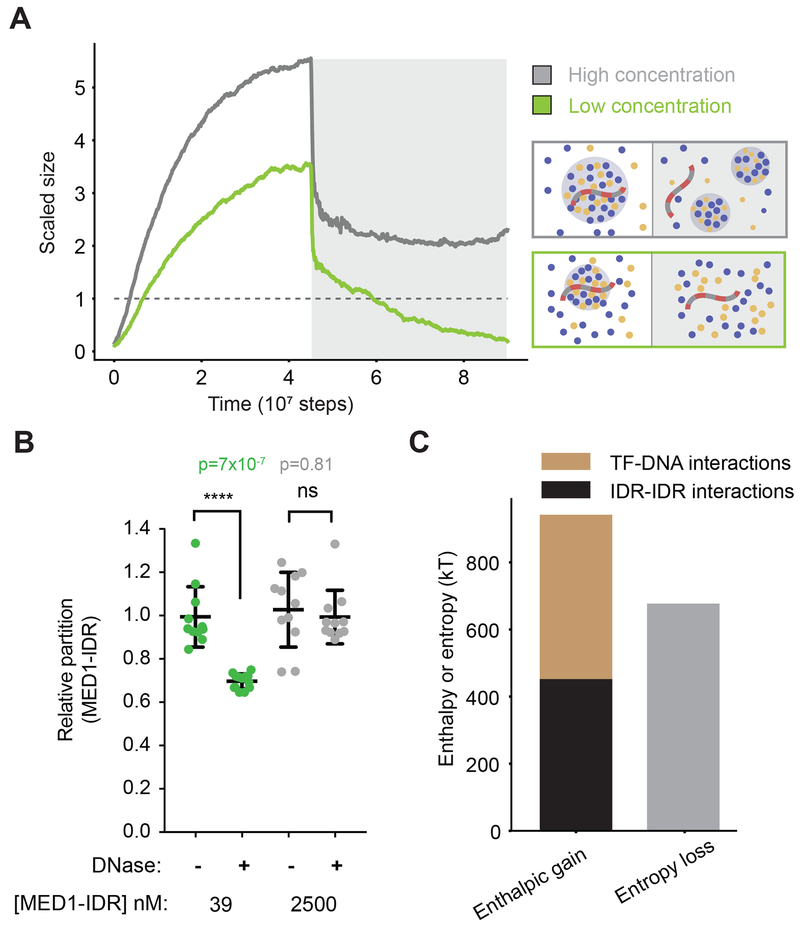
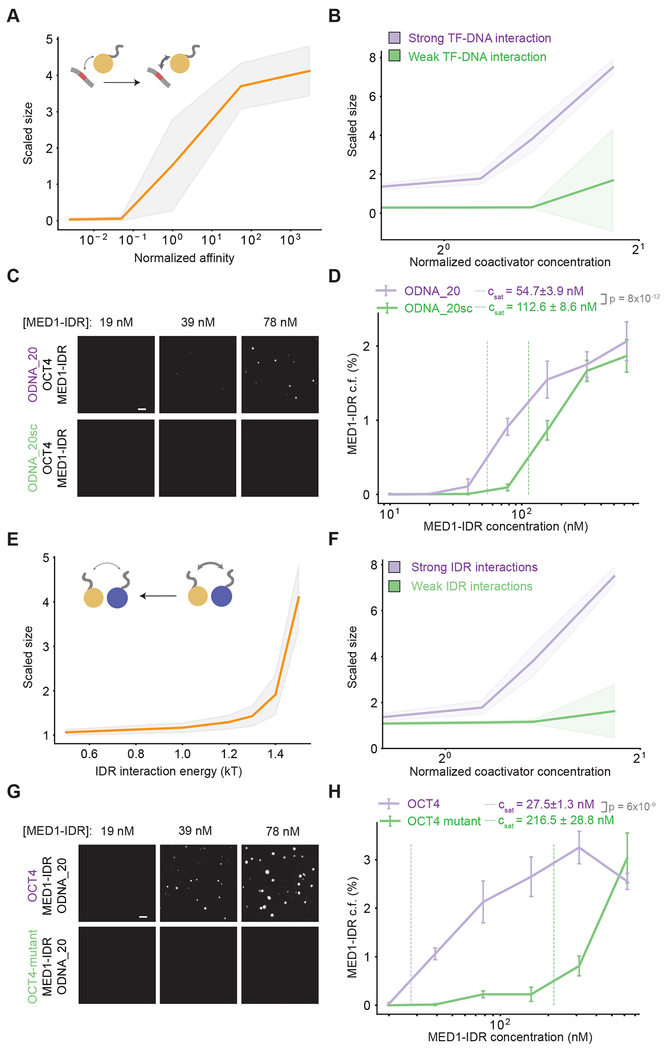
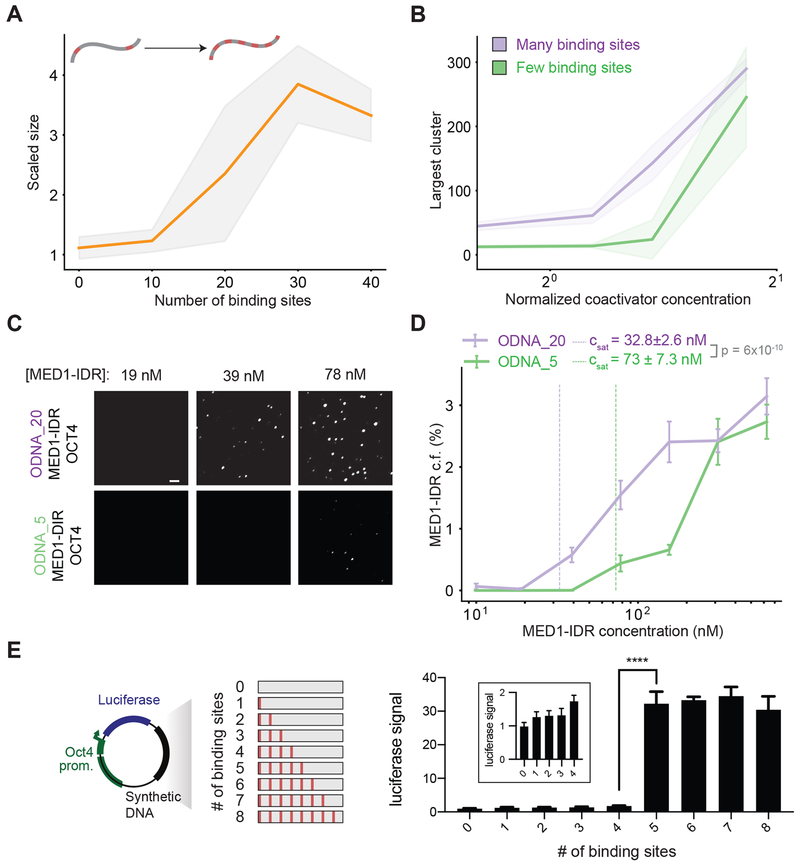
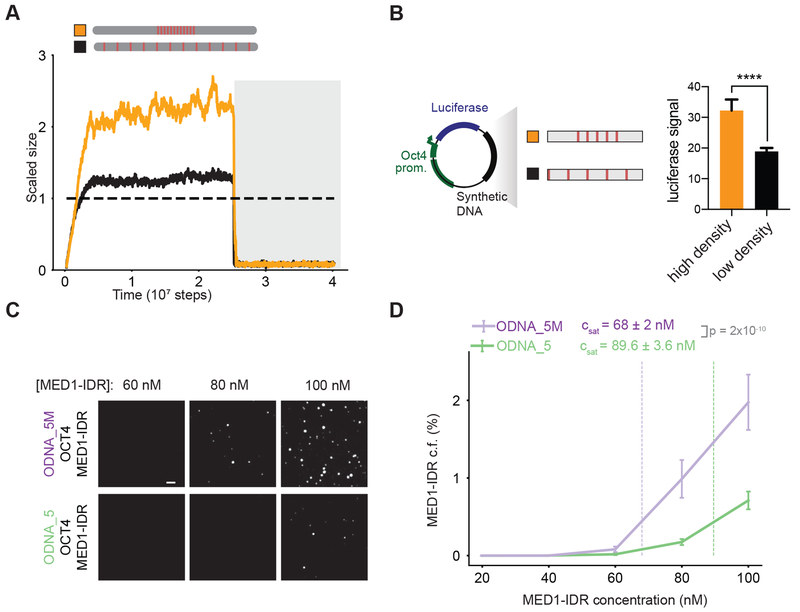
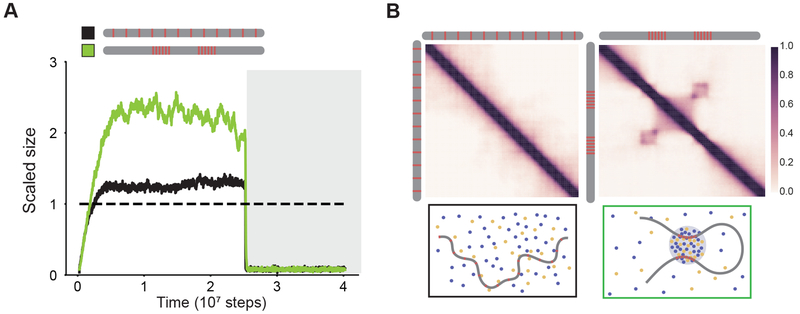
Enhancers are DNA elements that are bound by transcription factors (TFs), which recruit coactivators and the transcriptional machinery to genes. Phase-separated condensates of TFs and coactivators have been implicated in assembling the transcription machinery at particular enhancers, yet the role of DNA sequence in this process has not been explored. We show that DNA sequences encoding TF binding site number, density, and affinity above sharply defined thresholds drive condensation of TFs and coactivators. A combination of specific structured (TF-DNA) and weak multivalent (TF-coactivator) interactions allows for condensates to form at particular genomic loci determined by the DNA sequence and the complement of expressed TFs. DNA features found to drive condensation promote enhancer activity and transcription in cells. Our study provides a framework to understand how the genome can scaffold transcriptional condensates at specific loci and how the universal phenomenon of phase separation might regulate this process.
增强子是被转录因子 (TFs) 结合的 DNA 元件,它们招募共激活因子和转录机制到基因上。TFs 和共激活因子的相分离凝聚物已被牵涉到在特定的增强子上组装转录机制,然而,在这个过程中 DNA 序列的作用尚未被探索。我们表明,编码 TF 结合位点数量、密度和亲和力的 DNA 序列超过了明确的阈值,驱动了 TFs 和共激活因子的凝聚。特定结构的(TF-DNA)和弱多价(TF-共激活因子)相互作用的组合允许在由 DNA 序列和表达的 TFs 组成的特定基因组位置形成凝聚物。被发现驱动凝聚的 DNA 特征促进了细胞中增强子的活性和转录。我们的研究提供了一个框架,以理解基因组如何在特定位置支架转录凝聚物,以及相分离的普遍现象如何调节这个过程。