Department of Mathematics, University of California, Davis, Davis, CA, USA.
Department of Medicine and Epidemiology, Center for Animal Disease Modeling and Surveillance (CADMS), School of Veterinary Medicine, University of California, Davis, Davis, CA, USA.
Sci Rep. 2023 Oct 18;13(1):17738. doi: 10.1038/s41598-023-43472-5.
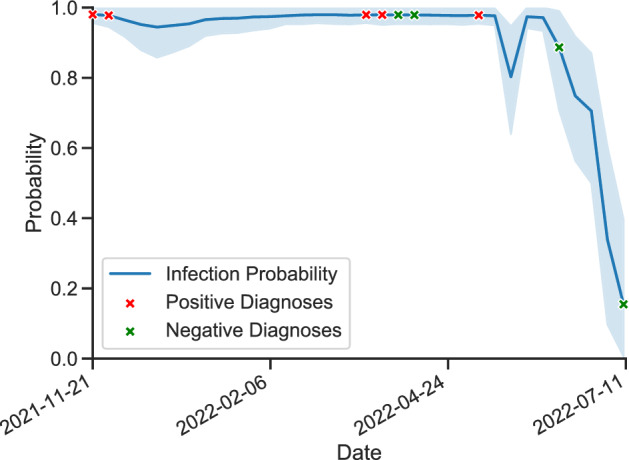
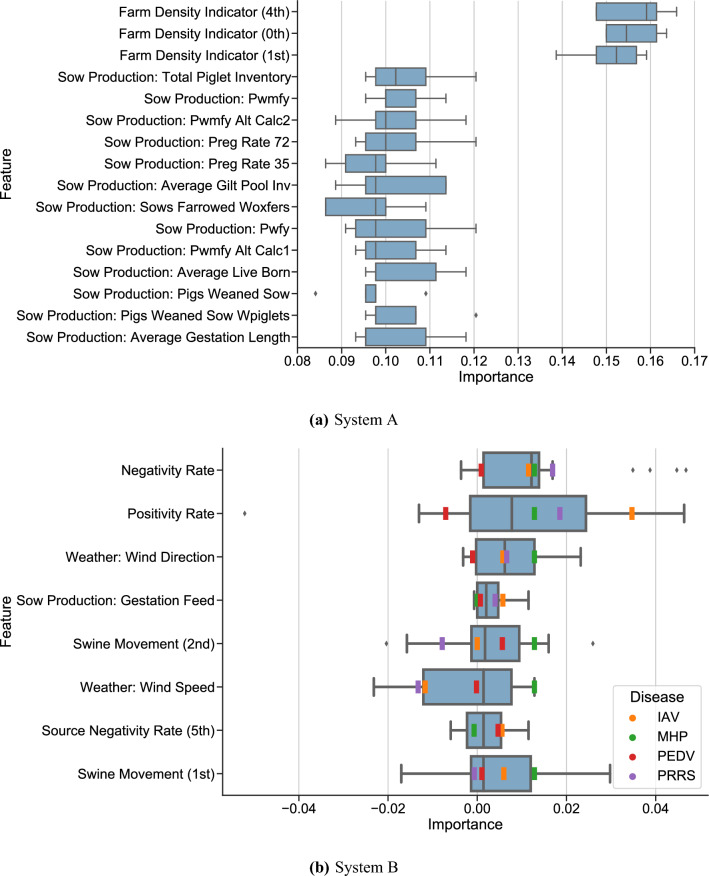
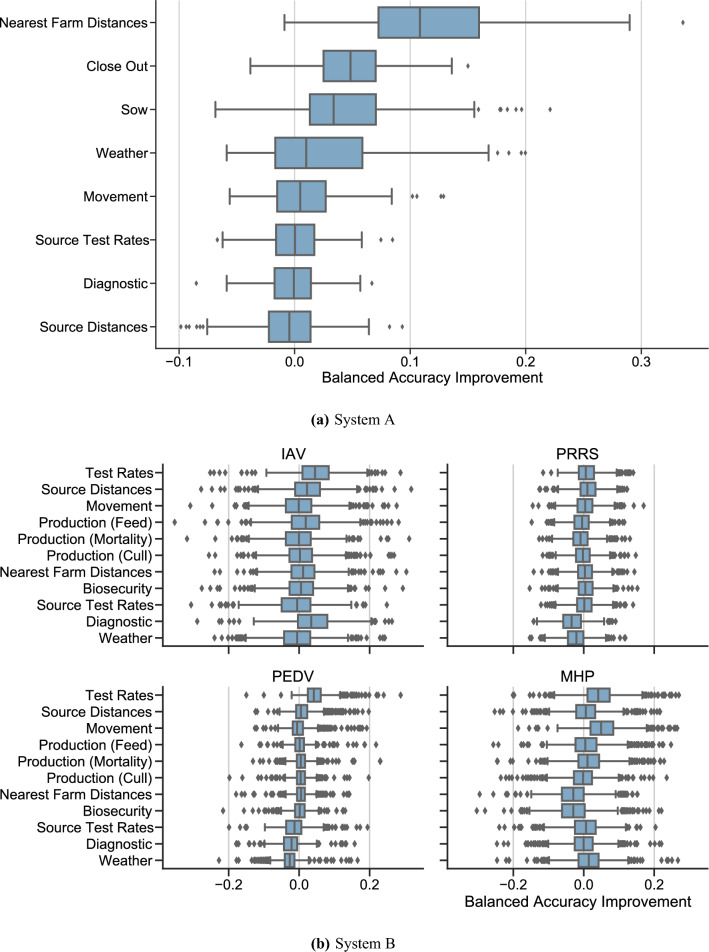
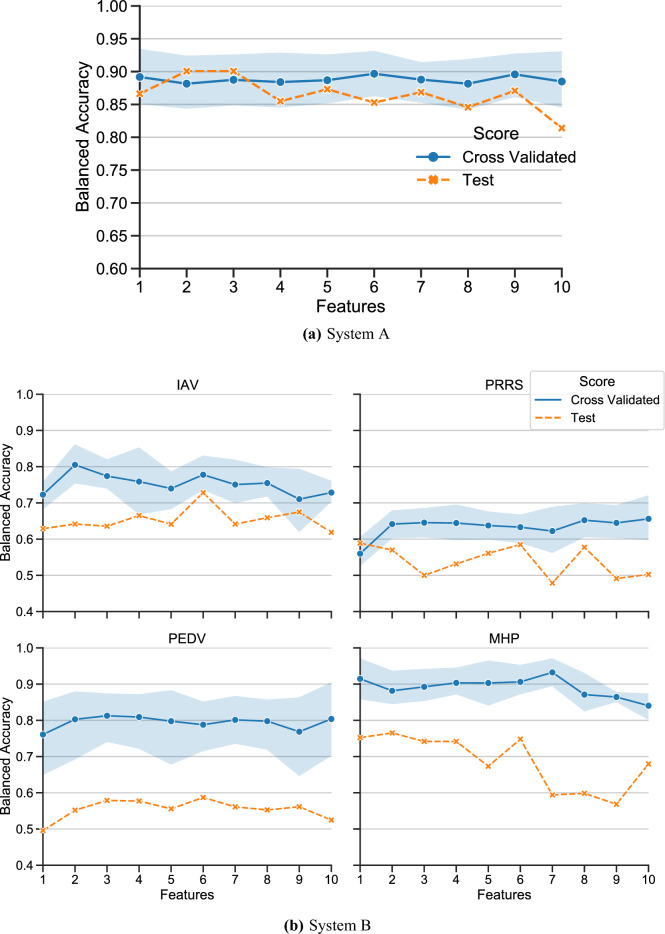
The pork industry is an essential part of the global food system, providing a significant source of protein for people around the world. A major factor restraining productivity and compromising animal wellbeing in the pork industry is disease outbreaks in pigs throughout the production process: widespread outbreaks can lead to losses as high as 10% of the U.S. pig population in extreme years. In this study, we present a machine learning model to predict the emergence of infection in swine production systems throughout the production process on a daily basis, a potential precursor to outbreaks whose detection is vital for disease prevention and mitigation. We determine features that provide the most value in predicting infection, which include nearby farm density, historical test rates, piglet inventory, feed consumption during the gestation period, and wind speed and direction. We utilize these features to produce a generalizable machine learning model, evaluate the model's ability to predict outbreaks both seven and 30 days in advance, allowing for early warning of disease infection, and evaluate our model on two swine production systems and analyze the effects of data availability and data granularity in the context of our two swine systems with different volumes of data. Our results demonstrate good ability to predict infection in both systems with a balanced accuracy of [Formula: see text] on any disease in the first system and balanced accuracies (average prediction accuracy on positive and negative samples) of [Formula: see text], [Formula: see text], [Formula: see text] and [Formula: see text] on porcine reproductive and respiratory syndrome, porcine epidemic diarrhea virus, influenza A virus, and Mycoplasma hyopneumoniae in the second system, respectively, using the six most important predictors in all cases. These models provide daily infection probabilities that can be used by veterinarians and other stakeholders as a benchmark to more timely support preventive and control strategies on farms.
猪肉产业是全球食品系统的重要组成部分,为世界各地的人们提供了重要的蛋白质来源。在猪肉产业中,限制生产力和损害动物福利的一个主要因素是猪在整个生产过程中爆发疾病:在极端年份,广泛爆发的疾病可能导致高达美国猪群 10%的损失。在这项研究中,我们提出了一种机器学习模型,以便在生产过程的日常基础上预测猪生产系统中感染的出现,这是爆发的潜在前兆,对其进行检测对于疾病的预防和控制至关重要。我们确定了在预测感染方面最有价值的特征,包括附近农场的密度、历史检测率、仔猪存栏量、妊娠期的饲料消耗以及风速和风向。我们利用这些特征来生成一个可推广的机器学习模型,评估模型提前 7 天和 30 天预测爆发的能力,以便对疾病感染进行早期预警,并在两个猪生产系统上评估我们的模型,并分析在我们的两个具有不同数据量的猪系统中,数据可用性和数据粒度的影响。我们的结果表明,该模型在两个系统中都具有良好的感染预测能力,在第一个系统中,任何疾病的平衡准确率均为[Formula: see text],在第二个系统中,猪繁殖与呼吸综合征、猪流行性腹泻病毒、甲型流感病毒和支原体肺炎的平衡准确率分别为[Formula: see text]、[Formula: see text]、[Formula: see text]和[Formula: see text],使用所有情况下的六个最重要的预测器。这些模型提供了每日感染概率,兽医和其他利益相关者可以将其用作农场更及时地支持预防和控制策略的基准。