Rabindranath Madhumitha, Zaya Rita, Prayitno Khairunnadiya, Orchanian-Cheff Ani, Patel Keyur, Jaeckel Elmar, Bhat Mamatha
Ajmera Transplant Program, University Health Network, Toronto, ON, Canada.
Institute of Medical Science, University of Toronto, Toronto, ON, Canada.
Transplant Direct. 2023 Oct 16;9(11):e1547. doi: 10.1097/TXD.0000000000001547. eCollection 2023 Nov.
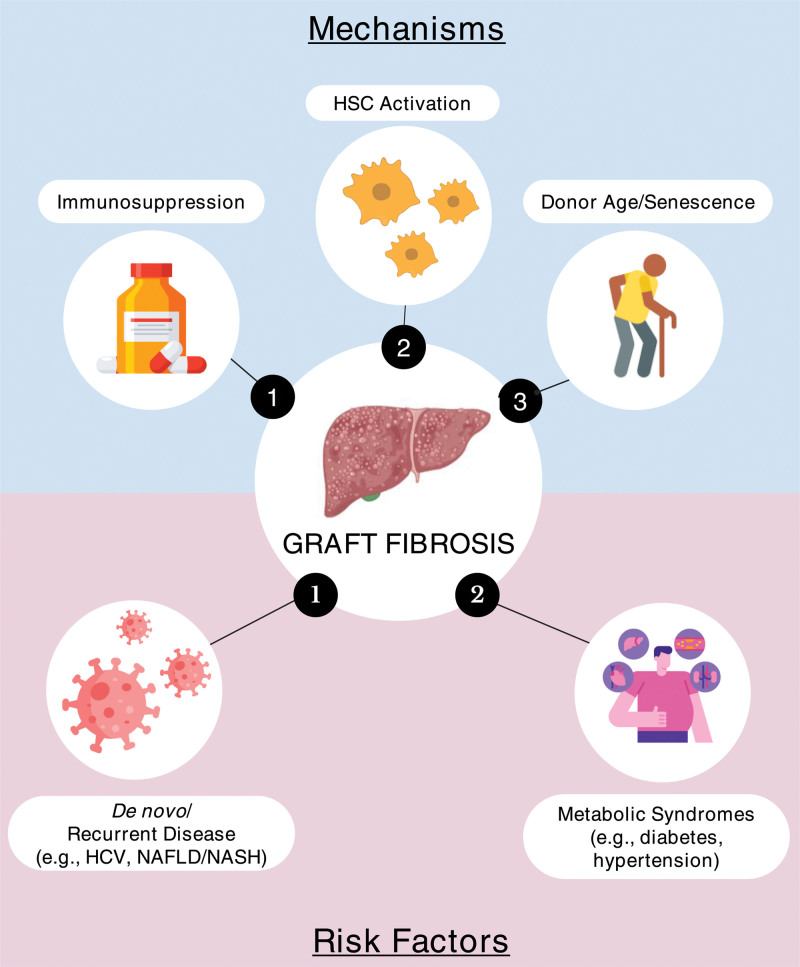
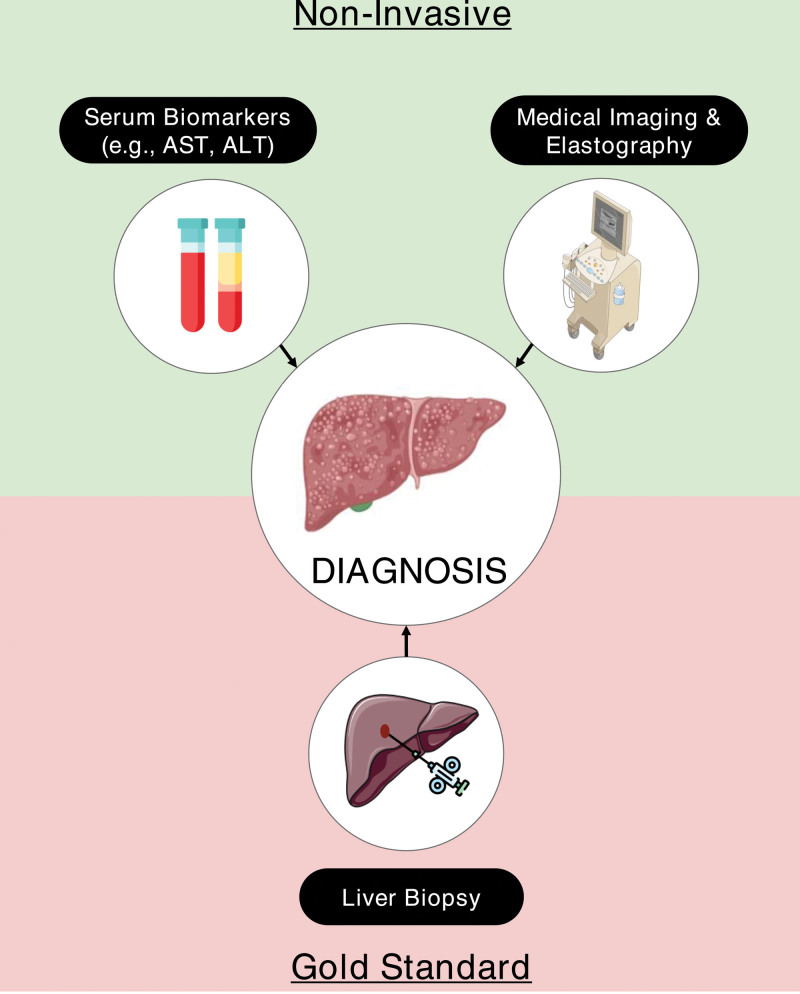
Despite advances in posttransplant care, long-term outcomes for liver transplant recipients remain unchanged. Approximately 25% of recipients will advance to graft cirrhosis and require retransplantation. Graft fibrosis progresses in the context of de novo or recurrent disease. Recurrent hepatitis C virus infection was previously the most important cause of graft failure but is now curable in the majority of patients. However, with an increasing prevalence of obesity and diabetes and nonalcoholic fatty liver disease as the most rapidly increasing indication for liver transplantation, metabolic dysfunction-associated liver injury is anticipated to become an important cause of graft fibrosis alongside alloimmune hepatitis and alcoholic liver disease. To better understand the landscape of the graft fibrosis literature, we summarize the associated epidemiology, cause, potential mechanisms, diagnosis, and complications. We additionally highlight the need for better noninvasive methods to ameliorate the management of graft fibrosis. Some examples include leveraging the microbiome, genetic, and machine learning methods to address these limitations. Overall, graft fibrosis is routinely seen by transplant clinicians, but it requires a better understanding of its underlying biology and contributors that can help inform diagnostic and therapeutic practices.
尽管移植后护理取得了进展,但肝移植受者的长期预后仍未改变。约25%的受者会发展为移植肝肝硬化并需要再次移植。移植肝纤维化在新发或复发性疾病的背景下进展。复发性丙型肝炎病毒感染曾是移植肝衰竭的最重要原因,但现在大多数患者已可治愈。然而,随着肥胖、糖尿病和非酒精性脂肪性肝病的患病率不断上升,且作为肝移植增长最快的适应证,预计代谢功能障碍相关肝损伤将与同种免疫性肝炎和酒精性肝病一道,成为移植肝纤维化的重要原因。为了更好地了解移植肝纤维化文献的概况,我们总结了其相关的流行病学、病因、潜在机制、诊断和并发症。我们还强调了需要更好的非侵入性方法来改善移植肝纤维化的管理。一些例子包括利用微生物组、遗传学和机器学习方法来解决这些局限性。总体而言,移植肝纤维化是移植临床医生经常见到的情况,但需要更好地了解其潜在生物学特性和促成因素,以指导诊断和治疗实践。