Institute of Parasitology, Justus Liebig University Giessen, Giessen, Germany.
Front Immunol. 2023 Oct 3;14:1244068. doi: 10.3389/fimmu.2023.1244068. eCollection 2023.
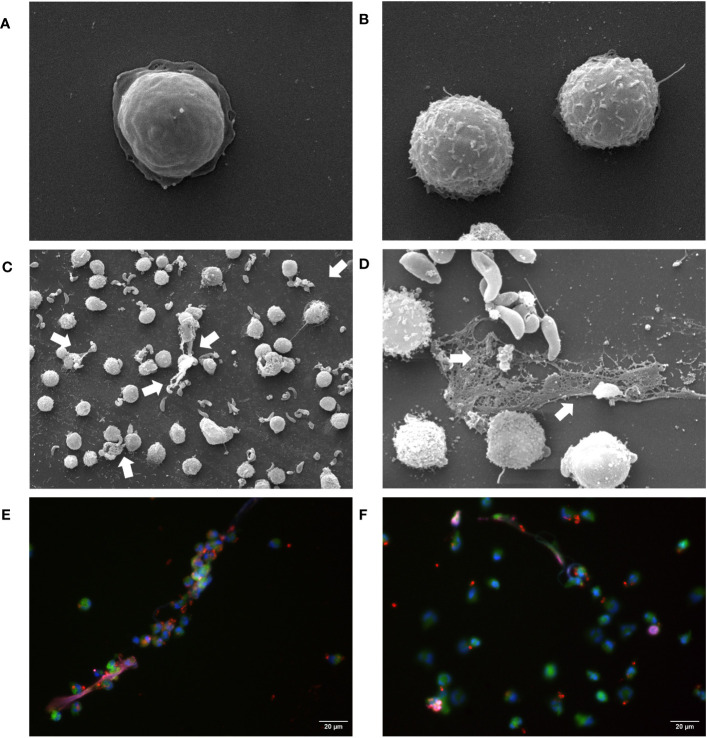
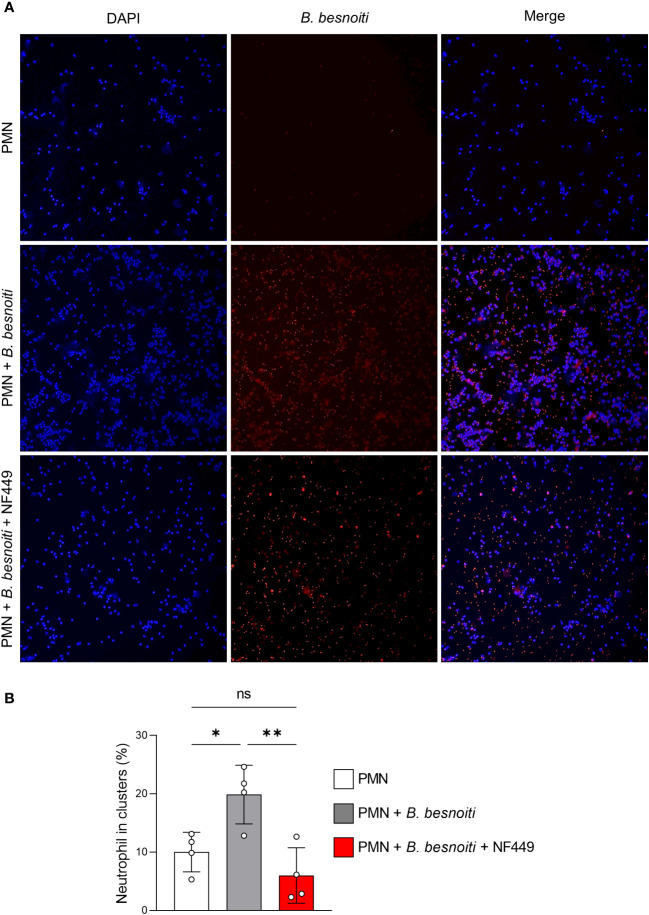
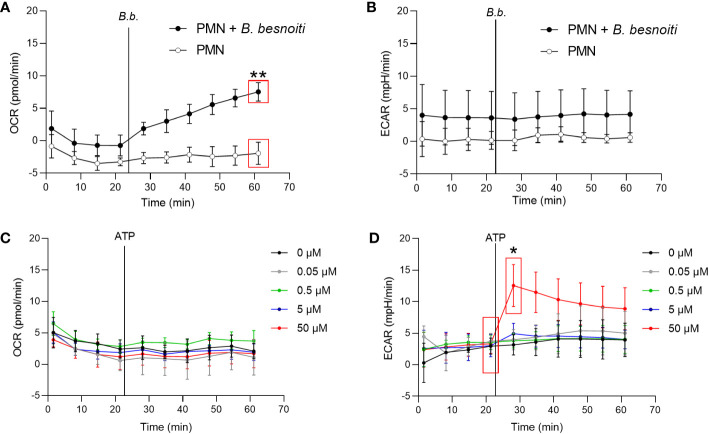
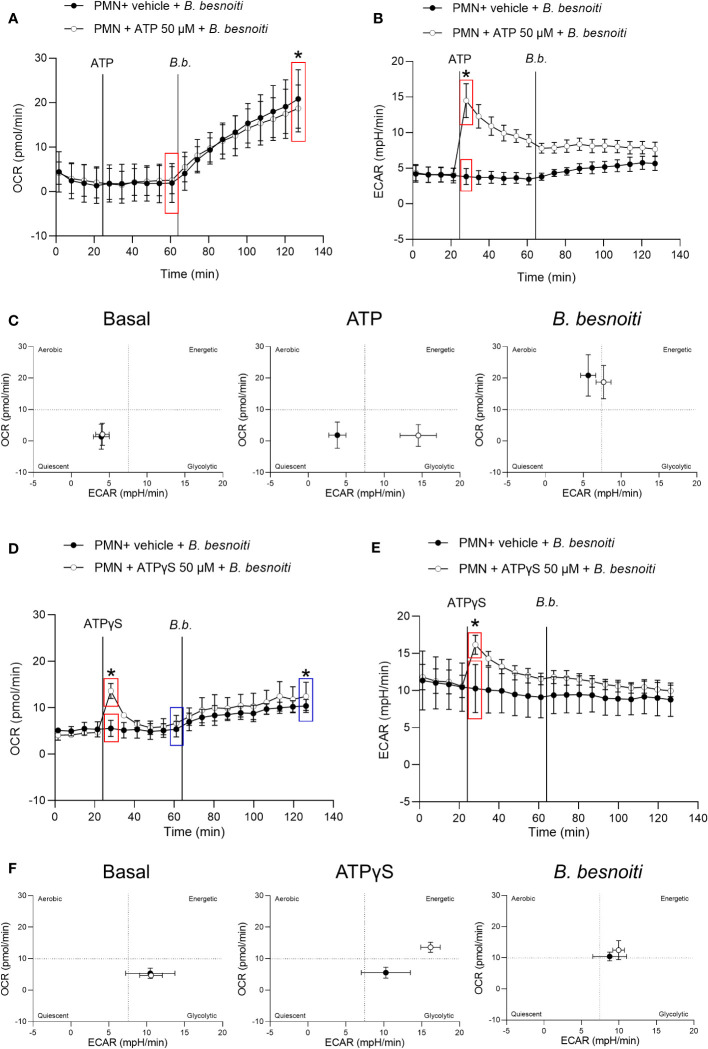
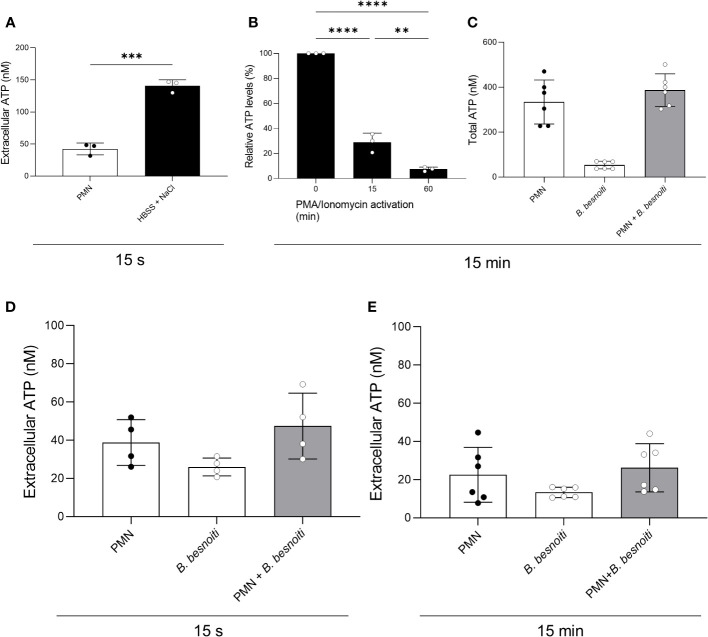
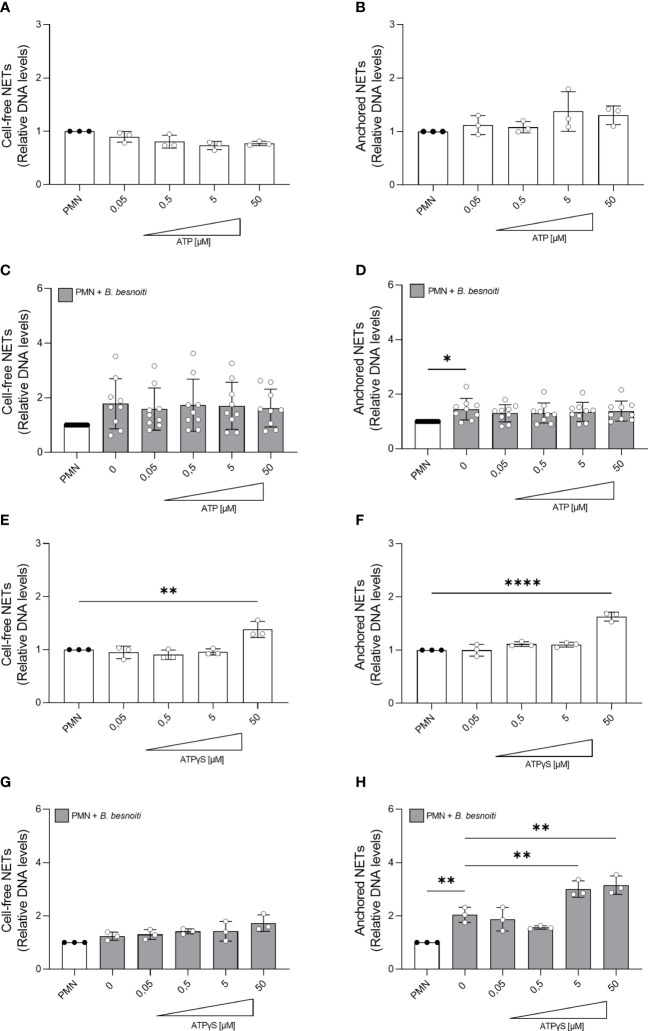
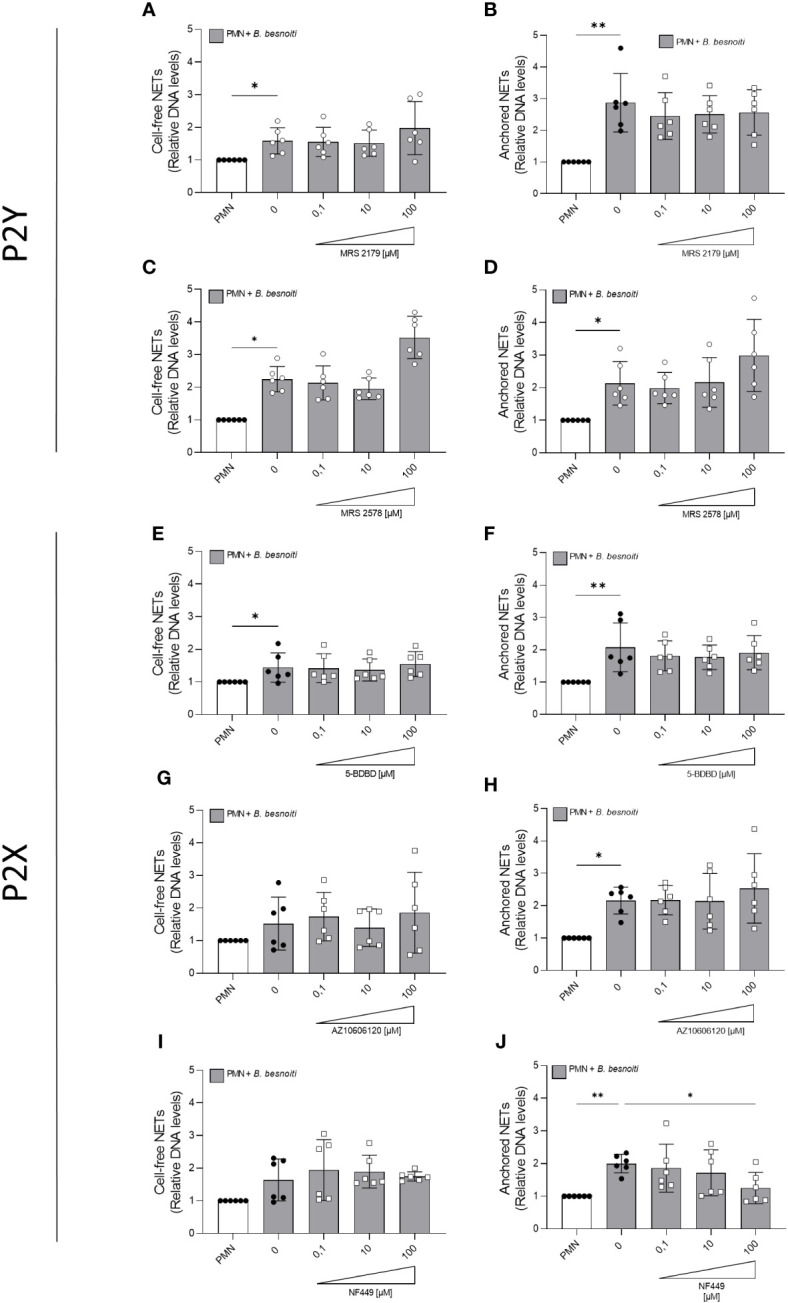
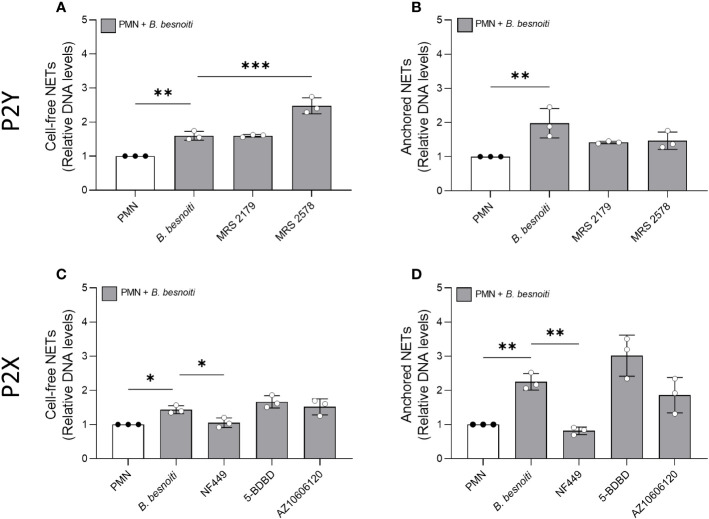
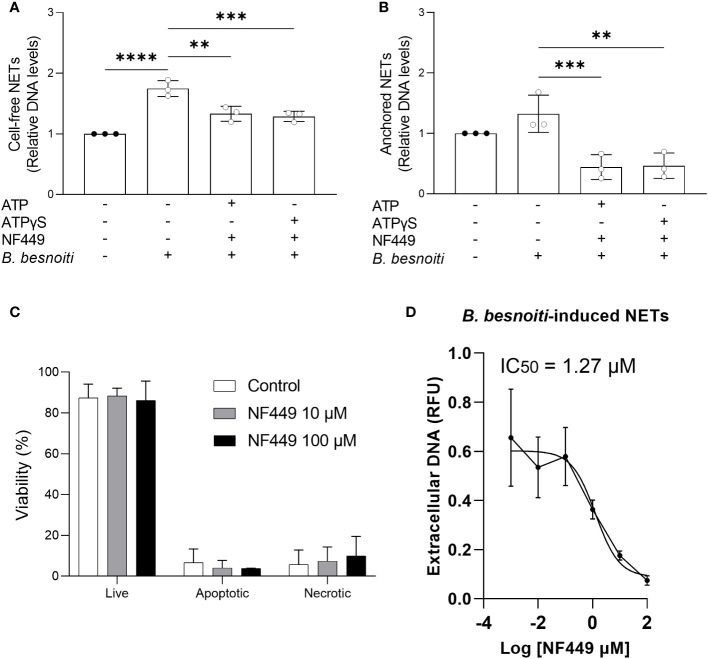
Bovine besnoitiosis is a re-emerging cattle disease caused by the cyst-forming apicomplexan parasite . Neutrophil extracellular trap (NET) formation represents an efficient innate immune mechanism of polymorphonuclear neutrophils (PMN) against apicomplexan parasites, including . PMN purinergic signaling was proposed as a critical factor for NET formation. One important purinergic ligand is ATP, which is recognized as a danger signal and released into the extracellular space acting as an autocrine/paracrine signaling molecule. ATP-driven effects on PMN via the nucleotide P2 receptor family include chemotaxis, reactive oxygen species (ROS) production, and NET formation. So far, data on both PMN ATP concentrations and the role of ATP as a key modulator of purinergic signaling in tachyzoite-triggered bovine NETosis is scarce. Current data showed that tachyzoite exposure to bovine PMN neither changed total PMN ATP nor extracellular ATP quantities even though it significantly triggered NET formation. Moreover, tachyzoite-exposed PMN revealed enhanced oxygen consumption rates (OCR) as quantified by the Seahorse metabolic analyzer. Exogenous supplementation of ATP or non-hydrolizable ATP (ATPγS) led to increased extracellular acidification rates (ECAR) but failed to alter tachyzoite-induced oxidative responses (OCR) in exposed PMN. In addition, exogenous supplementation of ATPγS, but not of ATP, boosted tachyzoite-induced anchored NET formation. Referring to purinergic signaling, tachyzoite-triggered anchored NET formation revealed P2X1 purinergic as receptor-dependent since it was blocked by the P2X1 inhibitor NF449 at an IC of 1.27 µM. In contrast, antagonists of P2Y2, P2Y6, P2X4, and P2X7 purinergic receptors all failed to affect parasite-driven NETosis. As an interesting finding, we additionally observed that tachyzoite exposure induced PMN clustering in a P2X1-dependent manner. Thus, we identified P2X1 purinergic receptor as a pivotal molecule for both tachyzoiteinduced PMN clustering and anchored NET formation.
牛贝氏巴贝斯虫病是一种由形成包囊的顶复门寄生虫引起的牛再发疾病。中性粒细胞胞外诱捕网(NET)的形成代表了多形核粒细胞(PMN)对抗顶复门寄生虫的一种有效的先天免疫机制,包括。PMN 嘌呤能信号被认为是 NET 形成的关键因素。一种重要的嘌呤能配体是 ATP,它被认为是一种危险信号,并作为自分泌/旁分泌信号分子释放到细胞外空间。ATP 通过核苷酸 P2 受体家族对 PMN 的作用包括趋化作用、活性氧(ROS)的产生和 NET 的形成。到目前为止,关于 PMN 中 ATP 的浓度以及 ATP 作为嘌呤能信号的关键调节剂在刚地弓形虫触发牛 NETosis 中的作用的数据都很缺乏。目前的数据表明,刚地弓形虫暴露于牛 PMN 既不改变总 PMN ATP 也不改变细胞外 ATP 量,尽管它显著地触发了 NET 的形成。此外,刚地弓形虫暴露的 PMN 显示出增强的耗氧率(OCR),如 Seahorse 代谢分析仪所量化的。外源性补充 ATP 或不可水解的 ATP(ATPγS)导致细胞外酸化率(ECAR)增加,但未能改变刚地弓形虫诱导的暴露 PMN 中的氧化反应(OCR)。此外,外源性补充 ATPγS,但不是 ATP,增强了刚地弓形虫诱导的锚定 NET 的形成。在嘌呤能信号方面,刚地弓形虫触发的锚定 NET 的形成揭示了 P2X1 嘌呤能受体作为依赖性受体,因为它被 P2X1 抑制剂 NF449 以 1.27 µM 的 IC 阻断。相比之下,P2Y2、P2Y6、P2X4 和 P2X7 嘌呤能受体的拮抗剂都未能影响寄生虫驱动的 NETosis。作为一个有趣的发现,我们还观察到刚地弓形虫暴露以 P2X1 依赖的方式诱导 PMN 聚集。因此,我们确定 P2X1 嘌呤能受体是刚地弓形虫诱导的 PMN 聚集和锚定 NET 形成的关键分子。