Alghamdi Waad, Al-Fadel Nouf, Alghamdi Eman A, Alghamdi Maha, Alharbi Fawaz
Saudi Food and Drug Authority, Riyadh, Saudi Arabia.
Drugs Real World Outcomes. 2023 Dec;10(4):577-585. doi: 10.1007/s40801-023-00388-w. Epub 2023 Oct 19.
Numerous investigations on herbal medicine that have been undertaken in the past several years demonstrate the general acceptance of its safety. The Saudi Food and Drug Authority (SFDA) established the Herb-Drug Interaction (HDI) project to detect and assess potential HDIs to ensure safety. The aim is to detect safety signals and assess them based on available evidence.
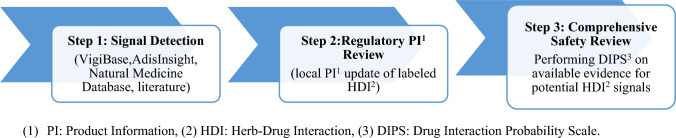
First, SFDA-registered herbal products (n = 30) were selected and prioritized based on commonly used herbs. Second, reported potential HDIs were retrieved from the World Health Organization global database of individual case safety reports (VigiBase), AdisInsight, and the Natural Medicines database. We excluded drugs non-registered by SFDA and labeled interactions in the product information of SFDA, the US Food and Drug Administration (FDA), and the European Medicines Agency (EMA). Finally, a comprehensive evaluation of potential HDIs was carried out using several evidence sources: literature, global cases, local cases, and other relevant documents. The Drug Interaction Probability Scale (DIPS) scale was used to assess the probability of a causal relationship between the interacting herb and drug and the event.
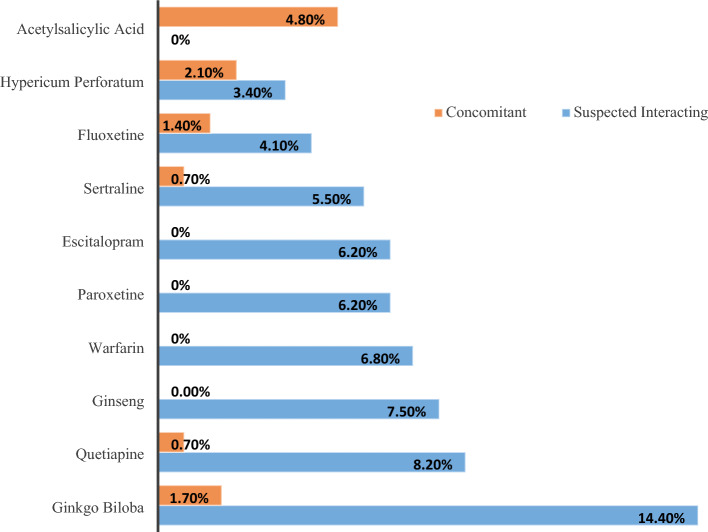
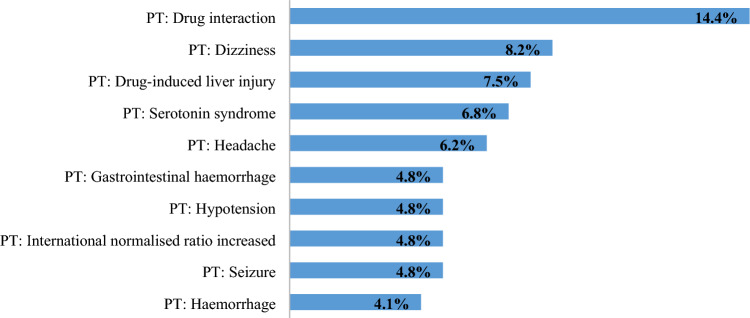
The search yielded 566 potential signals, and 41 had published evidence and were referred for assessment. The assessment results using DIPS were: 22 possible (53.6 %), 7 probable (17%), and 12 doubtful (29.2%) interactions. The recommendation was to include probable HDIs in the product information, including turmeric-tacrolimus, etoposide-Echinacea, Ginkgo biloba-ibuprofen, green tea-warfarin, and licorice-thiazides interactions.
The HDI project assessed the screening and identification of potential HDIs. The action plan of this project can be used in post-marketing activities to identify potential drug interactions.
过去几年对草药进行的大量研究表明其安全性已得到普遍认可。沙特食品药品管理局(SFDA)设立了草药-药物相互作用(HDI)项目,以检测和评估潜在的草药-药物相互作用,确保用药安全。其目的是发现安全信号并根据现有证据对其进行评估。
首先,根据常用草药对SFDA注册的草药产品(n = 30)进行选择和排序。其次,从世界卫生组织个体病例安全报告全球数据库(VigiBase)、AdisInsight和天然药物数据库中检索已报道的潜在草药-药物相互作用。我们排除了未在SFDA注册的药物,并标记了SFDA、美国食品药品监督管理局(FDA)和欧洲药品管理局(EMA)产品信息中的相互作用。最后,利用多种证据来源对潜在的草药-药物相互作用进行全面评估:文献、全球病例、本地病例及其他相关文件。使用药物相互作用概率量表(DIPS)来评估相互作用的草药与药物及事件之间因果关系的概率。
检索得到566个潜在信号,其中41个有已发表的证据并被提交评估。使用DIPS的评估结果为:22个可能相互作用(53.6%)、7个很可能相互作用(17%)和12个可疑相互作用(29.2%)。建议在产品信息中纳入很可能的草药-药物相互作用,包括姜黄-他克莫司、依托泊苷-紫锥菊、银杏叶-布洛芬、绿茶-华法林和甘草-噻嗪类药物的相互作用。
HDI项目评估了潜在草药-药物相互作用的筛选和识别。该项目的行动计划可用于上市后活动,以识别潜在的药物相互作用。