Women's Malignancies Branch, National Cancer Institute, National Institutes of Health, Bethesda, MD, 20892, USA.
Molecular Histopathology Laboratory, Frederick National Laboratory for Cancer Research, NCI, Frederick, MD, 21702, USA.
J Exp Clin Cancer Res. 2023 Oct 19;42(1):270. doi: 10.1186/s13046-023-02820-z.
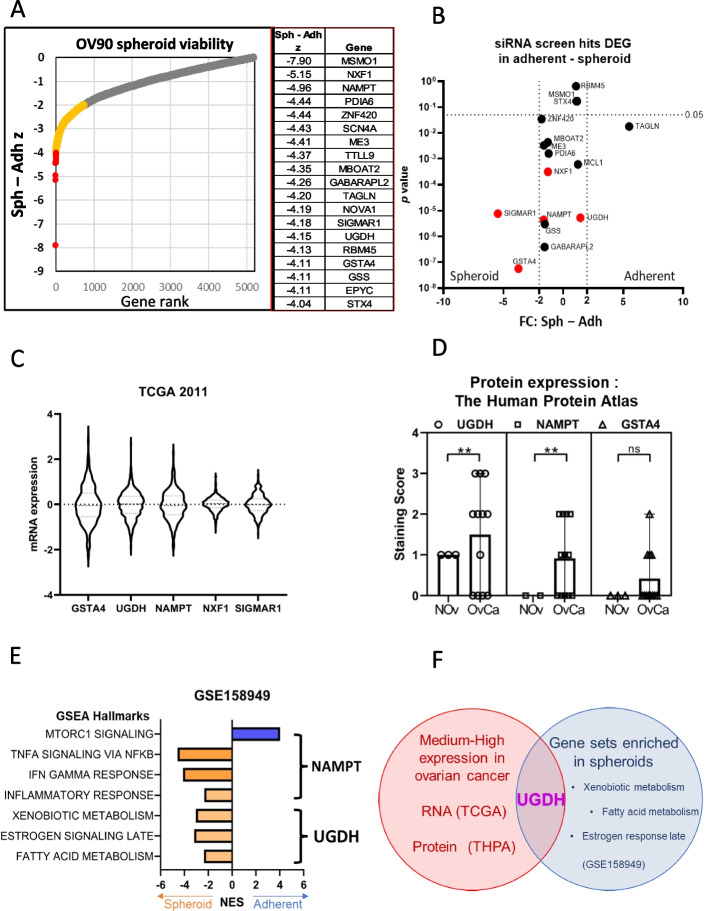
Epithelial ovarian cancer (EOC) is a global health burden, with the poorest five-year survival rate of the gynecological malignancies due to diagnosis at advanced stage and high recurrence rate. Recurrence in EOC is driven by the survival of chemoresistant, stem-like tumor-initiating cells (TICs) that are supported by a complex extracellular matrix and immunosuppressive microenvironment. To target TICs to prevent recurrence, we identified genes critical for TIC viability from a whole genome siRNA screen. A top hit was the cancer-associated, proteoglycan subunit synthesis enzyme UDP-glucose dehydrogenase (UGDH).
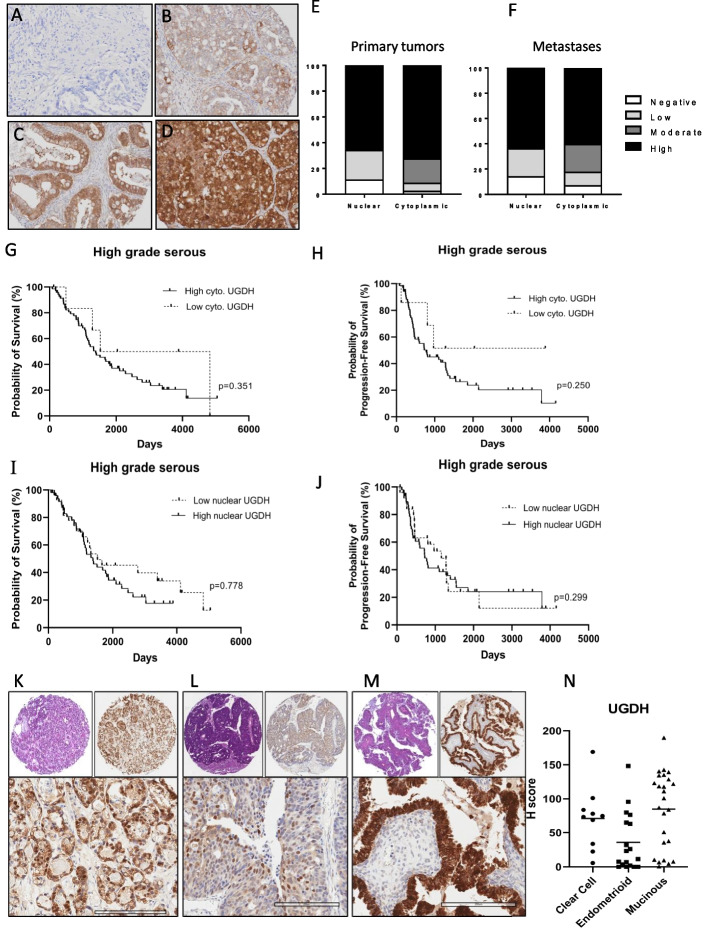
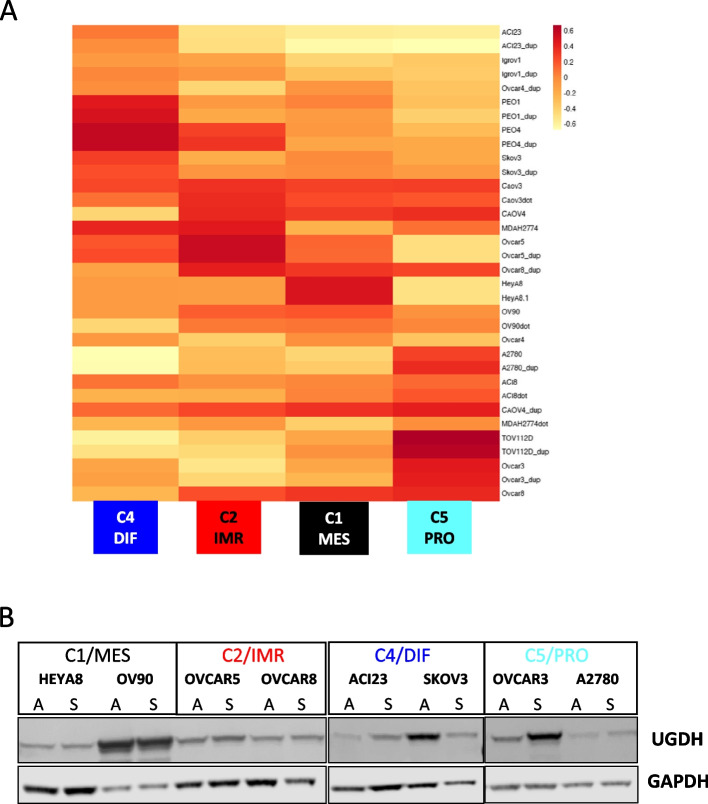
Immunohistochemistry was used to characterize UGDH expression in histological and molecular subtypes of EOC. EOC cell lines were subtyped according to the molecular subtypes and the functional effects of modulating UGDH expression in vitro and in vivo in C1/Mesenchymal and C4/Differentiated subtype cell lines was examined.
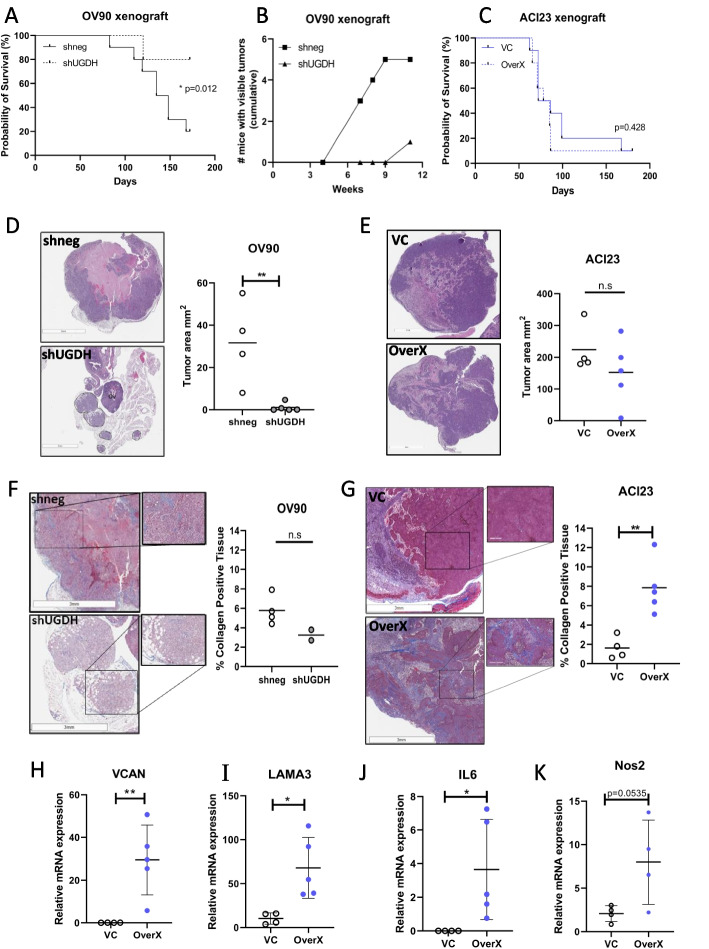
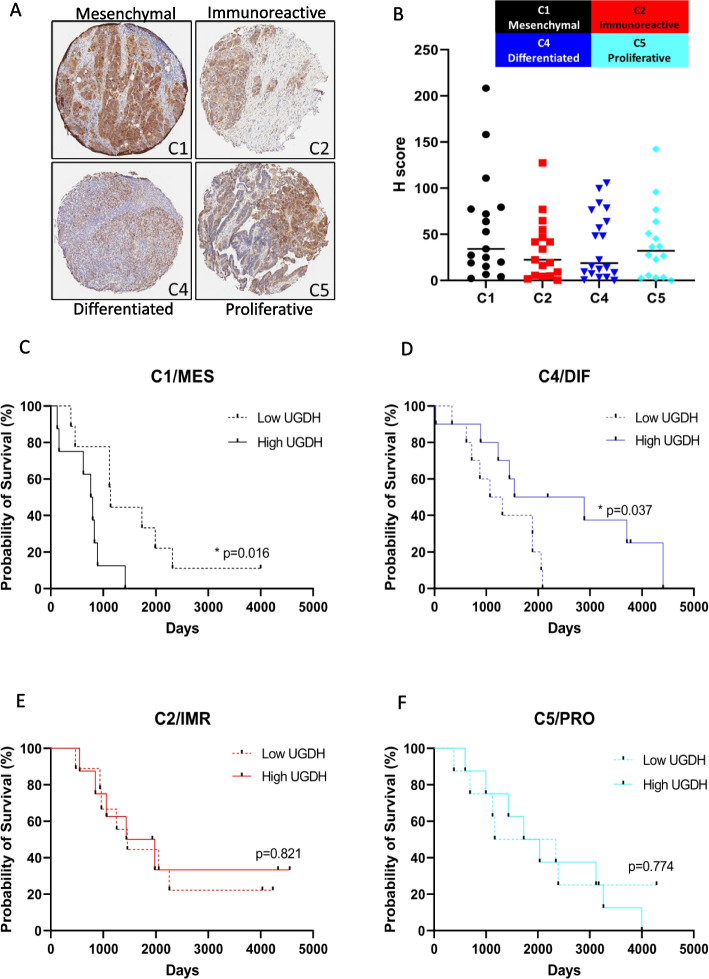
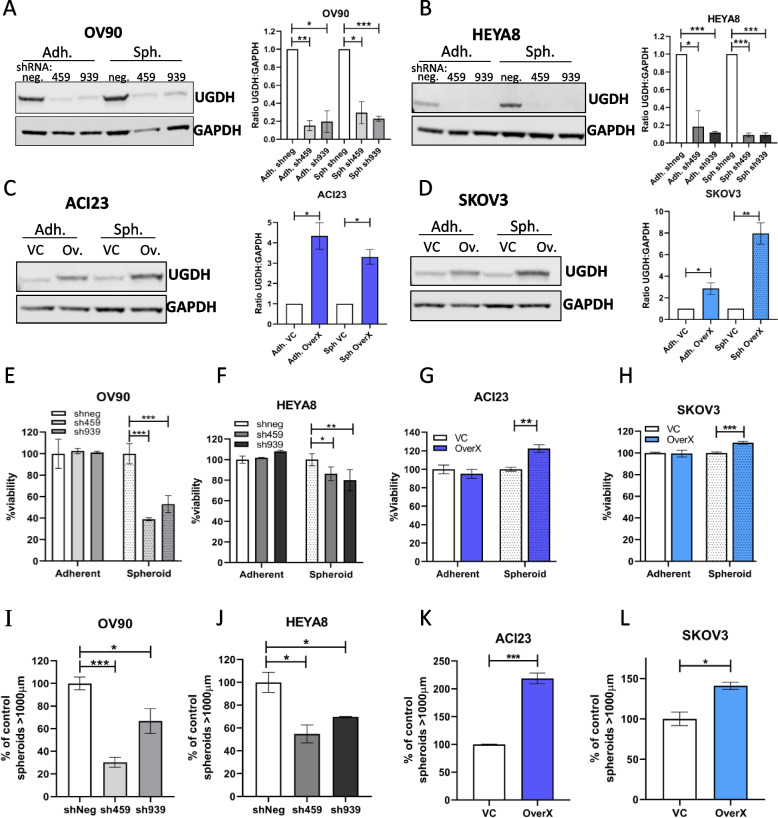
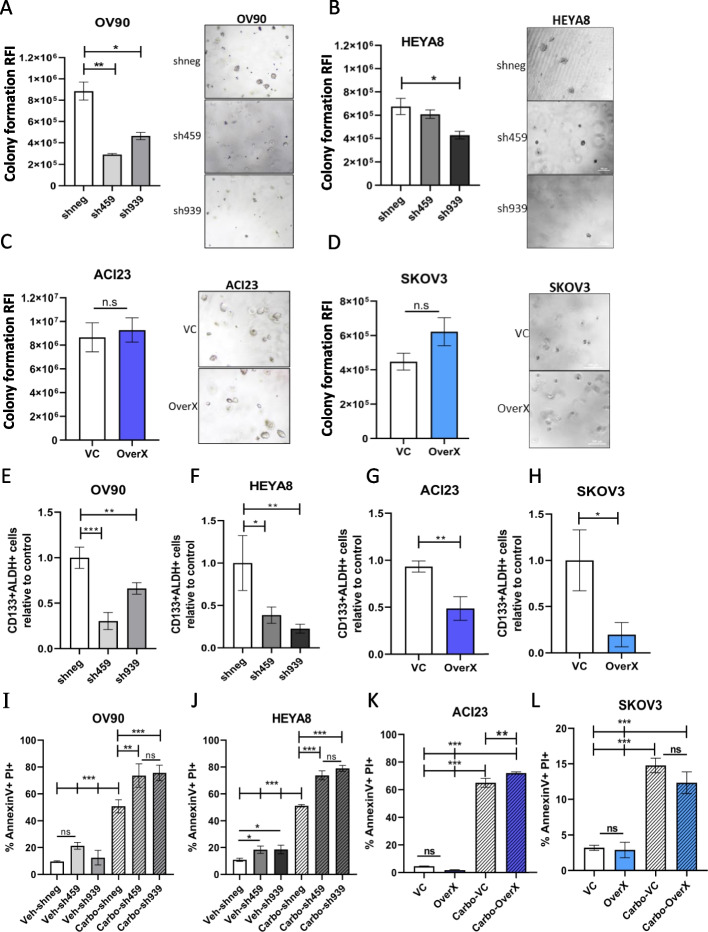
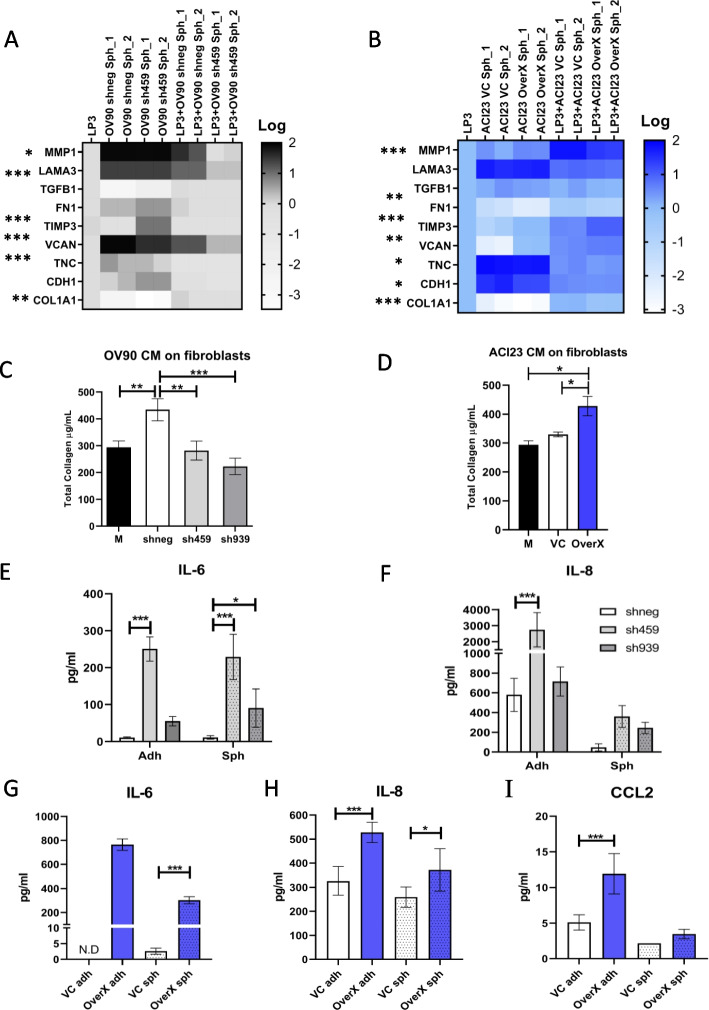
High UGDH expression was observed in high-grade serous ovarian cancers and a distinctive survival prognostic for UGDH expression was revealed when serous cancers were stratified by molecular subtype. High UGDH was associated with a poor prognosis in the C1/Mesenchymal subtype and low UGDH was associated with poor prognosis in the C4/Differentiated subtype. Knockdown of UGDH in the C1/mesenchymal molecular subtype reduced spheroid formation and viability and reduced the CD133 + /ALDH TIC population. Conversely, overexpression of UGDH in the C4/Differentiated subtype reduced the TIC population. In co-culture models, UGDH expression in spheroids affected the gene expression of mesothelial cells causing changes to matrix remodeling proteins, and fibroblast collagen production. Inflammatory cytokine expression of spheroids was altered by UGDH expression. The effect of UGDH knockdown or overexpression in the C1/ Mesenchymal and C4/Differentiated subtypes respectively was tested on mouse intrabursal xenografts and showed dynamic changes to the tumor stroma. Knockdown of UGDH improved survival and reduced tumor burden in C1/Mesenchymal compared to controls.
These data show that modulation of UGDH expression in ovarian cancer reveals distinct roles for UGDH in the C1/Mesenchymal and C4/Differentiated molecular subtypes of EOC, influencing the tumor microenvironmental composition. UGDH is a strong potential therapeutic target in TICs, for the treatment of EOC, particularly in patients with the mesenchymal molecular subtype.
上皮性卵巢癌(EOC)是全球健康负担,由于诊断为晚期和高复发率,其妇科恶性肿瘤的五年生存率最差。EOC 的复发是由化学耐药、具有干细胞样特性的肿瘤起始细胞(TIC)的存活驱动的,这些细胞由复杂的细胞外基质和免疫抑制微环境支持。为了通过靶向 TIC 来预防复发,我们从全基因组 siRNA 筛选中确定了对 TIC 存活至关重要的基因。一个主要的命中是癌症相关的蛋白聚糖亚基合成酶 UDP-葡萄糖脱氢酶(UGDH)。
免疫组织化学用于在 EOC 的组织学和分子亚型中描述 UGDH 的表达。根据分子亚型对 EOC 细胞系进行分型,并在 C1/间充质和 C4/分化亚型细胞系中体外和体内研究调节 UGDH 表达的功能影响。
在高级别浆液性卵巢癌中观察到高 UGDH 表达,并且当浆液性癌按分子亚型分层时,揭示了 UGDH 表达的独特生存预后。高 UGDH 与 C1/间充质亚型的不良预后相关,而低 UGDH 与 C4/分化亚型的不良预后相关。在 C1/间充质分子亚型中敲低 UGDH 降低了球体形成和活力,并减少了 CD133+/ALDH+TIC 群体。相反,在 C4/分化亚型中过表达 UGDH 降低了 TIC 群体。在共培养模型中,球体中的 UGDH 表达影响间皮细胞的基因表达,导致基质重塑蛋白和成纤维胶原产生的变化。球体的炎症细胞因子表达也被 UGDH 表达改变。在 C1/间充质和 C4/分化亚型中分别测试 UGDH 敲低或过表达对小鼠囊内异种移植物的影响,显示肿瘤基质发生动态变化。与对照组相比,C1/间充质中 UGDH 敲低可改善生存并降低肿瘤负担。
这些数据表明,卵巢癌中 UGDH 表达的调节揭示了 UGDH 在 EOC 的 C1/间充质和 C4/分化分子亚型中的不同作用,影响肿瘤微环境组成。UGDH 是 TIC 治疗卵巢癌的一个强有力的潜在治疗靶点,特别是在间充质分子亚型的患者中。