Mohamed Reem I, Daoud Ibrahim M, Suliman Awadia G, Kaddam Lamis
Department of Physiology, Faculty of Medicine, Alneelain University, Khartoum, SDN.
Department of Obstetrics and Gynaecology, Faculty of Medicine, Alneelain University, Khartoum, SDN.
Cureus. 2023 Sep 18;15(9):e45480. doi: 10.7759/cureus.45480. eCollection 2023 Sep.
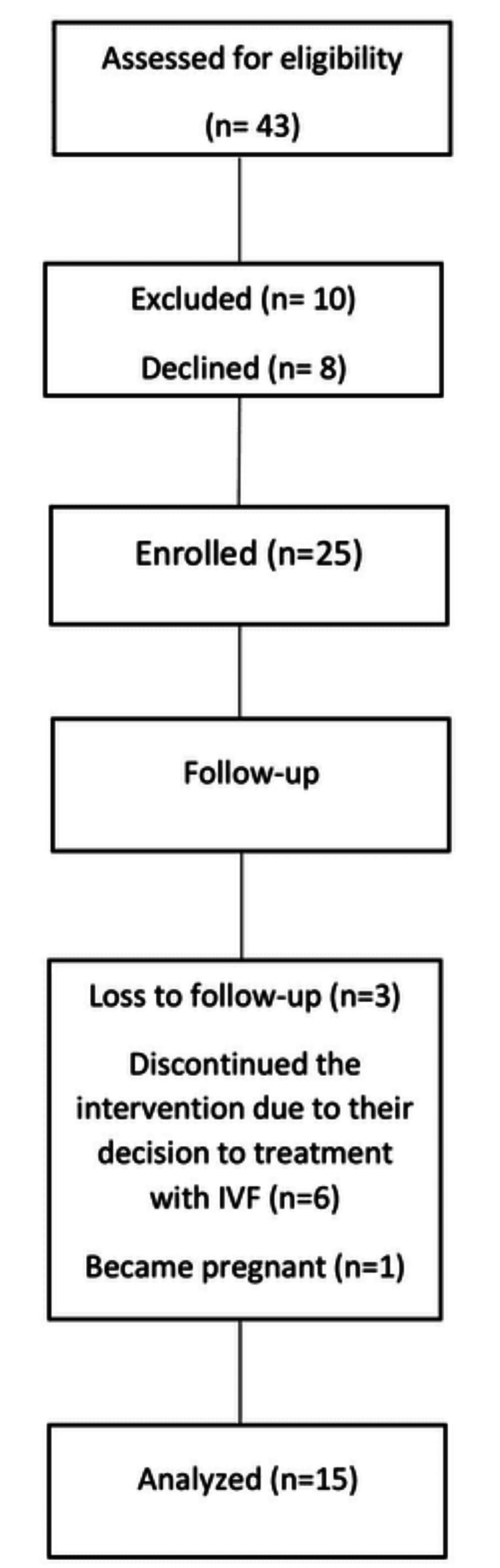
Background The most prevalent endocrine condition affecting women of reproductive age is polycystic ovarian syndrome (PCOS), which is linked to a variety of metabolic abnormalities. Although the pathogenesis of PCOS is not fully understood, it is known that oxidative stress, altered gut microbiome, and increased gonadotrophin-releasing hormone play a significant role. Gum arabic (GA) is an edible, dried, gummy exudate from the tree, well-known for its prebiotic and antioxidant effects. The main objective of the study was to assess the changes in hormonal and metabolic profiles in PCOS patients after the ingestion of gum arabic. Method This was a clinical trial conducted on fifteen patients suffering from PCOS, with a mean age of 27.8 years (20-39 years). All patients experienced irregular cycles. Hormonal and metabolic markers (follicular stimulating hormone (FSH), luteinizing hormone (LH), total testosterone (TT), fasting insulin, total cholesterol (TC), and glycosylated hemoglobin (HBA1c) were measured before and after the ingestion of gum arabic (30 g/day of GA dissolved in 250 ml water for eight weeks) on the second day of the menstrual cycle after granting ethical approval from the National Medicine and Poisons Board and from the participants of the study. Results The study demonstrated a significant decrease in the luteinizing hormone level, FSH/LH ratio, and cholesterol pre- and post-gum arabic ingestion (p-values 0.001, 0.013, and 0.007, respectively). Follicular stimulating hormone slightly reduced post-ingestion with no significant difference (p-value 0.414). No significant changes were seen in the testosterone, insulin, or HBA1c levels. Conclusion The study concluded that gum arabic ingestion for eight weeks decreases the luteinizing hormone and LH/FSH ratio and improves the metabolic profile by reducing the cholesterol level in PCOS patients.
影响育龄女性的最常见内分泌疾病是多囊卵巢综合征(PCOS),它与多种代谢异常有关。尽管PCOS的发病机制尚未完全明确,但已知氧化应激、肠道微生物群改变以及促性腺激素释放激素增加起着重要作用。阿拉伯胶(GA)是一种可食用的、干燥的、从树上渗出的树胶,以其益生元和抗氧化作用而闻名。本研究的主要目的是评估PCOS患者摄入阿拉伯胶后激素和代谢谱的变化。
这是一项针对15名PCOS患者的临床试验,平均年龄为27.8岁(20 - 39岁)。所有患者月经周期不规律。在获得国家药品和毒物管理局以及研究参与者的伦理批准后,于月经周期的第二天测量激素和代谢标志物(促卵泡生成素(FSH)、促黄体生成素(LH)、总睾酮(TT)、空腹胰岛素、总胆固醇(TC)和糖化血红蛋白(HBA1c)),在摄入阿拉伯胶(30克/天的GA溶解于250毫升水中,持续八周)前后进行测量。
研究表明,摄入阿拉伯胶前后促黄体生成素水平、FSH/LH比值和胆固醇显著降低(p值分别为0.001、0.013和0.007)。摄入后促卵泡生成素略有降低,但无显著差异(p值0.414)。睾酮、胰岛素或HBA1c水平未见显著变化。
该研究得出结论,PCOS患者连续八周摄入阿拉伯胶可降低促黄体生成素和LH/FSH比值,并通过降低胆固醇水平改善代谢谱。