Mr. & Mrs. Ko Chi-Ming Centre for Parkinson's Disease Research, School of Chinese Medicine, Hong Kong Baptist University, Hong Kong SAR, China.
Pritzker School of Molecular Engineering, The University of Chicago, Chicago, IL, USA.
Signal Transduct Target Ther. 2023 Oct 23;8(1):404. doi: 10.1038/s41392-023-01657-4.
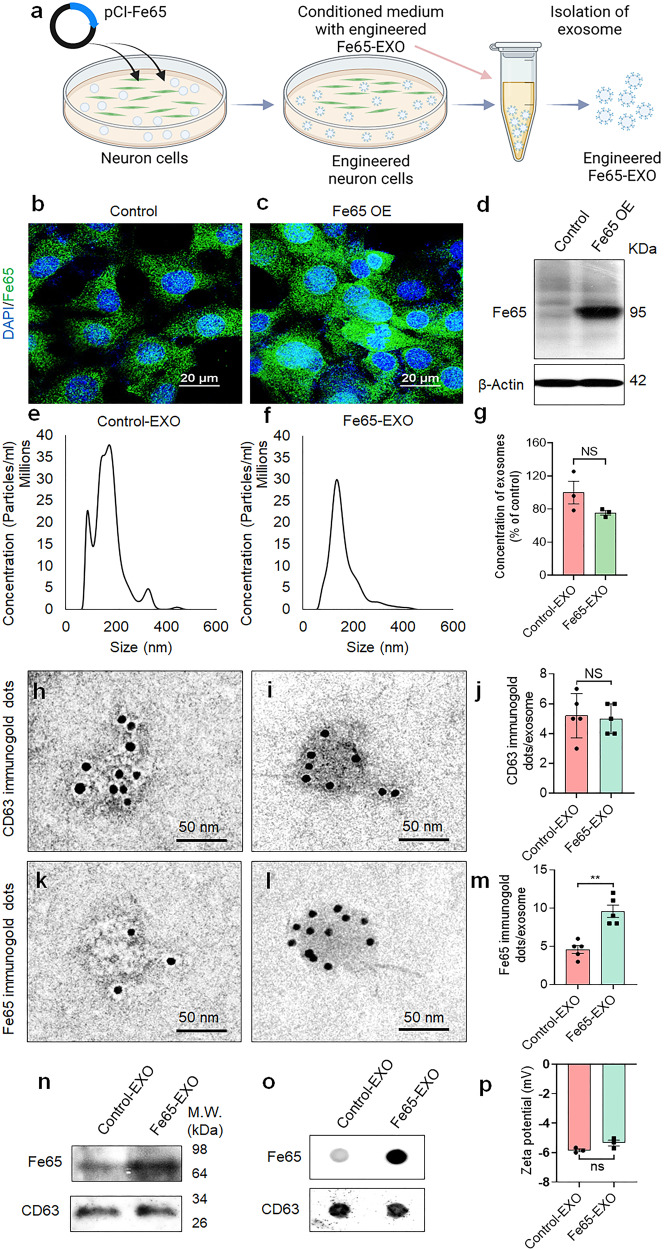
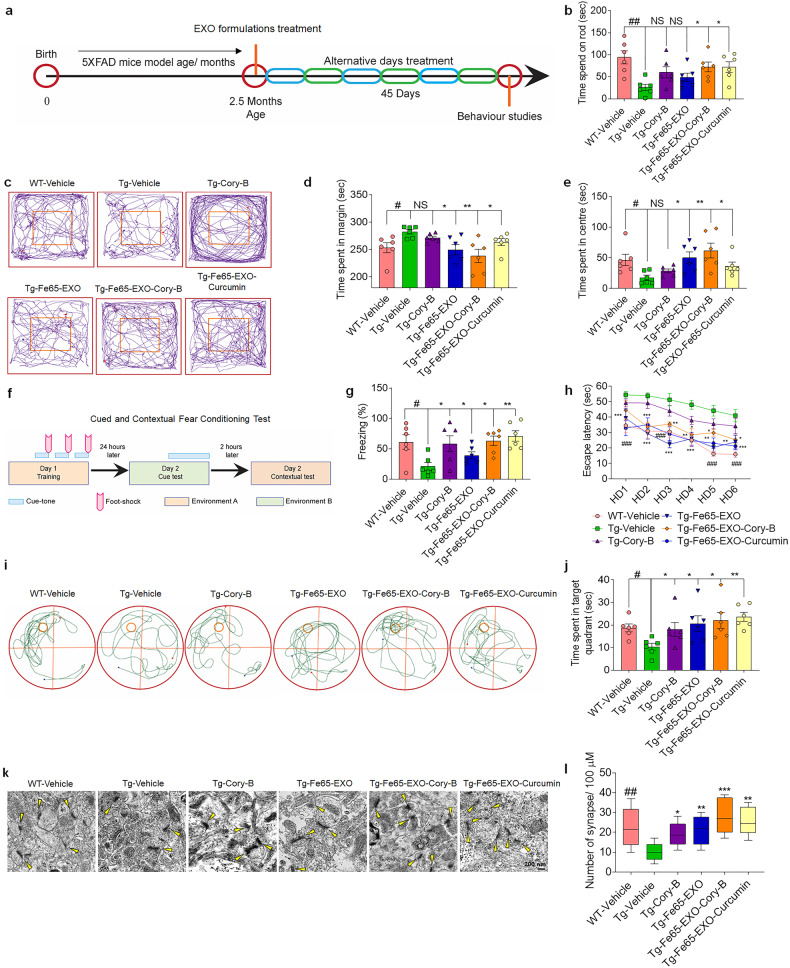
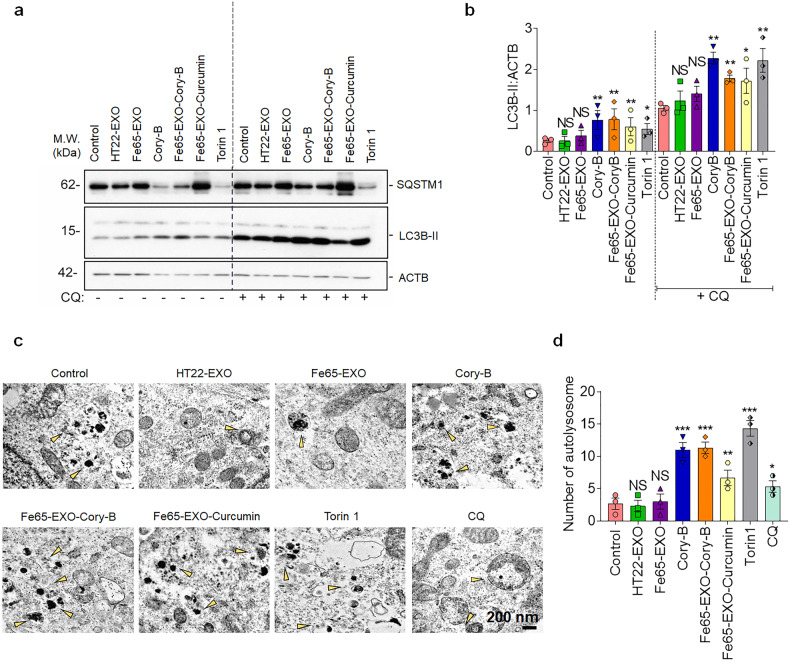
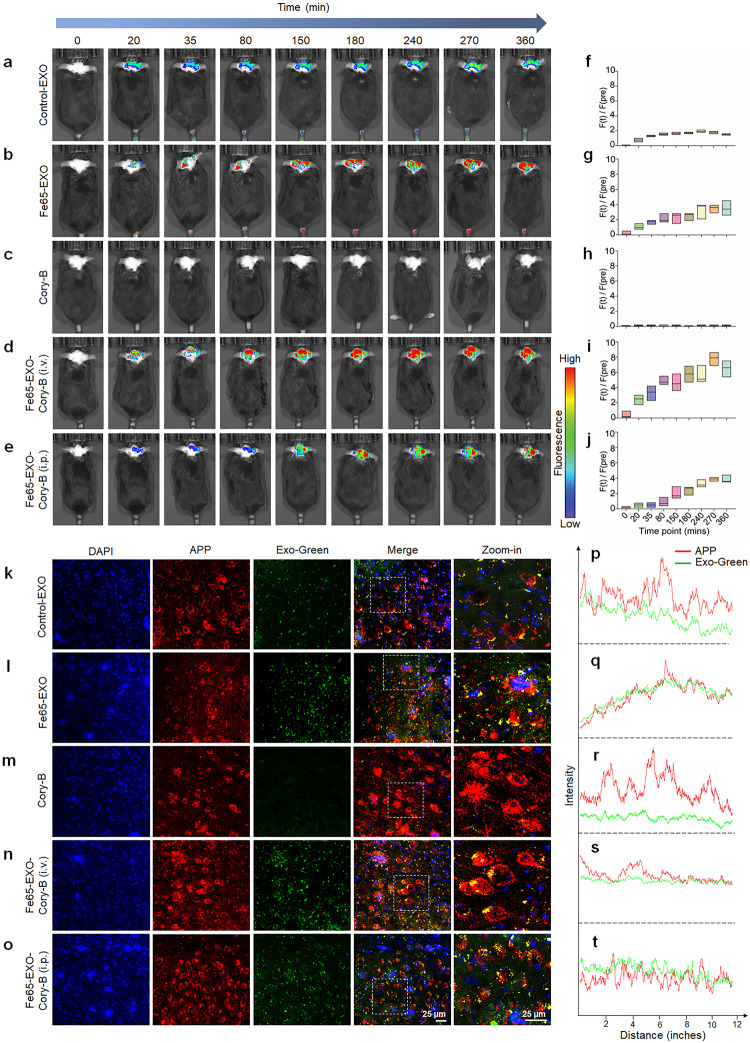
Alzheimer's disease (AD) is a neurodegenerative disorder characterized by the predominant impairment of neurons in the hippocampus and the formation of amyloid plaques, hyperphosphorylated tau protein, and neurofibrillary tangles in the brain. The overexpression of amyloid-β precursor protein (APP) in an AD brain results in the binding of APP intracellular domain (AICD) to Fe65 protein via the C-terminal Fe65-PTB2 interaction, which then triggers the secretion of amyloid-β and the consequent pathogenesis of AD. Apparently, targeting the interaction between APP and Fe65 can offer a promising therapeutic approach for AD. Recently, exosome, a type of extracellular vesicle with diameter around 30-200 nm, has gained much attention as a potential delivery tool for brain diseases, including AD, due to their ability to cross the blood-brain barrier, their efficient uptake by autologous cells, and their ability to be surface-modified with target-specific receptor ligands. Here, the engineering of hippocampus neuron cell-derived exosomes to overexpress Fe65, enabled the development of a novel exosome-based targeted drug delivery system, which carried Corynoxine-B (Cory-B, an autophagy inducer) to the APP overexpressed-neuron cells in the brain of AD mice. The Fe65-engineered HT22 hippocampus neuron cell-derived exosomes (Fe65-EXO) loaded with Cory-B (Fe65-EXO-Cory-B) hijacked the signaling and blocked the natural interaction between Fe65 and APP, enabling APP-targeted delivery of Cory-B. Notably, Fe65-EXO-Cory-B induced autophagy in APP-expressing neuronal cells, leading to amelioration of the cognitive decline and pathogenesis in AD mice, demonstrating the potential of Fe65-EXO-Cory-B as an effective therapeutic intervention for AD.
阿尔茨海默病(AD)是一种神经退行性疾病,其特征是海马体神经元的主要损伤以及脑中淀粉样斑块、过度磷酸化的 tau 蛋白和神经原纤维缠结的形成。AD 脑中淀粉样前体蛋白(APP)的过表达导致 APP 细胞内结构域(AICD)与 Fe65 蛋白通过 C 端 Fe65-PTB2 相互作用结合,从而触发淀粉样β的分泌和 AD 的发病机制。显然,靶向 APP 和 Fe65 之间的相互作用可能为 AD 提供一种有前途的治疗方法。最近,外泌体,一种直径约 30-200nm 的细胞外囊泡,因其能够穿过血脑屏障、被自身细胞有效摄取以及能够被靶向受体配体表面修饰等特性,作为一种治疗包括 AD 在内的脑部疾病的潜在递药工具,引起了广泛关注。在这里,通过工程改造海马神经元细胞来源的外泌体过表达 Fe65,开发了一种新型的基于外泌体的靶向药物递药系统,该系统将姜酮 B(Cory-B,自噬诱导剂)递送到 AD 小鼠大脑中过表达 APP 的神经元细胞中。载有姜酮 B(Cory-B)的 Fe65 工程化 HT22 海马神经元细胞来源的外泌体(Fe65-EXO-Cory-B)劫持了信号通路并阻断了 Fe65 与 APP 之间的自然相互作用,从而实现了 APP 靶向的 Cory-B 递药。值得注意的是,Fe65-EXO-Cory-B 在表达 APP 的神经元细胞中诱导自噬,从而改善 AD 小鼠的认知能力下降和发病机制,表明 Fe65-EXO-Cory-B 作为 AD 有效治疗干预的潜力。