Sethurajan Monikka Reshmi, K Natarajan
Research Scholar, Department of Computer Science and Engineering, School of Engineering and Technology, CHRIST (Deemed to be University), Kengeri Campus, Bengaluru, Karnataka 560074, India.
Associate Professor, Department of Computer Science and Engineering, School of Engineering and Technology, CHRIST (Deemed to be University), Kengeri Campus, Bengaluru, Karnataka 560074, India.
MethodsX. 2023 Oct 10;11:102430. doi: 10.1016/j.mex.2023.102430. eCollection 2023 Dec.
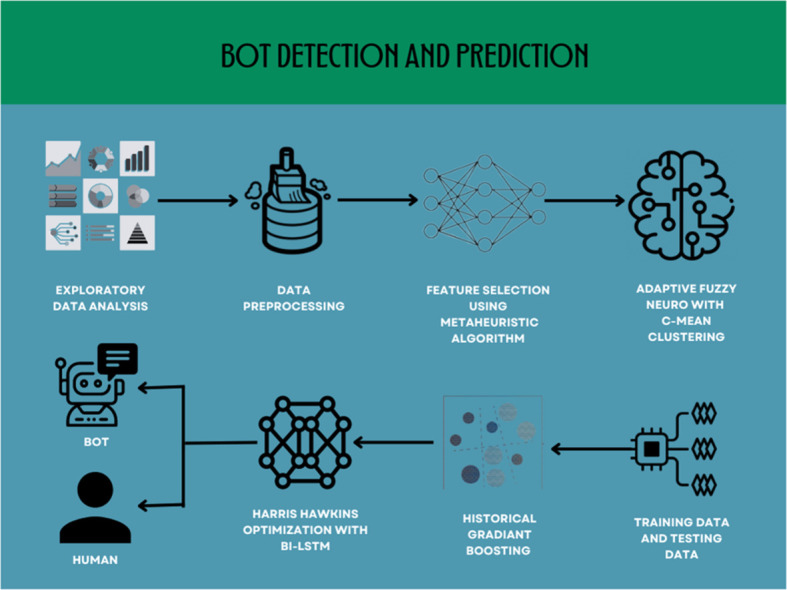
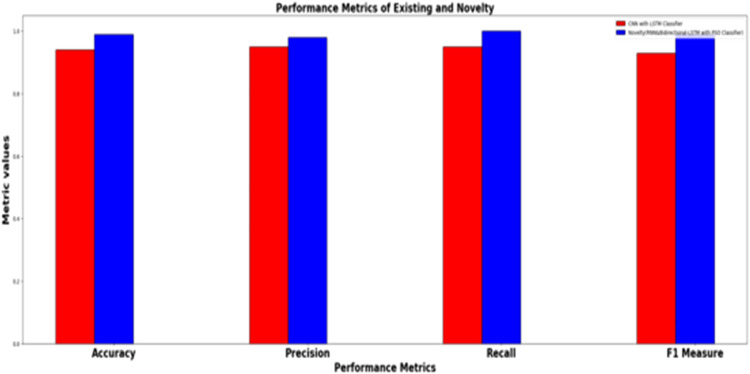
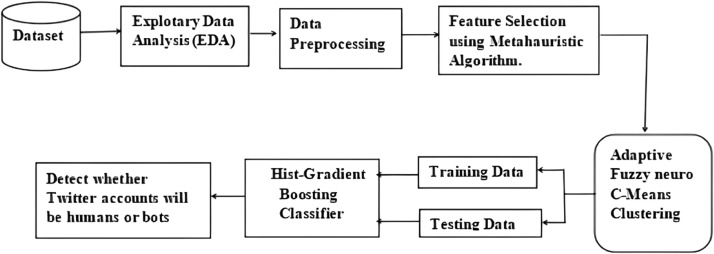
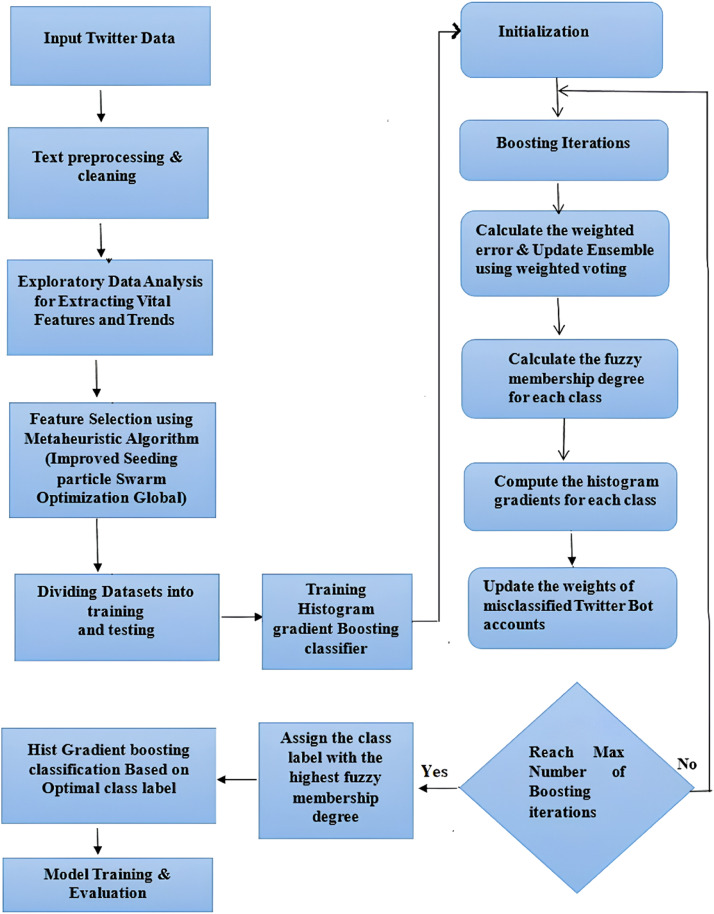
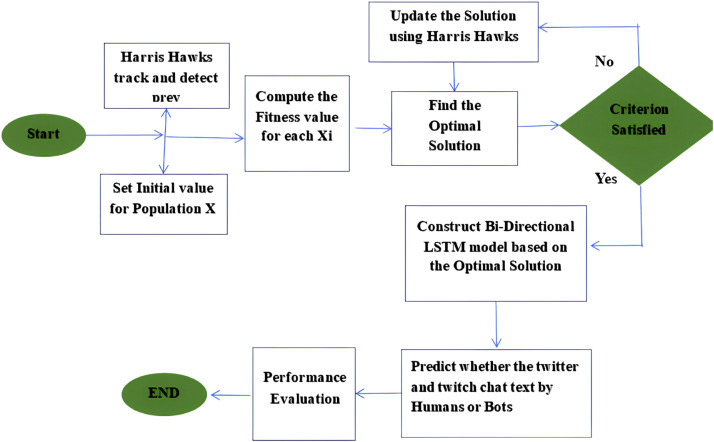
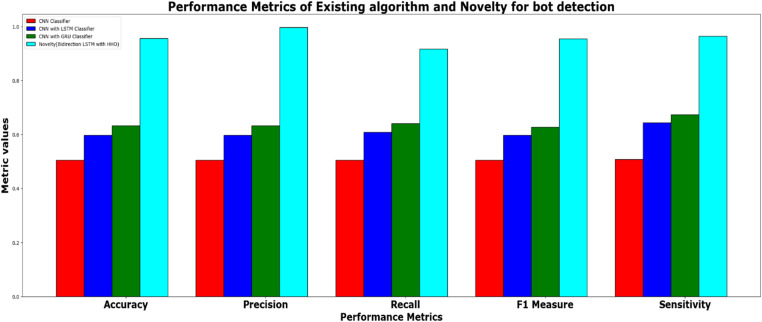
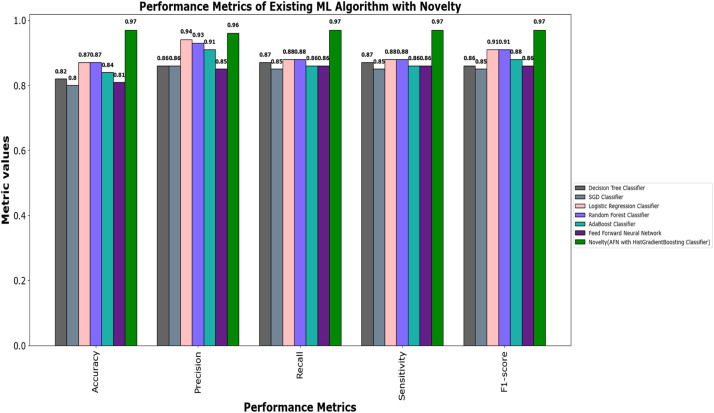
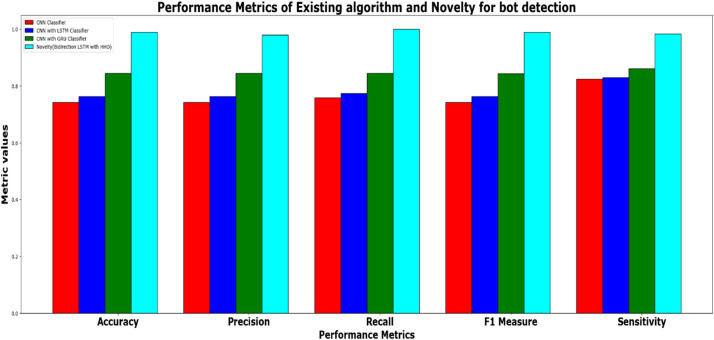
There has been a tremendous increase in the popularity of social media such as blogs, Instagram, twitter, online websites etc. The increasing utilization of these platforms have enabled the users to share information on a regular basis and also publicize social events. Nevertheless, most of the multimedia events are filled with social bots which raise concerns on the authenticity of the information shared in these events. With the increasing advancements of social bots, the complexity of detecting and fact-checking is also increasing. This is mainly due to the similarity between authorized users and social bots. Several researchers have introduced different models for detecting social bots and fact checking. However, these models suffer from various challenges. In most of the cases, these bots become indistinguishable from existing users and it is challenging to extract relevant attributes of the bots. In addition, it is also challenging to collect large scale data and label them for training the bot detection models. The performance of existing traditional classifiers used for bot detection processes is not satisfactory. This paper presents:•A machine learning based adaptive fuzzy neuro model integrated with a hist gradient boosting (HGB) classifier for identifying the persisting pattern of social bots for fake news detection.•And Harris Hawk optimization with Bi-LSTM for social bot prediction.•Results validate the efficacy of the HGB classifier which achieves a phenomenal accuracy of 95.64 % for twitter bot and 98.98 % for twitch bot dataset.
诸如博客、照片墙(Instagram)、推特、在线网站等社交媒体的受欢迎程度大幅上升。这些平台使用的增加使用户能够定期分享信息并宣传社会事件。然而,大多数多媒体事件充斥着社交机器人,这引发了对这些事件中所分享信息真实性的担忧。随着社交机器人的不断发展,检测和核实事实的复杂性也在增加。这主要是由于授权用户和社交机器人之间存在相似性。几位研究人员已经引入了不同的模型来检测社交机器人并核实事实。然而,这些模型面临各种挑战。在大多数情况下,这些机器人与现有用户难以区分,提取机器人的相关属性具有挑战性。此外,收集大规模数据并为训练机器人检测模型对其进行标注也具有挑战性。用于机器人检测过程的现有传统分类器的性能并不令人满意。本文提出:
• 一种基于机器学习的自适应模糊神经模型,与直方图梯度提升(HGB)分类器集成,用于识别社交机器人在虚假新闻检测中的持续模式。
• 以及用于社交机器人预测的基于双向长短期记忆网络(Bi-LSTM)的哈里斯鹰优化算法。
• 结果验证了HGB分类器的有效性,该分类器在推特机器人数据集上的准确率达到了惊人的95.64%,在Twitch机器人数据集上的准确率达到了98.98%。