Department of Medical Microbiology and Infection Prevention, University of Groningen, University Medical Center Groningen, Groningen, Netherlands.
Department of Microbiology, Icahn School of Medicine at Mount Sinai, New York, NY, United States.
Front Immunol. 2023 Oct 5;14:1249902. doi: 10.3389/fimmu.2023.1249902. eCollection 2023.
Influenza vaccines play a vital role in protecting individuals from influenza virus infection and severe illness. However, current influenza vaccines have suboptimal efficacy, which is further reduced in cases where the vaccine strains do not match the circulating strains. One strategy to enhance the efficacy of influenza vaccines is by extended antigen delivery, thereby mimicking the antigen kinetics of a natural infection. Prolonging antigen availability was shown to quantitatively enhance influenza virus-specific immune responses but how it affects the quality of the induced immune response is unknown. Therefore, the current study aimed to investigate whether prolongation of the delivery of influenza vaccine improves the quality of the induced immune responses over that induced by prime-boost immunization.
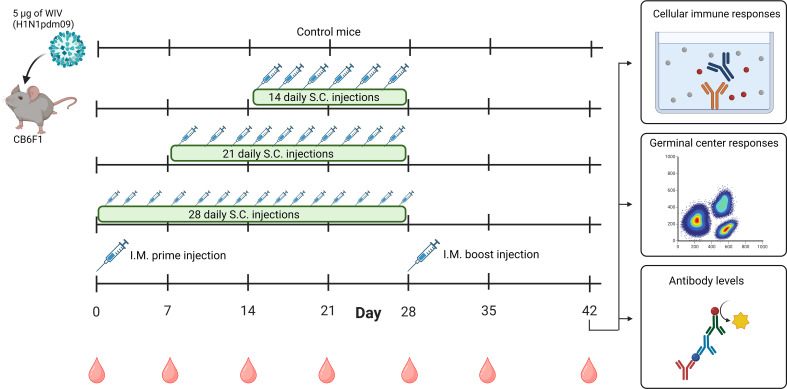
Mice were given daily doses of whole inactivated influenza virus vaccine for periods of 14, 21, or 28 days; the control group received prime-boost immunization with a 28 days interval.
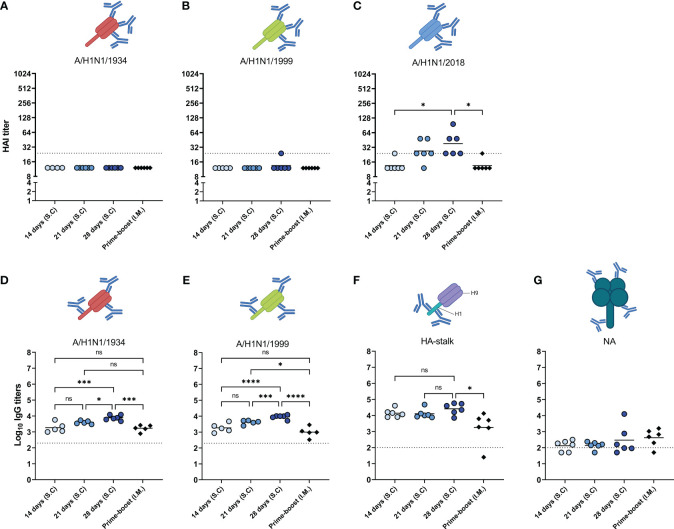
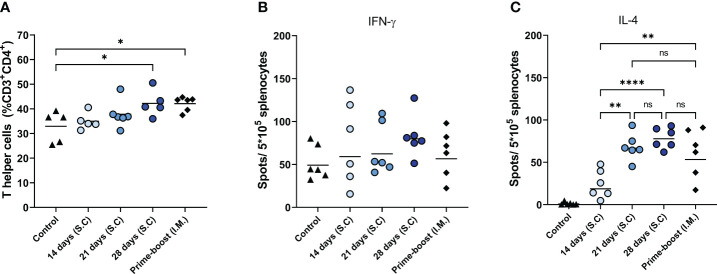
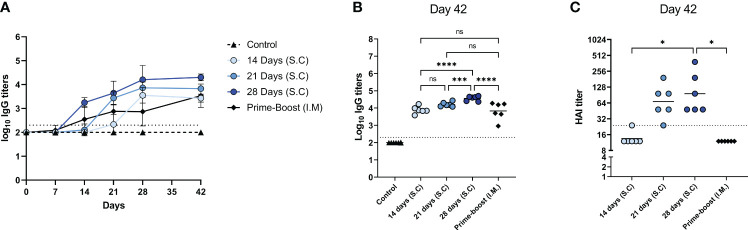
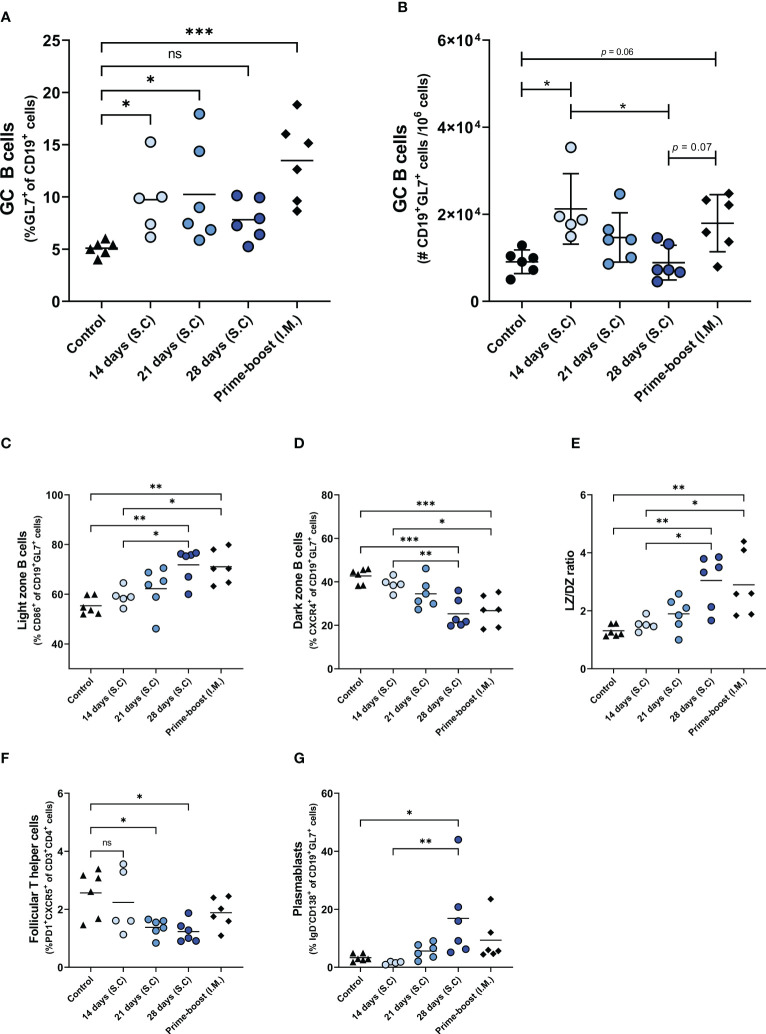
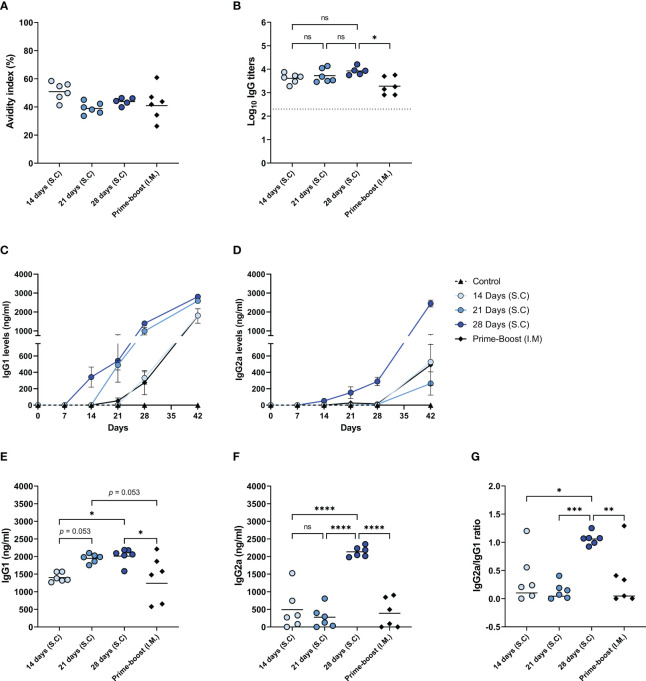
Our data show that the highest levels of cellular and humoral immune responses were induced by 28 days of extended antigen delivery, followed by 21, and 14 days of delivery, and prime-boost immunization. Moreover, prolonging vaccine delivery also improved the quality of the induced antibody response, as indicated by higher level of high avidity antibodies, a balanced IgG subclass profile, and a higher level of cross-reactive antibodies.
Our findings contribute to a better understanding of the immune response to influenza vaccination and have important implications for the design and development of future slow-release influenza vaccines.
流感疫苗在保护个体免受流感病毒感染和严重疾病方面发挥着至关重要的作用。然而,目前的流感疫苗的效果并不理想,如果疫苗株与流行株不匹配,效果会进一步降低。提高流感疫苗效果的一种策略是延长抗原的递送,从而模拟自然感染的抗原动力学。延长抗原的供应时间已被证明可以定量增强流感病毒特异性免疫反应,但它如何影响诱导的免疫反应的质量尚不清楚。因此,本研究旨在探讨延长流感疫苗的递送时间是否会改善诱导的免疫反应的质量,超过初免-加强免疫诱导的免疫反应。
将小鼠每日给予全灭活流感病毒疫苗,持续 14、21 或 28 天;对照组接受 28 天间隔的初免-加强免疫。
我们的数据显示,28 天的延长抗原递送可诱导最高水平的细胞和体液免疫反应,其次是 21 天和 14 天的递送,以及初免-加强免疫。此外,延长疫苗递送时间还改善了诱导的抗体反应的质量,表现为高水平的高亲和力抗体、平衡的 IgG 亚类谱和高水平的交叉反应性抗体。
我们的研究结果有助于更好地理解流感疫苗接种的免疫反应,并对未来慢释放流感疫苗的设计和开发具有重要意义。