Harper Luke, de Boer Sterre, Lindberg Olof, Lätt Jimmy, Cullen Nicholas, Clark Lyles, Irwin David, Massimo Lauren, Grossman Murray, Hansson Oskar, Pijnenburg Yolande, McMillan Corey T, Santillo Alexander F
Clinical Memory Research Unit, Department of Clinical Sciences, Lund University, Malmö 20502, Sweden.
Alzheimer Center Amsterdam, Neurology, Vrije Universiteit Amsterdam, Amsterdam UMC location VUmc, Amsterdam 1081 HZ, The Netherlands.
Brain Commun. 2023 Oct 10;5(5):fcad264. doi: 10.1093/braincomms/fcad264. eCollection 2023.
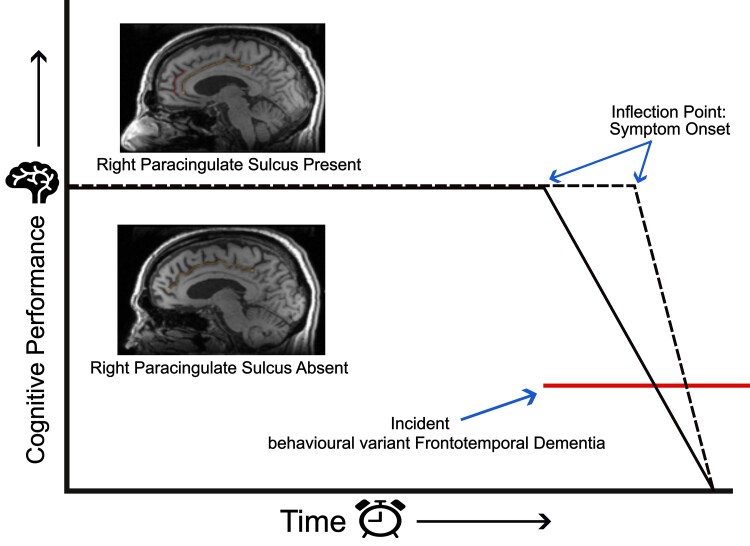
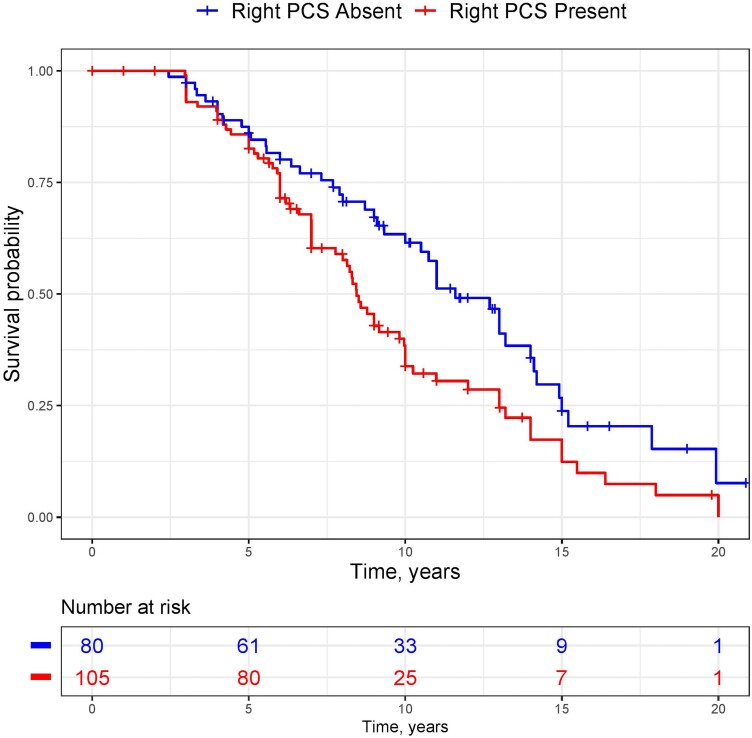
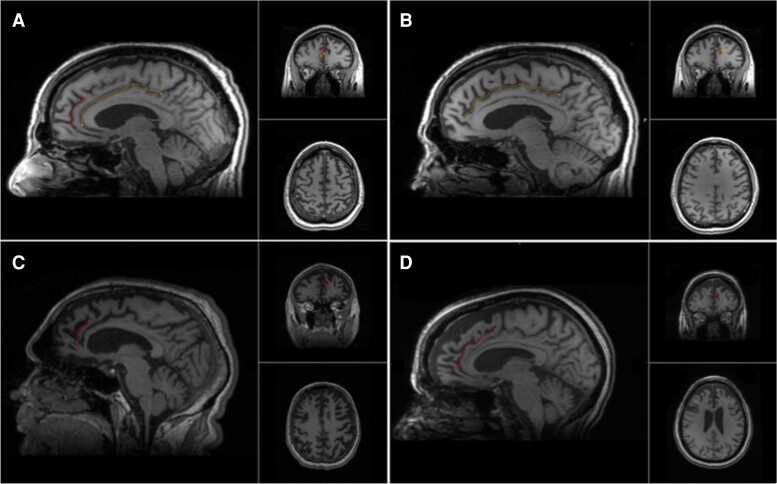
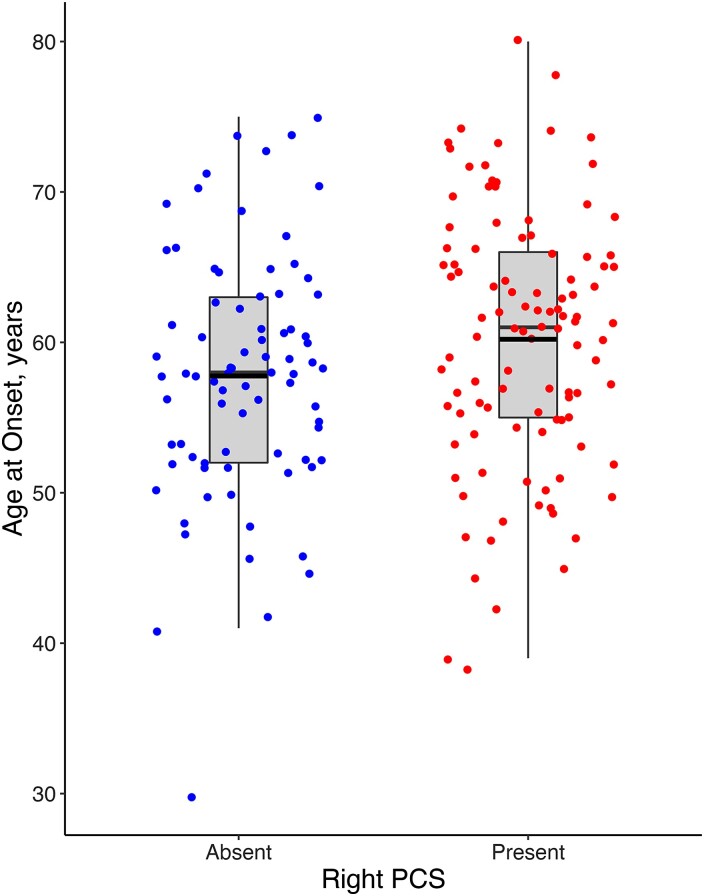
Frontotemporal dementia is the second most common form of early onset dementia (<65 years). Despite this, there are few known disease-modifying factors. The anterior cingulate is a focal point of pathology in behavioural variant frontotemporal dementia. Sulcation of the anterior cingulate is denoted by the presence of a paracingulate sulcus, a tertiary sulcus developing, where present during the third gestational trimester and remaining stable throughout life. This study aims to examine the impact of right paracingulate sulcal presence on the expression and prognosis of behavioural variant frontotemporal dementia. This retrospective analysis drew its population from two clinical samples recruited from memory clinics at university hospitals in the USA and The Netherlands. Individuals with sporadic behavioural variant frontotemporal dementia were enrolled between 2000 and 2022 and followed up for an average of 7.71 years. T-MRI data were evaluated for hemispheric paracingulate sulcal presence in accordance with an established protocol by two blinded raters. Outcome measures included age at onset, survival, cortical thickness and Frontotemporal Lobar Degeneration-modified Clinical Dementia Rating determined clinical disease progression. The study population consisted of 186 individuals with sporadic behavioural variant frontotemporal dementia (113 males and 73 females), mean age 63.28 years (SD 8.32). The mean age at onset was 2.44 years later in individuals possessing a right paracingulate sulcus [60.2 years (8.54)] versus individuals who did not [57.76 (8.05)], 95% confidence interval > 0.41, = 0.02. Education was not associated with age at onset ( = -0.05, = 0.75). The presence of a right paracingulate sulcus was associated with an 83% increased risk of death per year after age at onset (hazard ratio 1.83, confidence interval [1.09-3.07], < 0.02), whilst the mean age at death was similar for individuals with a present and absent right paracingulate sulcus ( = 0.7). Right paracingulate sulcal presence was not associated with baseline cortical thickness. Right paracingulate sulcal presence is associated with disease expression and survival in sporadic behavioural variant frontotemporal dementia. Findings provide evidence of neurodevelopmental brain reserve in behavioural variant frontotemporal dementia that may be important in the design of trials for future therapeutic approaches.
额颞叶痴呆是早发性痴呆(<65岁)的第二常见形式。尽管如此,已知的疾病修饰因素却很少。前扣带回是行为变异型额颞叶痴呆病理的一个焦点。前扣带回的脑沟化表现为旁扣带回沟的存在,这是一种在妊娠晚期出现并在一生中保持稳定的三级脑沟。本研究旨在探讨右侧旁扣带回沟的存在对行为变异型额颞叶痴呆的表达和预后的影响。这项回顾性分析的数据来自美国和荷兰大学医院记忆门诊招募的两个临床样本。散发性行为变异型额颞叶痴呆患者于2000年至2022年入组,平均随访7.71年。两名盲法评估者根据既定方案对T-MRI数据进行半球旁扣带回沟存在情况的评估。结局指标包括发病年龄、生存率、皮质厚度以及根据额颞叶变性改良的临床痴呆评定量表确定的临床疾病进展情况。研究人群包括186例散发性行为变异型额颞叶痴呆患者(113例男性和73例女性),平均年龄63.28岁(标准差8.32)。右侧有旁扣带回沟的个体发病平均年龄比没有的个体晚2.44年[60.2岁(8.54)]与[57.76岁(8.05)],95%置信区间>0.41,P = 0.02。受教育程度与发病年龄无关(P = -0.05,P = 0.75)。右侧旁扣带回沟的存在与发病后每年死亡风险增加83%相关(风险比1.83,置信区间[1.09 - 3.07],P < 0.02),而右侧有和没有旁扣带回沟的个体平均死亡年龄相似(P = 0.7)。右侧旁扣带回沟的存在与基线皮质厚度无关。右侧旁扣带回沟的存在与散发性行为变异型额颞叶痴呆的疾病表达和生存相关。研究结果为行为变异型额颞叶痴呆中的神经发育脑储备提供了证据,这在未来治疗方法的试验设计中可能很重要。