Frankel Cardiovascular Center, Division of Cardiovascular Medicine, Department of Internal Medicine, University of Michigan, Ann Arbor, MI, 48109, USA.
Department of Cardiology and Institute of Vascular Medicine, Peking University Third Hospital, Beijing, 100191, China; NHC Key Laboratory of Cardiovascular Molecular Biology and Regulatory Peptides, Beijing, 100191, China; Key Laboratory of Molecular Cardiovascular Science, Ministry of Education, Beijing, 100191, China; Beijing Key Laboratory of Cardiovascular Receptors Research, Beijing, 100191, China; Research Unit of Medical Science Research Management/Basic and Clinical Research of Metabolic Cardiovascular Diseases, Chinese Academy of Medical Sciences, Beijing, 100191, China.
Redox Biol. 2023 Nov;67:102937. doi: 10.1016/j.redox.2023.102937. Epub 2023 Oct 19.
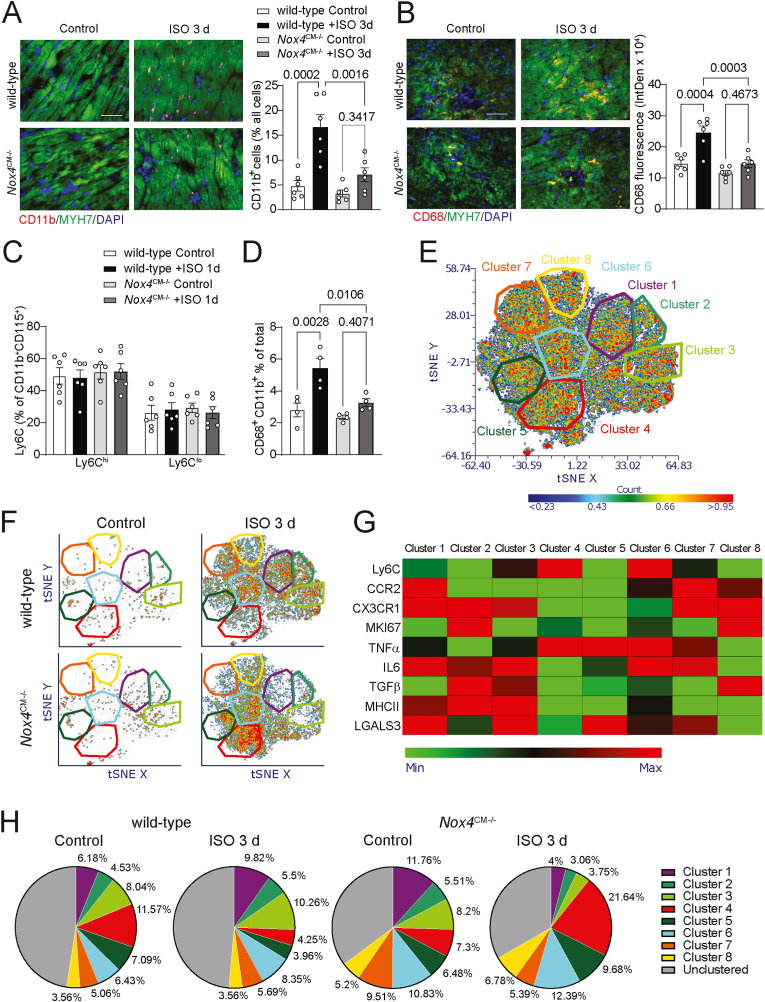
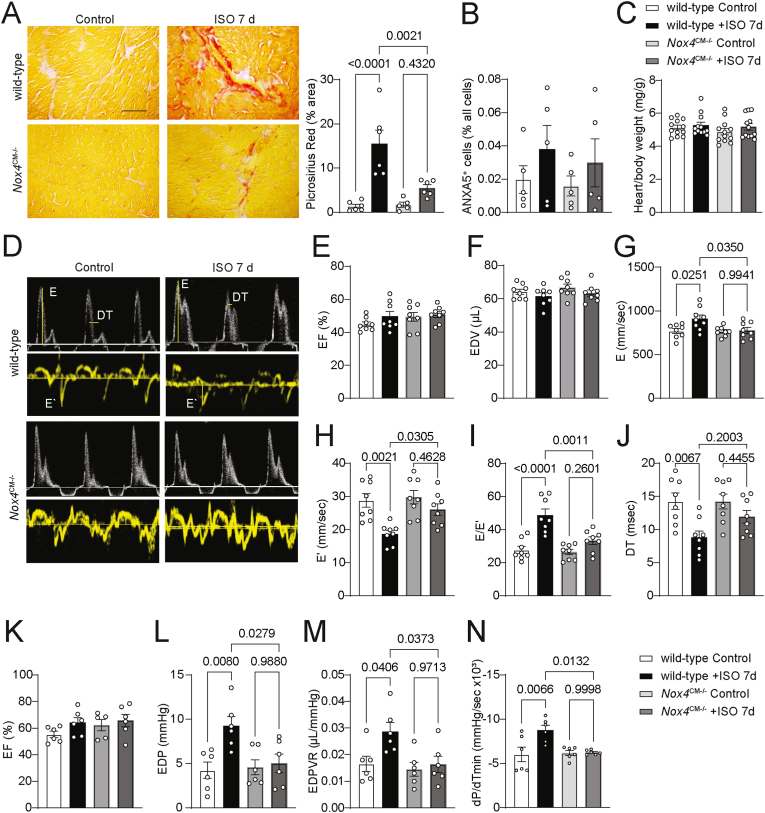
In acute sympathetic stress, catecholamine overload can lead to stress cardiomyopathy. We tested the hypothesis that cardiomyocyte NOX4 (NADPH oxidase 4)-dependent mitochondrial oxidative stress mediates inflammation and diastolic dysfunction in stress cardiomyopathy. Isoproterenol (ISO; 5 mg/kg) injection induced sympathetic stress in wild-type and cardiomyocyte (CM)-specific Nox4 knockout (Nox4) mice. Wild-type mice treated with ISO showed higher CM NOX4 expression, HO levels, inflammasome activation, and IL18, IL6, CCL2, and TNFα levels than Nox4 mice. Spectral flow cytometry and t-SNE analysis of cardiac cell suspensions showed significant increases in pro-inflammatory and pro-fibrotic embryonic-derived resident (CCR2MHCIICX3CR1) macrophages in wild-type mice 3 days after ISO treatment, whereas Nox4 mice had a higher proportion of embryonic-derived resident tissue-repair (CCR2MHCIICX3CR1) macrophages. A significant increase in cardiac fibroblast activation and interstitial collagen deposition and a restrictive pattern of diastolic dysfunction with increased filling pressure was observed in wild-type hearts compared with Nox4 7 days post-ISO. A selective NOX4 inhibitor, GKT137831, reduced myocardial mitochondrial ROS, macrophage infiltration, and fibrosis in ISO-injected wild-type mice, and preserved diastolic function. Our data suggest sympathetic overstimulation induces resident macrophage (CCR2MHCII) activation and myocardial inflammation, resulting in fibrosis and impaired diastolic function mediated by CM NOX4-dependent ROS.
在急性交感神经应激中,儿茶酚胺过载可导致应激性心肌病。我们检验了这样一个假设,即心肌细胞 NOX4(NADPH 氧化酶 4)依赖性线粒体氧化应激介导应激性心肌病中的炎症和舒张功能障碍。异丙肾上腺素(ISO;5mg/kg)注射诱导野生型和心肌细胞(CM)特异性 Nox4 敲除(Nox4)小鼠的交感神经应激。用 ISO 处理的野生型小鼠表现出更高的 CM NOX4 表达、HO 水平、炎症小体激活以及 IL18、IL6、CCL2 和 TNFα 水平,而 Nox4 小鼠则更低。心脏细胞悬浮液的光谱流式细胞术和 t-SNE 分析表明,在 ISO 处理后 3 天,野生型小鼠中促炎和促纤维化的胚胎来源驻留(CCR2MHCII CX3CR1)巨噬细胞显著增加,而 Nox4 小鼠中胚胎来源驻留组织修复(CCR2MHCII CX3CR1)巨噬细胞的比例更高。与 Nox4 相比,野生型心脏在 ISO 处理后 7 天观察到心脏成纤维细胞激活和间质胶原沉积显著增加以及舒张功能受限的限制性模式,伴有充盈压升高。一种选择性的 NOX4 抑制剂 GKT137831 减少了 ISO 注射野生型小鼠的心肌线粒体 ROS、巨噬细胞浸润和纤维化,并保留了舒张功能。我们的数据表明,交感神经过度刺激诱导驻留巨噬细胞(CCR2MHCII)激活和心肌炎症,导致纤维化和舒张功能障碍,这与 CM NOX4 依赖性 ROS 介导有关。