Department of Physiology, University of Kentucky, Lexington, KY, USA.
The Center for Muscle Biology, University of Kentucky, Lexington, KY, USA.
Geroscience. 2024 Apr;46(2):2153-2176. doi: 10.1007/s11357-023-00976-2. Epub 2023 Oct 24.
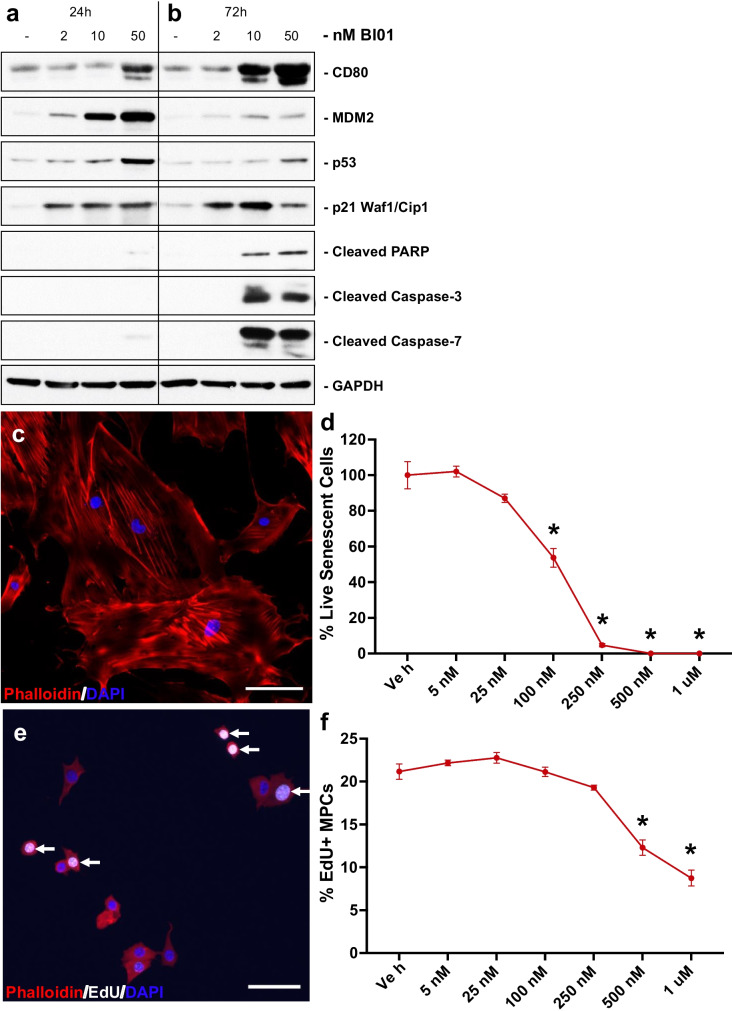
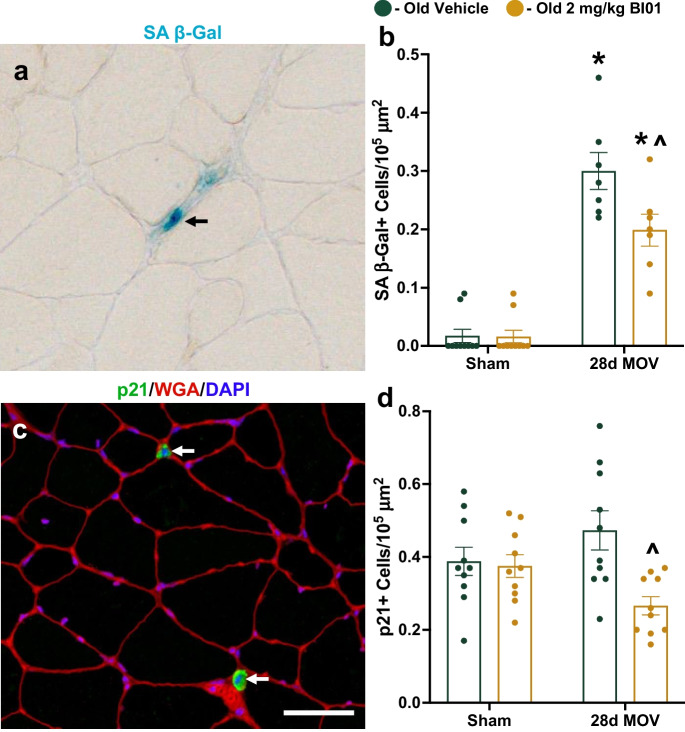
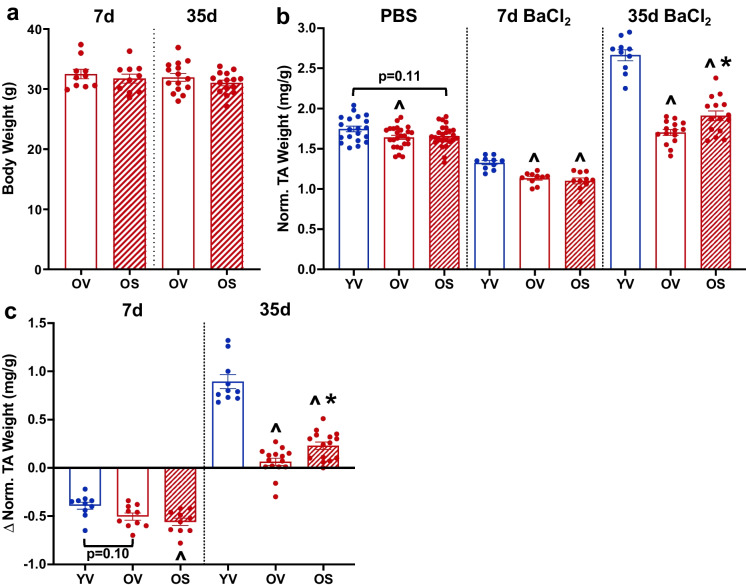
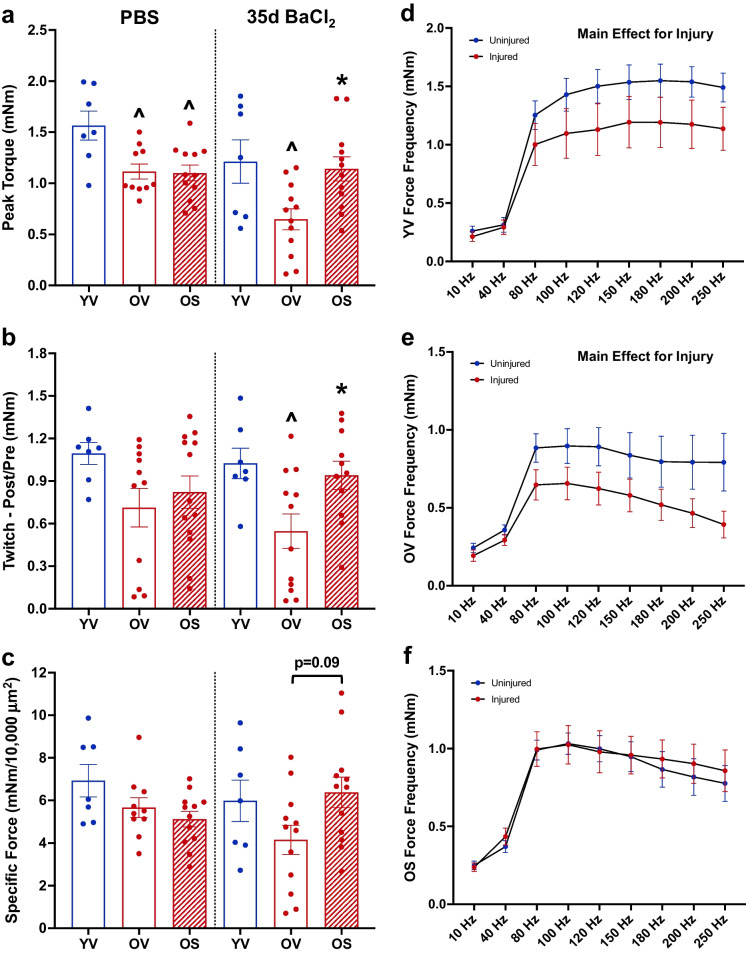
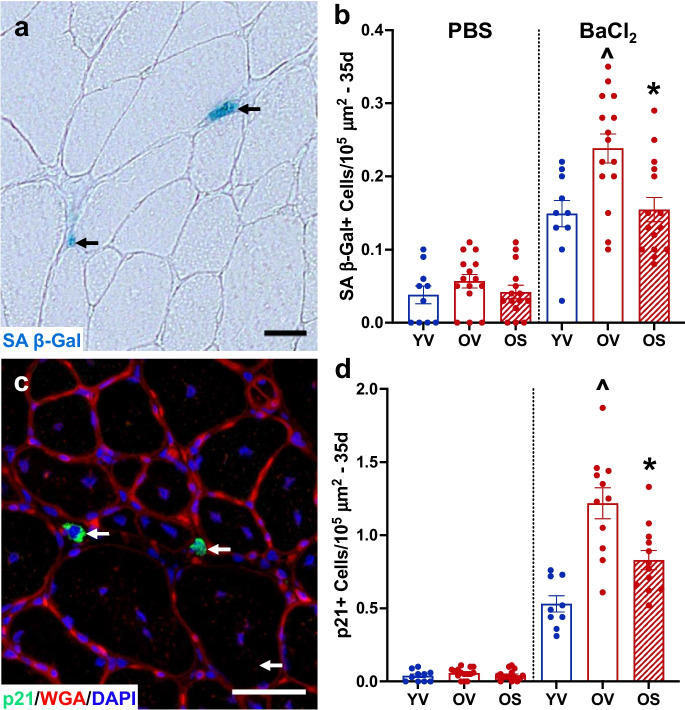
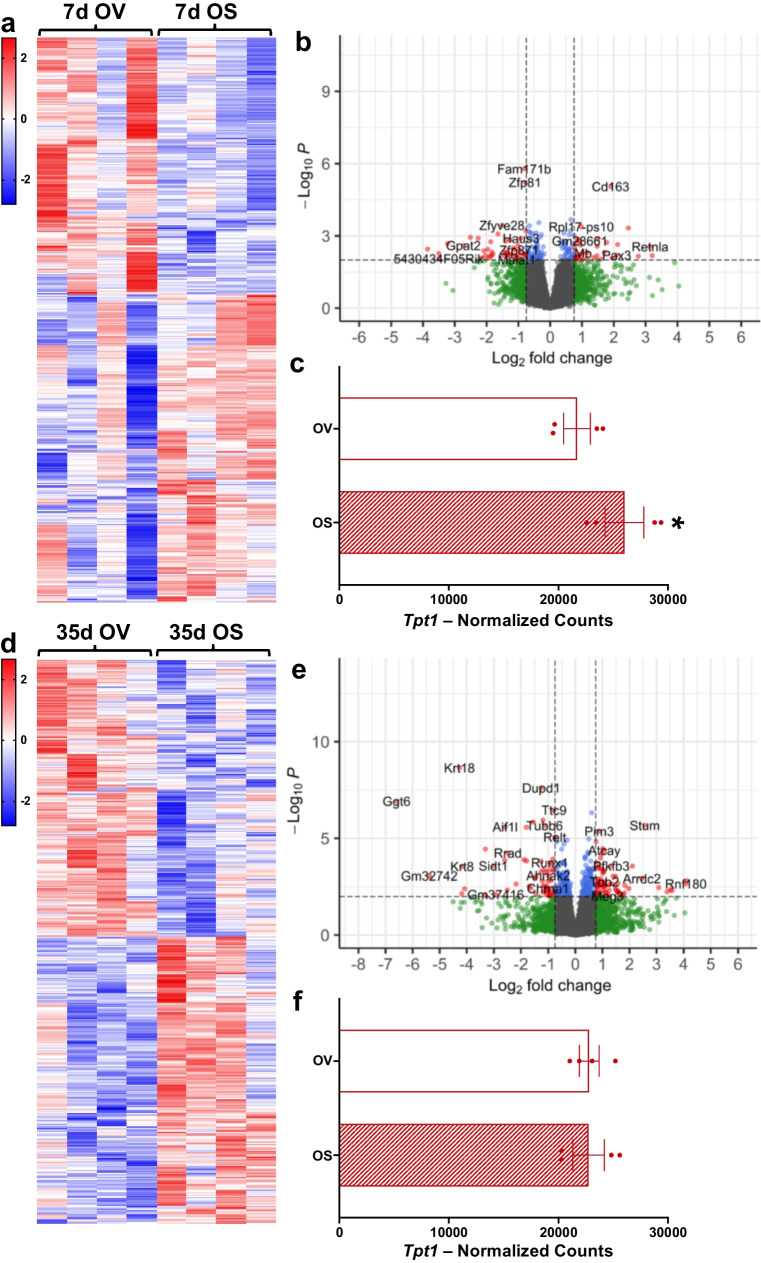
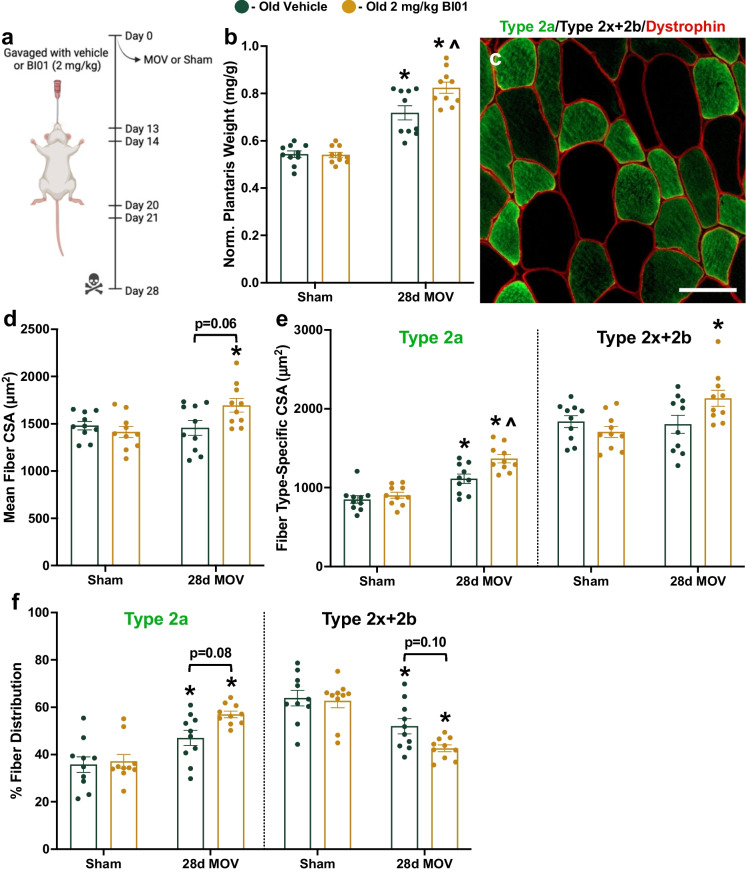
Skeletal muscle adaptation to external stimuli, such as regeneration following injury and hypertrophy in response to resistance exercise, are blunted with advanced age. The accumulation of senescent cells, along with defects in myogenic progenitor cell (MPC) proliferation, have been strongly linked as contributing factors to age-associated impairment in muscle adaptation. p53 plays an integral role in all these processes, as upregulation of p53 causes apoptosis in senescent cells and prevents mitotic catastrophe in MPCs from old mice. The goal of this study was to determine if a novel pharmaceutical agent (BI01), which functions by upregulating p53 through inhibition of binding to MDM2, the primary p53 regulatory protein, improves muscle regeneration and hypertrophy in old mice. BI01 effectively reduced the number of senescent cells in vitro but had no effect on MPC survival or proliferation at a comparable dose. Following repeated oral gavage with 2 mg/kg of BI01 (OS) or vehicle (OV), old mice (24 months) underwent unilateral BaCl injury in the tibialis anterior (TA) muscle, with PBS injections serving as controls. After 7 days, satellite cell number was higher in the TA of OS compared to OV mice, as was the expression of genes involved in ATP production. By 35 days, old mice treated with BI01 displayed reduced senescent cell burden, enhanced regeneration (higher muscle mass and fiber cross-sectional area) and restoration of muscle function relative to OV mice. To examine the impact of 2 mg/kg BI01 on muscle hypertrophy, the plantaris muscle was subjected to 28 days of mechanical overload (MOV) in OS and OV mice. In response to MOV, OS mice had larger plantaris muscles and muscle fibers than OV mice, particularly type 2b + x fibers, associated with reduced senescent cells. Together our data show that BI01 is an effective senolytic agent that may also augment muscle metabolism to enhance muscle regeneration and hypertrophy in old mice.
骨骼肌对外界刺激的适应,如损伤后的再生和抵抗运动引起的肥大,随着年龄的增长而减弱。衰老细胞的积累以及成肌祖细胞(MPC)增殖缺陷,与年龄相关的肌肉适应能力受损密切相关。p53 在所有这些过程中都起着至关重要的作用,因为 p53 的上调会导致衰老细胞凋亡,并防止老年小鼠 MPC 中的有丝分裂灾难。本研究的目的是确定一种新型药物(BI01)是否可以通过抑制与主要 p53 调节蛋白 MDM2 的结合而上调 p53,从而改善老年小鼠的肌肉再生和肥大。BI01 可有效减少体外衰老细胞的数量,但在可比剂量下对 MPC 的存活或增殖没有影响。在重复口服 2mg/kg BI01(OS)或载体(OV)后,老年小鼠(24 个月)在前胫骨肌(TA)中接受单侧 BaCl 损伤,PBS 注射作为对照。7 天后,OS 组 TA 中的卫星细胞数量高于 OV 组,参与 ATP 产生的基因表达也更高。35 天后,与 OV 组相比,BI01 处理的老年小鼠衰老细胞负担减少,再生增强(肌肉质量和纤维横截面积更高),肌肉功能恢复。为了研究 2mg/kg BI01 对肌肉肥大的影响,对 OS 和 OV 小鼠的跖肌进行了 28 天的机械过载(MOV)。对 MOV 的反应,OS 组小鼠的跖肌和肌纤维比 OV 组小鼠更大,尤其是 2b+x 型纤维,与衰老细胞减少有关。我们的数据表明,BI01 是一种有效的衰老细胞清除剂,还可以增强肌肉代谢,以增强老年小鼠的肌肉再生和肥大。