Kang Jongkyun, Huang Guodong, Ma Long, Tong Youren, Shahapal Anu, Chen Phoenix, Shen Jie
Department of Neurology, Brigham and Women's Hospital, Harvard Medical School, Boston, MA 02115, United States of America.
Program in Neuroscience, Harvard Medical School, Boston, MA 02115, United States of America.
bioRxiv. 2024 Mar 7:2023.10.06.561293. doi: 10.1101/2023.10.06.561293.
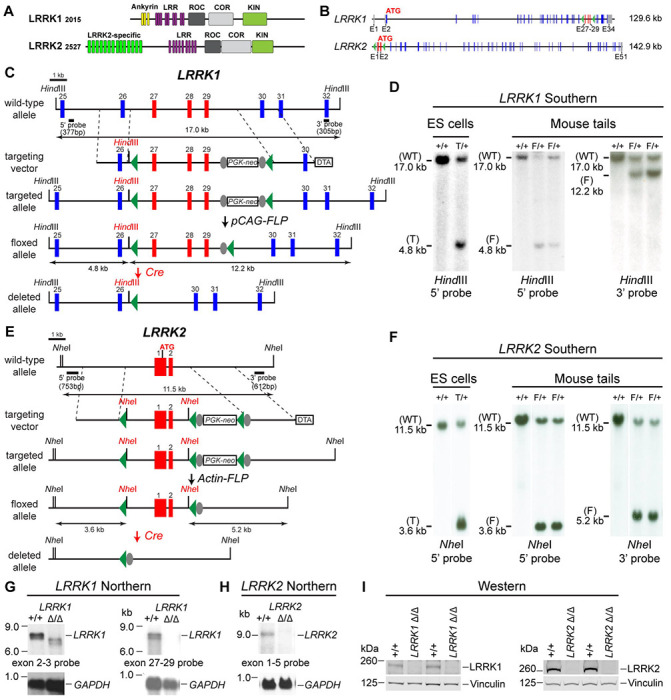
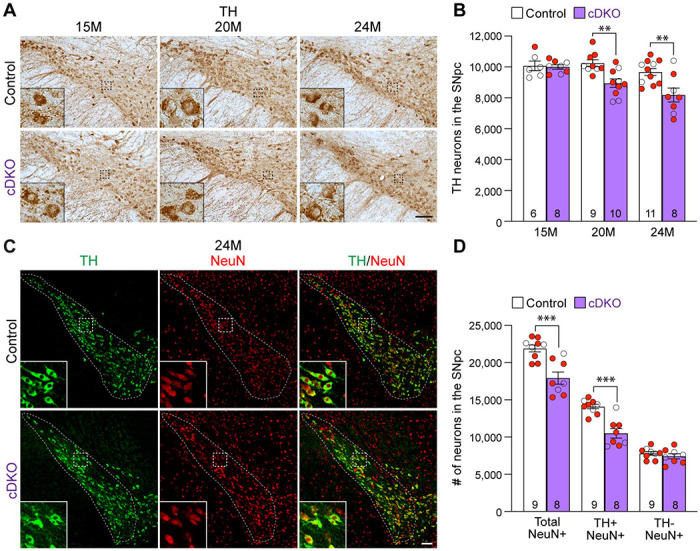
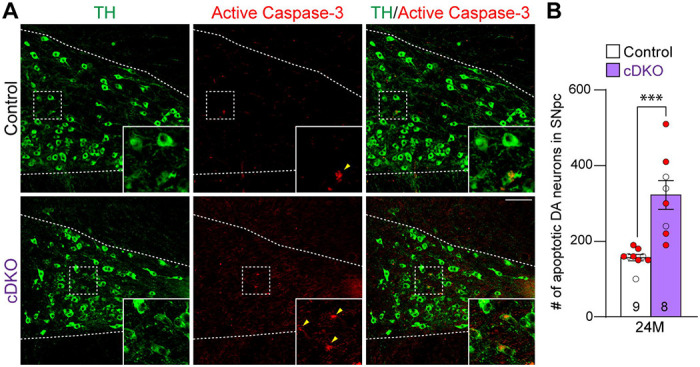
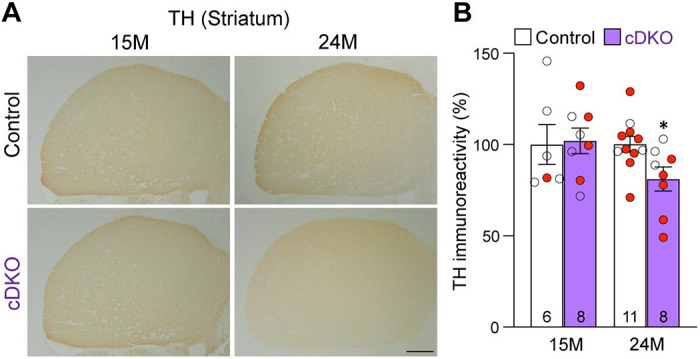
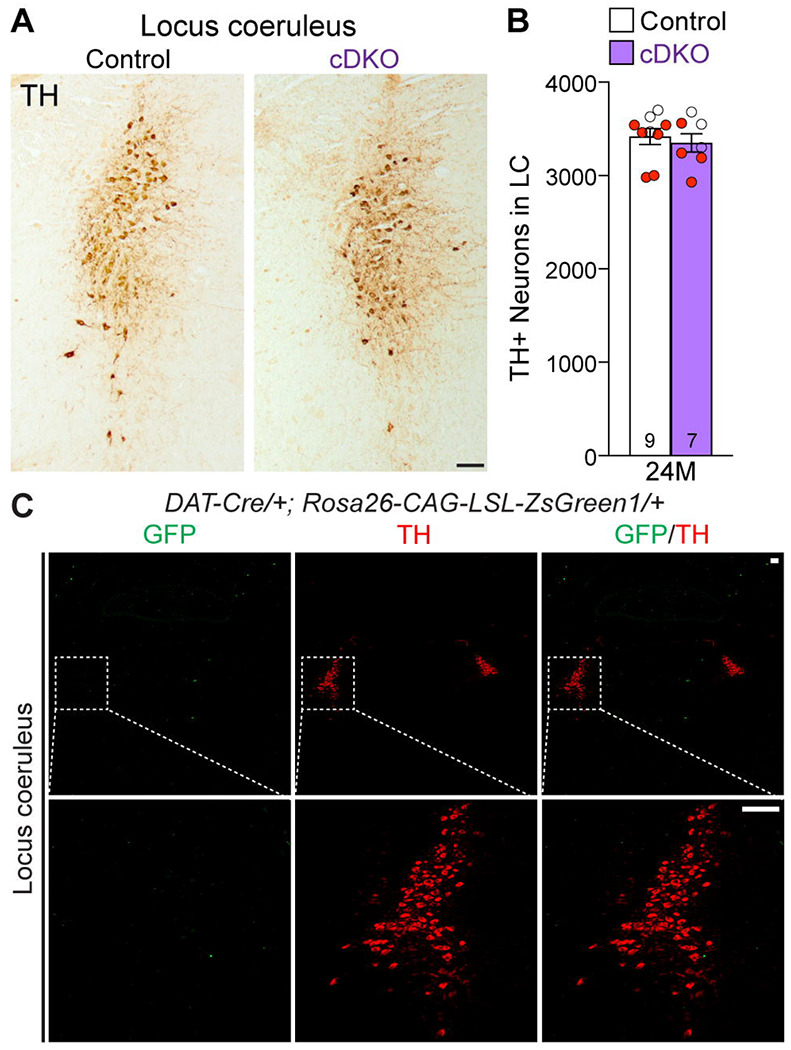
Mutations in leucine-rich repeat kinase 2 (LRRK2) are the most common genetic cause of Parkinson's disease (PD), which is the leading neurodegenerative movement disorder characterized by the progressive loss of dopaminergic (DA) neurons in the substantia nigra pars compacta (SNpc). However, whether LRRK2 mutations cause PD and degeneration of DA neurons a toxic gain-of-function or a loss-of-function mechanism is unresolved and has pivotal implications for LRRK2-based PD therapies. In this study, we investigate whether LRRK2 and its functional homologue LRRK1 play an essential, intrinsic role in DA neuron survival through the development of DA neuron-specific conditional double knockout (cDKO) mice. We first generated and characterized floxed and mice and then confirmed that germline deletions of the floxed and alleles result in null mutations, as evidenced by the absence of and mRNA and protein in the respective homozygous deleted mutant mice. We further examined the specificity of Cre-mediated recombination driven by the knockin (KI) allele using a GFP reporter line and confirmed that -mediated recombination is restricted to DA neurons in the SNpc. Crossing these validated floxed and mice with KI mice, we then generated DA neuron-restricted cDKO mice and further showed that levels of LRRK1 and LRRK2 are reduced in dissected ventral midbrains of cDKO mice. While DA neuron-restricted cDKO mice of both sexes exhibit normal mortality and body weight, they develop age-dependent loss of DA neurons in the SNpc, as demonstrated by the progressive reduction of DA neurons in the SNpc of cDKO mice at the ages of 20 and 24 months but the unaffected number of DA neurons at the age of 15 months. Moreover, DA neurodegeneration is accompanied with increases of apoptosis and elevated microgliosis in the SNpc as well as decreases of DA terminals in the striatum, and is preceded by impaired motor coordination. Taken together, these findings provide the unequivocal evidence for the importance of LRRK in DA neurons and raise the possibility that LRRK2 mutations may impair its protection of DA neurons, leading to DA neurodegeneration in PD.
富含亮氨酸重复激酶2(LRRK2)突变是帕金森病(PD)最常见的遗传病因,帕金森病是一种主要的神经退行性运动障碍,其特征是黑质致密部(SNpc)中多巴胺能(DA)神经元逐渐丧失。然而,LRRK2突变导致PD和DA神经元变性是通过毒性功能获得还是功能丧失机制仍未解决,这对基于LRRK2的PD治疗具有关键意义。在本研究中,我们通过构建DA神经元特异性条件性双敲除(cDKO)小鼠,研究LRRK2及其功能同源物LRRK1在DA神经元存活中是否发挥重要的内在作用。我们首先构建并鉴定了floxed 和 小鼠,然后证实floxed 和 等位基因的种系缺失导致无效突变,相应纯合缺失突变小鼠中 和 mRNA及蛋白的缺失证明了这一点。我们进一步使用绿色荧光蛋白(GFP)报告基因系检查了由 敲入(KI)等位基因驱动的Cre介导的重组的特异性,并证实 介导的重组仅限于SNpc中的DA神经元。将这些经过验证的floxed 和 小鼠与 KI小鼠杂交,我们构建了DA神经元特异性 cDKO小鼠,并进一步表明在cDKO小鼠解剖的腹侧中脑中LRRK1和LRRK2水平降低。虽然两性的DA神经元特异性 cDKO小鼠表现出正常的死亡率和体重,但它们会出现年龄依赖性的SNpc中DA神经元丧失,如20和24月龄cDKO小鼠SNpc中DA神经元逐渐减少所示,但15月龄时DA神经元数量未受影响。此外,DA神经变性伴随着SNpc中凋亡增加和小胶质细胞增生升高以及纹状体中DA终末减少,并且在运动协调受损之前出现。综上所述,这些发现为LRRK在DA神经元中的重要性提供了明确证据,并提出LRRK2突变可能损害其对DA神经元的保护作用,导致PD中DA神经变性的可能性。