School of Medicine, Washington University in St. Louis, Saint Louis, MO, United States.
Department of Health Policy and Community Health, Georgia Southern University, Statesboro, GA, United States.
JMIR Hum Factors. 2023 Dec 22;10:e47294. doi: 10.2196/47294.
COVID-19 remains an ongoing public health crisis. Black Americans remain underrepresented among those vaccinated and overrepresented in both COVID-19 morbidity and mortality. Medical misinformation, specifically related to COVID-19, has exacerbated the impact of the disease in Black American communities. Communication tools and strategies to build relationships and disseminate credible and trustworthy diagnostic and preventative health information are necessary to improve outcomes and equity for historically oppressed populations.
As the initial phase of a larger mixed methods project to develop, pilot, and evaluate a mobile health (mHealth) intervention among a population at high risk for COVID-19 and cardiovascular comorbidities, this study sought to explore COVID-19 information behavior among Black Americans. Specifically, this study examined (1) preferences for COVID-19 education via mHealth, (2) barriers and facilitators to COVID-19 education and diagnostic testing and routine care for associated cardiovascular and respiratory comorbidities in the local community, and (3) key content for inclusion in a COVID-19 mHealth app.
This qualitative study used principles of community-based participatory research and information systems research to conduct 7 focus groups across 3 sites. Focus groups were audio recorded and transcribed for thematic analysis using an abductive approach.
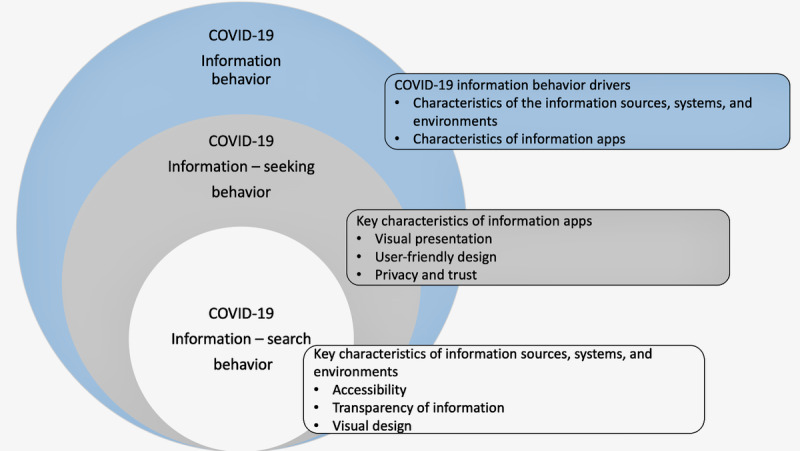
The study sample included 54 individuals across sites with a mean age of 50.24 (SD 11.76; range 20-71) years. Participants were primarily female (n=42, 78%) and Black (n=54, 100%) with varied education levels. Over half (n=29, 54%) of the participants were employed full-time, and nearly three-fourths (n=40, 74%) had household incomes <US $65,000. Participants used both Android (n=23, 43%) and iOS devices (n=29, 54%) and were "very comfortable" (n=37, 69%) using their mobile devices. Participants reported using a variety of sources for health information. Content-related preferences reported focus on visual presentation, user-friendly design, and privacy and highlighted the importance of community relevance, access, and community-specific content. Key barriers identified included health literacy-limiting app use, access to technology and information, and lack of trust. Increasing community relevance through community-specific messaging and the inclusion of Black providers were noted as facilitators that may increase credibility and trust. Key content identified included user-specific information such as where to get vaccines and tests, updated local COVID-19 data, travel protocols, information about long COVID-19 (post COVID-19 condition), comorbidities, frequently asked questions, and testimonials or personal stories.
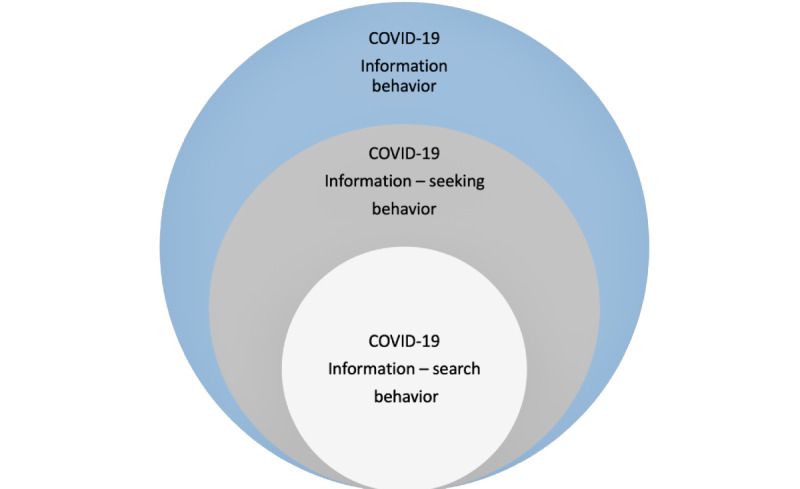
Increasing transparency and building trust are 2 key strategies that may improve the impact of health information messaging in Black communities. Focusing on content over context fails in the provision of critical health information and perpetuates health inequities by reinforcing systemic and structural racism. COVID-19 messaging must consider contextual information, patient needs and preferences, and patient information-seeking and information-search behaviors to establish trust and credibility, positively impact patient health outcomes, and improve health equity.
COVID-19 仍然是一场持续的公共卫生危机。在接种疫苗的人群中,黑人群体代表性不足,而在 COVID-19 的发病率和死亡率方面,黑人群体则代表性过高。与 COVID-19 相关的医疗错误信息,特别是,加剧了黑人群体社区中疾病的影响。为了改善历史上受压迫群体的结果和公平性,有必要使用沟通工具和策略来建立关系,并传播可靠和值得信赖的诊断和预防保健信息。
作为一个更大的混合方法项目的初始阶段,该项目旨在开发、试点和评估针对 COVID-19 和心血管合并症高危人群的移动健康(mHealth)干预措施,本研究旨在探索黑人群体的 COVID-19 信息行为。具体来说,本研究考察了(1)通过 mHealth 接受 COVID-19 教育的偏好,(2)当地社区中 COVID-19 教育和诊断测试以及与心血管和呼吸系统合并症相关的常规护理的障碍和促进因素,以及(3)纳入 COVID-19 mHealth 应用程序的关键内容。
本定性研究使用基于社区的参与性研究和信息系统研究的原则,在 3 个地点进行了 7 个焦点小组。使用归纳方法对焦点小组进行音频记录和转录,进行主题分析。
研究样本包括来自 3 个地点的 54 名参与者,平均年龄为 50.24(SD 11.76;范围 20-71)岁。参与者主要为女性(n=42,78%)和黑人(n=54,100%),教育程度各异。超过一半(n=29,54%)的参与者全职工作,近四分之三(n=40,74%)的家庭收入<65000 美元。参与者使用了 Android(n=23,43%)和 iOS 设备(n=29,54%),并且“非常舒适”(n=37,69%)使用他们的移动设备。参与者报告使用了各种来源的健康信息。报告的与内容相关的偏好侧重于视觉呈现、用户友好的设计以及隐私,并强调了社区相关性、可及性和社区特定内容的重要性。确定的主要障碍包括限制应用程序使用的健康素养、获取技术和信息的机会以及缺乏信任。通过社区特定消息传递增加社区相关性,并纳入黑人提供者,被认为是提高可信度和信任度的促进因素。确定的关键内容包括用户特定信息,例如在哪里接种疫苗和接受测试、更新的当地 COVID-19 数据、旅行协议、有关长 COVID-19(COVID-19 后状况)、合并症、常见问题解答以及见证或个人故事的信息。
提高透明度和建立信任是 2 项可能改善黑人群体健康信息传播效果的关键策略。关注内容而不是背景会导致关键健康信息的提供失败,并通过强化系统和结构性种族主义来延续健康不平等。COVID-19 信息必须考虑到背景信息、患者需求和偏好,以及患者的信息搜索和信息搜索行为,以建立信任和可信度,积极影响患者的健康结果,并改善健康公平。