Wang Mengyi, Tang Jingyuan, Zhang Shiwu, Pang Kemiao, Zhao Yajun, Liu Ning, Huang Jiayi, Kang Jiaxin, Dong Shiyun, Li Hongxia, Tian Zhen, Duan Binhong, Lu Fanghao, Zhang Weihua
Department of Pathophysiology, Harbin Medical University, 150081, Harbin, China.
Department of Endocrinology, Heilongjiang Provincial Hospital, 150036, Harbin, China.
Cell Death Discov. 2023 Oct 24;9(1):394. doi: 10.1038/s41420-023-01690-w.
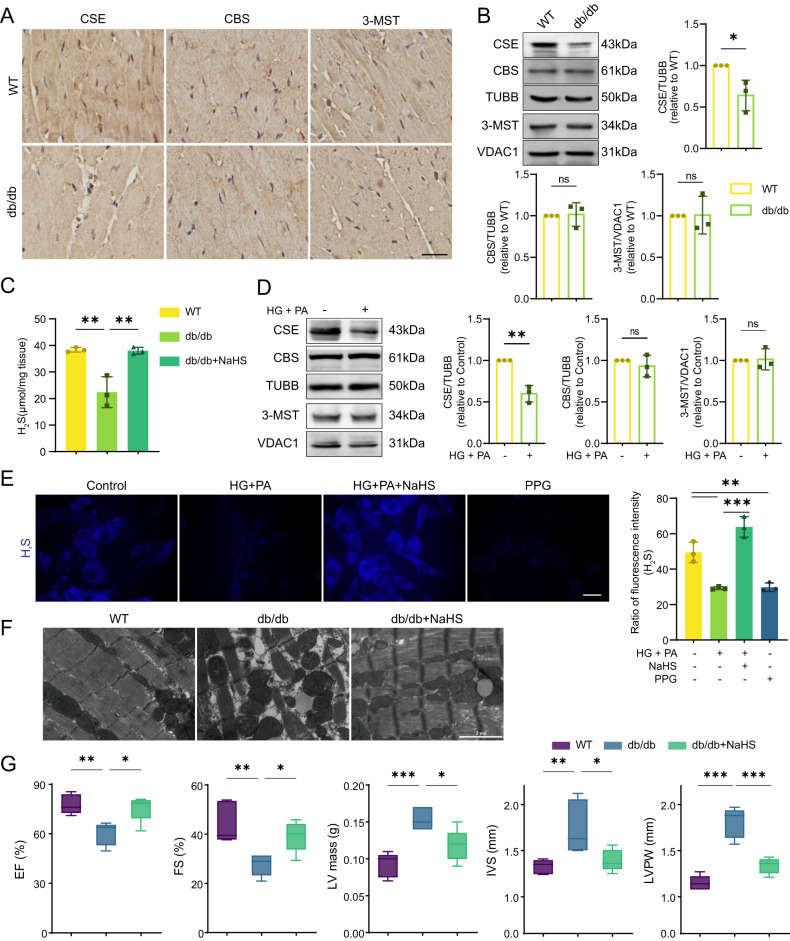
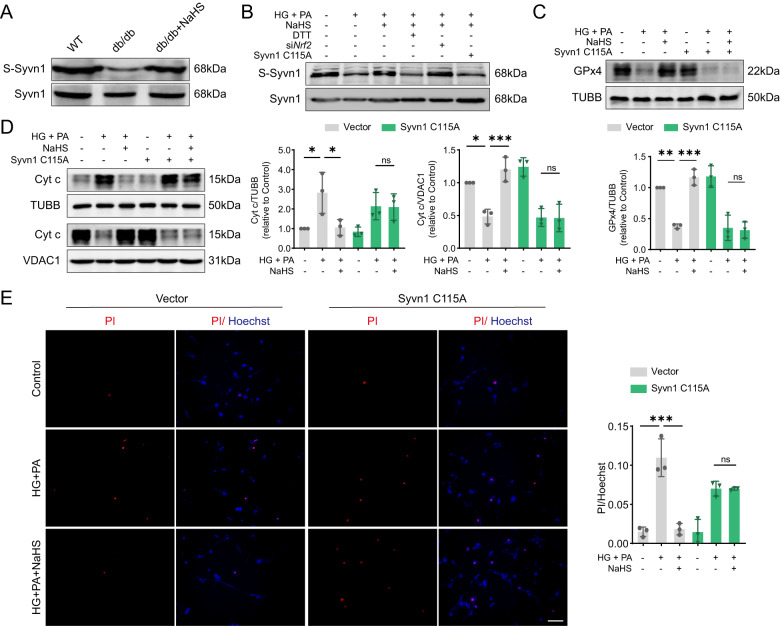
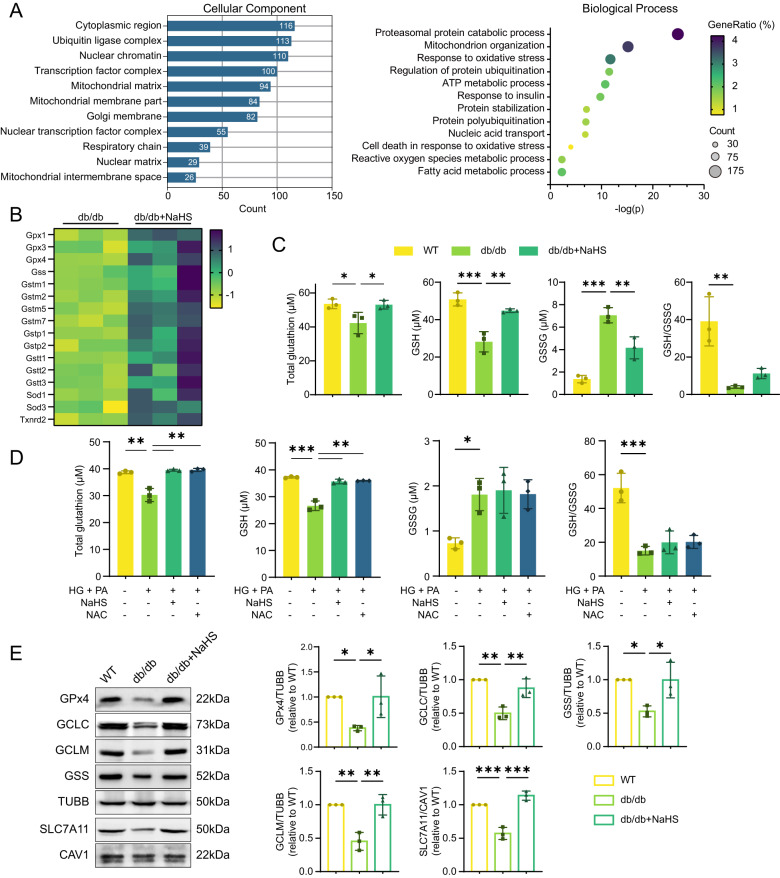
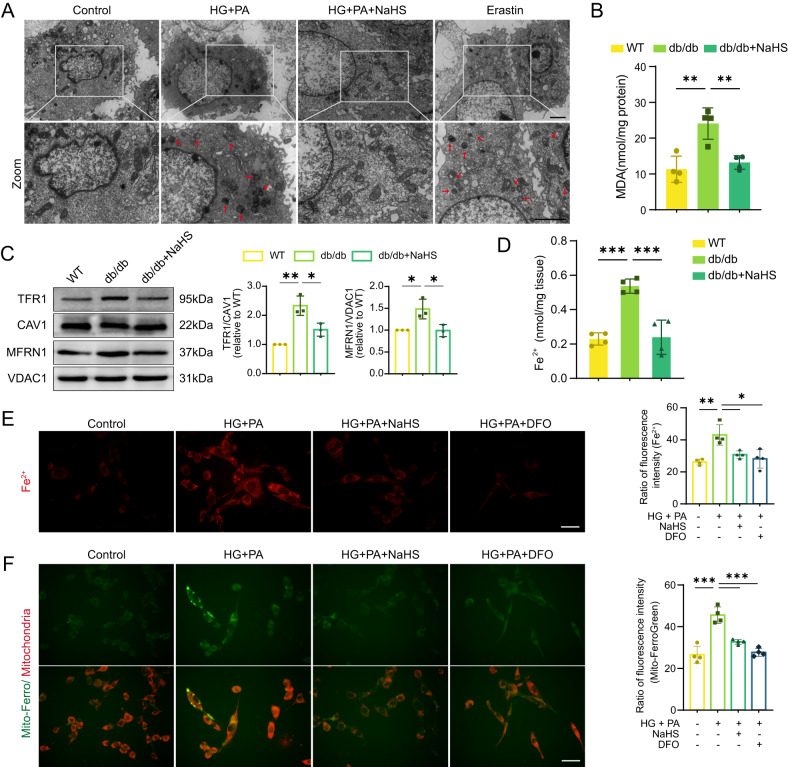
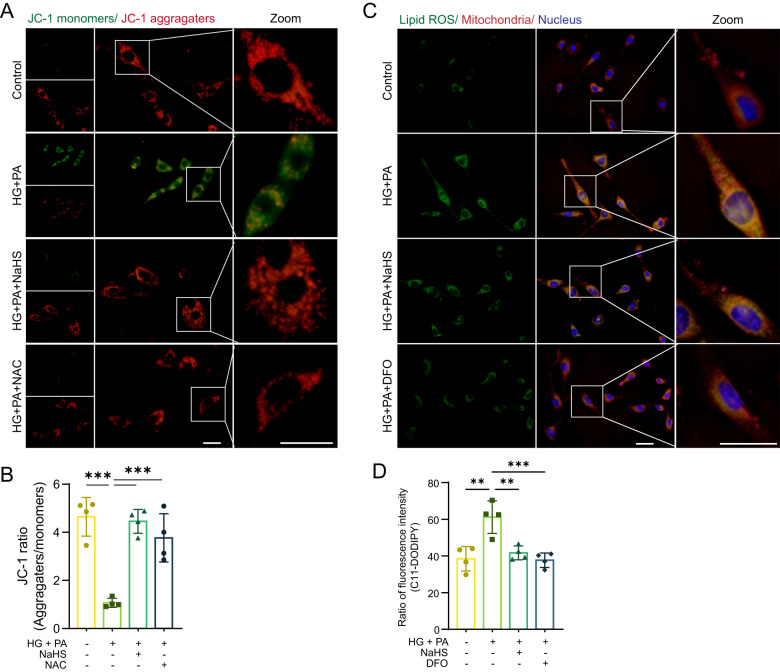
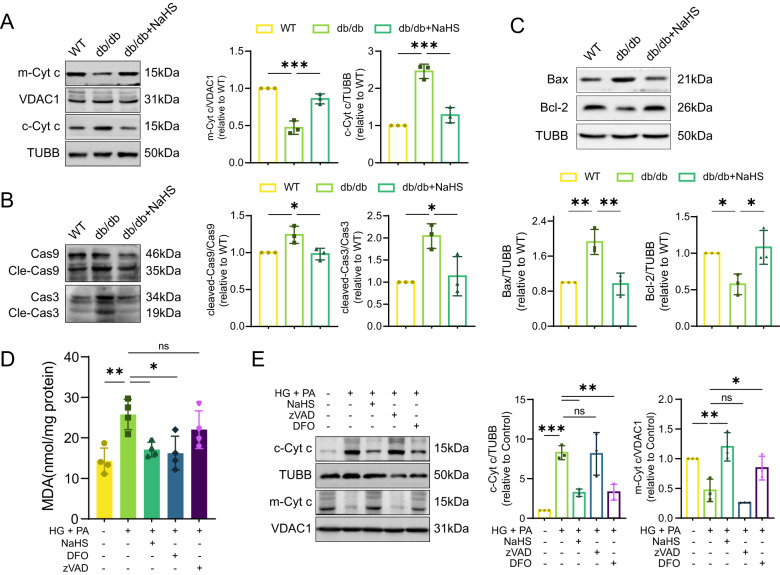
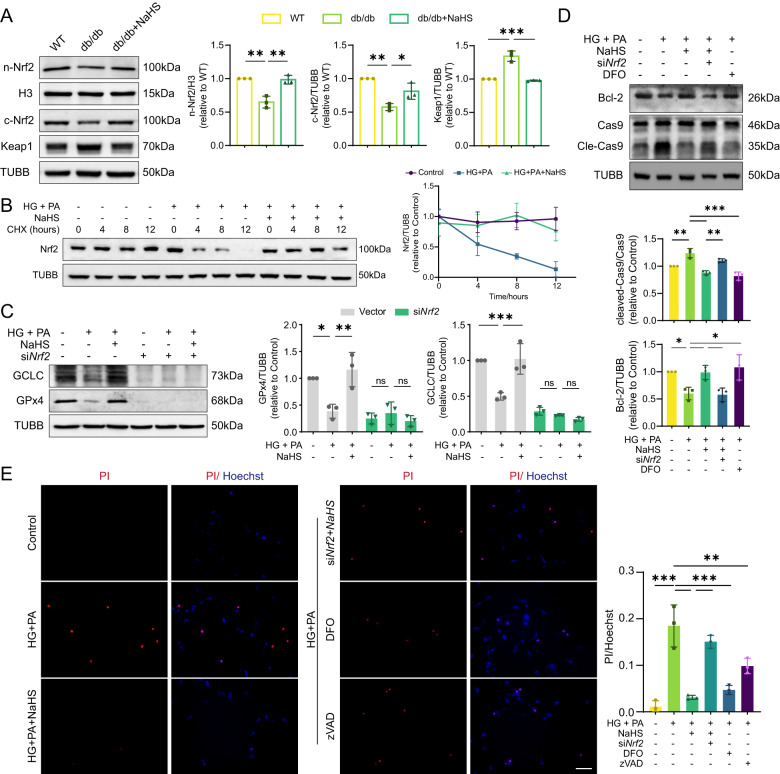
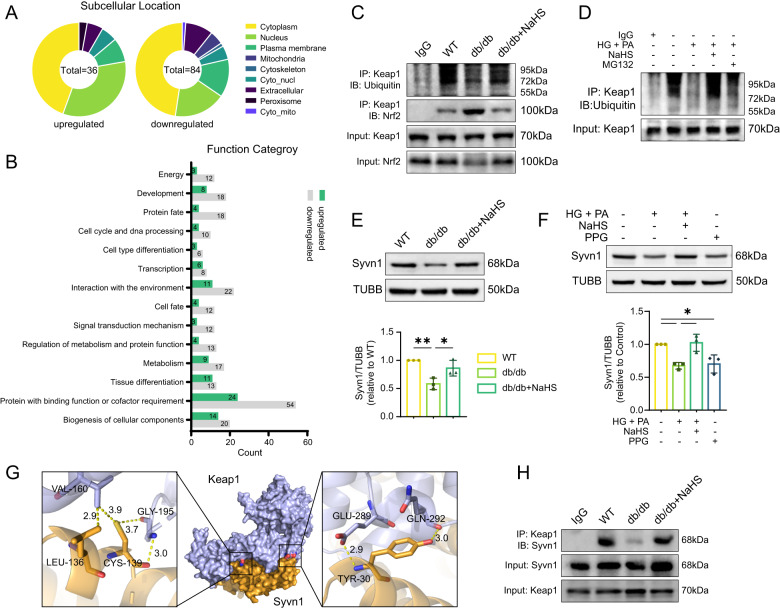
Excessive ROS accumulation contributes to cardiac injury in type 2 diabetes mellitus. Hydrogen sulfide (HS) is a vital endogenous gasotransmitter to alleviate cardiac damage in diabetic cardiomyopathy (DCM). However, the underlying mechanisms remain unclear. In this study, we investigated the effects of NaHS administration in db/db mice via intraperitoneal injection for 20 weeks and the treatment of high glucose (HG), palmitate (PA) and NaHS in HL-1 cardiomyocytes for 48 h, respectively. HS levels were decreased in hearts of db/db mice and HL-1 cardiomyocytes exposed to HG and PA, which were restored by NaHS. Exogenous HS activated the nuclear factor erythroid 2-related factor 2 (Nrf2)/glutathione peroxidase 4 (GPx4)/glutathione (GSH) pathway, suppressed ferroptosis and mitigated mitochondrial apoptosis in db/db mice. However, these effects were abrogated after Nrf2 knockdown. NaHS treatment elevated the ubiquitination level of Kelch-like ECH-associated protein (Keap1) by preserving its E3 ligase synoviolin (Syvn1), resulting in Nrf2 nuclear translocation. HS facilitated the sulfhydration of Syvn1-cys115 site, a post-translational modification. Transfecting Syvn1 C115A in cardiomyocytes exposed to HG and PA partially attenuated the effects of NaHS on Nrf2 and cell death. Our findings suggest that exogenous HS regulates Nrf2/GPx4/GSH pathway by promoting the Syvn1-Keap1 interaction to reduce ferroptosis and mitochondrial apoptosis in DCM.
过量的活性氧(ROS)积累会导致2型糖尿病患者的心脏损伤。硫化氢(HS)是一种重要的内源性气体递质,可减轻糖尿病性心肌病(DCM)中的心脏损伤。然而,其潜在机制仍不清楚。在本研究中,我们分别通过腹腔注射NaHS 20周来研究其对db/db小鼠的影响,以及用高糖(HG)、棕榈酸(PA)和NaHS处理HL-1心肌细胞48小时的影响。db/db小鼠心脏以及暴露于HG和PA的HL-1心肌细胞中的HS水平降低,而NaHS可使其恢复。外源性HS激活了核因子红细胞2相关因子2(Nrf2)/谷胱甘肽过氧化物酶4(GPx4)/谷胱甘肽(GSH)途径,抑制了铁死亡,并减轻了db/db小鼠的线粒体凋亡。然而,Nrf2基因敲低后,这些作用被消除。NaHS处理通过保留其E3连接酶滑膜素(Syvn1)提高了类Kelch样ECH相关蛋白(Keap1)的泛素化水平,导致Nrf2核转位。HS促进了Syvn1半胱氨酸115位点的巯基化,这是一种翻译后修饰。在暴露于HG和PA的心肌细胞中转染Syvn1 C115A可部分减弱NaHS对Nrf2和细胞死亡的影响。我们的研究结果表明,外源性HS通过促进Syvn1-Keap1相互作用来调节Nrf2/GPx4/GSH途径,以减少DCM中的铁死亡和线粒体凋亡。